
If you’ve ever looked at a beautiful, smoky brisket on Instagram and wondered how on earth people make something that tender, you’re not alone. Brisket looks intimidating, but here’s the good news: you don’t need a smoker, expensive gear, or eight hours standing outside babysitting a fire. Learning how to cook a brisket in the oven is one of the easiest kitchen skills you can pick up, and the results are shockingly good.
More than 70 percent of home cooks use their oven at least once a day, which makes the oven a realistic and accessible way to cook something as large and impressive as brisket. The steady, controlled heat gives you the exact low and slow environment brisket needs to become juicy, tender, and flavorful.
If you love comfort food, meal prepping, or hosting, oven baked brisket is your new best friend. It’s hands off, easy to customize, and almost guaranteed to impress.
What cut of brisket you need
Brisket point vs flat
Brisket comes in two main sections:
- Flat cut
Leaner, slices beautifully, great for structured servings. - Point cut
Fattier, richer, more marbled, great for pulled brisket.
Some grocery stores sell the whole packer brisket, which includes both. For oven cooking, the flat cut is usually easiest to work with, especially if you’re a beginner and want neat slices.
How much brisket to buy
Brisket shrinks. A lot. On average, you’ll lose about 30 to 40 percent of the weight during cooking.
A good rule of thumb:
- Serving sliced brisket: 1/2 pound per person
- Serving pulled brisket: 1/3 pound per person
If you’re meal prepping, the 5 to 7 pound range is perfect for most home ovens.
Why the cut matters in the oven
The oven offers steady heat, but not smoke. A slightly fattier cut like the point stays juicy and forgiving, while the flat gives you neat slices. Either works, but knowing the difference helps you decide how to season and serve it.
Ingredients and tools you need
Basic seasoning
The simplest oven brisket seasoning is incredibly minimalist:
- Salt
- Pepper
- Garlic powder
- Onion powder
This lets the beef flavor shine.
Optional flavor add ons
If you want more personality, try:
- Smoked paprika
- Brown sugar
- Chili powder
- Cayenne pepper
- Mustard powder
- Liquid smoke (a little goes a long way)
You can also use a store bought dry rub. For a clean ingredients option, look for rubs without added sugar or anti caking agents.
Tools that make it easier
Brisket isn’t difficult, but certain tools help:
- Large roasting pan
- Aluminum foil
- Oven thermometer
- Meat thermometer
- Cutting board with grooves (brisket juices are real)
Pro Tip: A meat thermometer is non negotiable for perfect brisket. Internal temp is everything.
The step by step method for cooking brisket in the oven
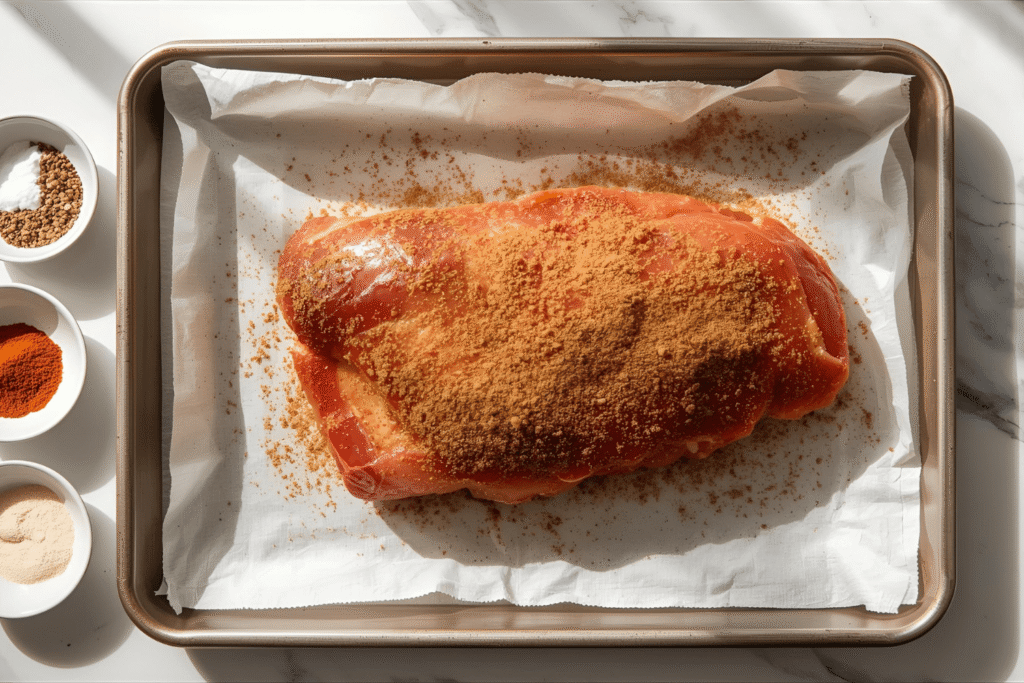
Prep and trimming
Brisket usually comes with a thick fat cap. Trim it down to about 1/4 inch. This helps the fat melt into the meat without making it greasy.
Remove any silver skin, but don’t obsess over perfection.
Seasoning
Liberally coat the entire brisket in your seasoning mix. Brisket is a large cut and can handle heavy seasoning. Rub it on both sides and gently press it in.
Oven temperature and timing
Low and slow is the secret. Set your oven to 275°F. This temperature melts the connective tissue gradually, which is what makes brisket tender.
At 275°F, brisket usually cooks at about 1 hour per pound.
Foil wrapping (Texas crutch)
Once the brisket reaches around 160°F internal temperature, it will often stall. This is normal. Wrap the brisket tightly in foil or butcher paper and continue cooking.
Wrapping traps moisture and helps the brisket power through the stall.
Resting time
Resting is essential. Once the brisket reaches 195 to 205°F, remove it from the oven and let it rest for 45 minutes to 1 hour before slicing.
This allows juices to redistribute and keeps the meat tender.
Pro Tip: Never skip the rest. A rushed brisket is a dry brisket.
How long to cook brisket in the oven
Temperature guide
You can cook brisket at different temperatures, but here’s a quick breakdown:
- 250°F: Extra tender, longest cook time
- 275°F: Best balance of time and tenderness
- 300°F: Faster, but riskier for dryness
Weight and time chart
Here’s a helpful reference:
- 3 lb brisket: 3 to 4 hours
- 5 lb brisket: 5 to 6 hours
- 7 lb brisket: 7 to 8 hours
- 10 lb brisket: 10 to 11 hours
Remember, internal temperature is more important than the clock.
Why low and slow always wins
Brisket is a tough muscle loaded with collagen. Low heat melts collagen into gelatin, creating that juicy, melt in your mouth texture. Higher heat tightens muscle fibers and squeezes moisture out, which is how brisket becomes dry.
Low and slow isn’t just tradition. It’s science.
Flavor variations
Classic Texas style rub
This rub uses classic pantry staples:
- Salt
- Pepper
- Garlic powder
- Onion powder
This is the best choice if you want the flavor to be all about the beef.
Smoky paprika blend
For a smoky vibe without a smoker:
- Smoked paprika
- Brown sugar
- Black pepper
- Chili powder
- Garlic powder
The sugar helps the crust darken beautifully.
Sweet and spicy glaze
If you love bold flavors, try brushing on a glaze in the final hour:
- Honey or brown sugar
- Soy sauce
- Chili flakes
- Garlic
This creates sticky, caramelized edges.
Herb slow roasted version
Perfect if you want something elegant and aromatic:
- Thyme
- Rosemary
- Olive oil
- Black pepper
- Lemon zest
This version pairs beautifully with roasted potatoes and veggies.
Common mistakes and how to avoid them
Brisket coming out dry
Dry brisket usually happens because of:
- Too high oven temperature
- Not wrapping during the stall
- Not resting
- Undercooking or overcooking
Moisture depends on collagen melting slowly and resting fully.
Over trimming
Some fat is essential. Trim too much and the brisket loses richness. Aim for that 1/4 inch sweet spot.
Not resting long enough
Cutting brisket too early is one of the most common mistakes. Resting makes the difference between juicy and dry.
Oven temperature issues
Most home ovens run hotter than the display. Use an oven thermometer to make sure you’re actually cooking at 275°F.
Pro Tip: If the edges of the brisket are cooking faster than the center, loosely tent the thinner end with foil.
Slicing and serving
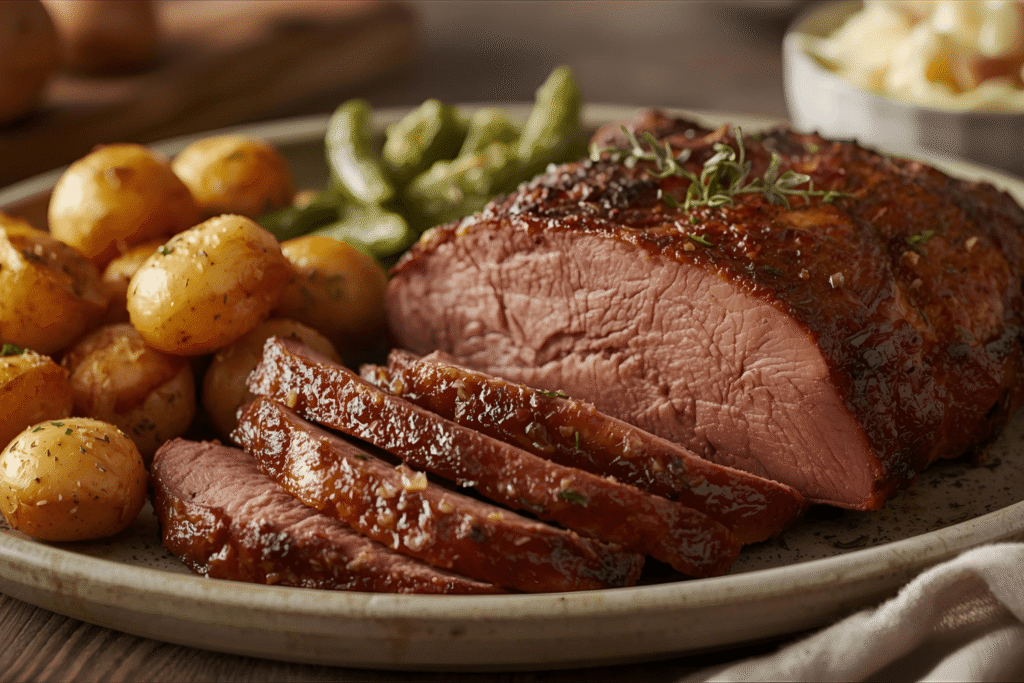
How to slice correctly
Always slice brisket against the grain. This shortens muscle fibers and makes each bite more tender.
The grain changes direction between the point and the flat, so pay attention when slicing the whole packer.
How to serve brisket
Brisket is so versatile. Serve it:
- On its own with pan juices
- In tacos
- On sandwiches
- With mashed potatoes
- With a drizzle of BBQ sauce
Best side dishes
Great sides include:
- Roasted potatoes
- Mac and cheese
- Coleslaw
- Cornbread
- Roasted veggies
Storing, freezing, and reheating brisket
Fridge storage
Store brisket slices with some of the cooking juices to keep them moist. They last 3 to 4 days in the refrigerator.
Freezing tips
Freeze brisket in portions with juice or broth. It prevents freezer dryness and helps maintain texture.
How to reheat without drying out
Reheat brisket in the oven at 300°F, covered, with a splash of broth. It usually takes 15 to 20 minutes.
Extra tips for getting the perfect oven brisket every time
If you want your oven brisket to taste like it came from a professional BBQ spot, there are a few small upgrades that make a big difference. One of the best tricks is to let your brisket sit at room temperature for about 30 minutes before cooking. This helps it cook more evenly and prevents the outside from drying out before the inside heats up.
You can also boost flavor by adding a splash of apple cider vinegar or Worcestershire sauce to the pan before cooking. It lightly steams the brisket and adds depth without overpowering the natural beef flavor.
These tiny tweaks elevate the entire dish with almost no extra effort.
FAQs
You can, but it increases the risk of dryness. 275°F is much safer.
In the oven, fat side up helps baste the meat as it cooks.
Not required, but adding 1/2 cup broth can help keep the environment moist.
Yes. It helps the flavors absorb and creates a better crust.
195 to 205°F is the sweet range for tenderness.
Final thoughts
Cooking brisket in the oven is one of the most rewarding kitchen skills you can learn. It’s simple, surprisingly hands off, and perfect for feeding a crowd or prepping meals for the week. Once you understand the low and slow method, resting time, and how to slice it properly, you can create juicy, tender beef every single time. Whether you prefer classic Texas style seasoning, a bold sweet and spicy glaze, or a cozy herb roasted version, cooking brisket at home has never been easier. This method works for beginners and pros alike, and it’s incredibly forgiving.