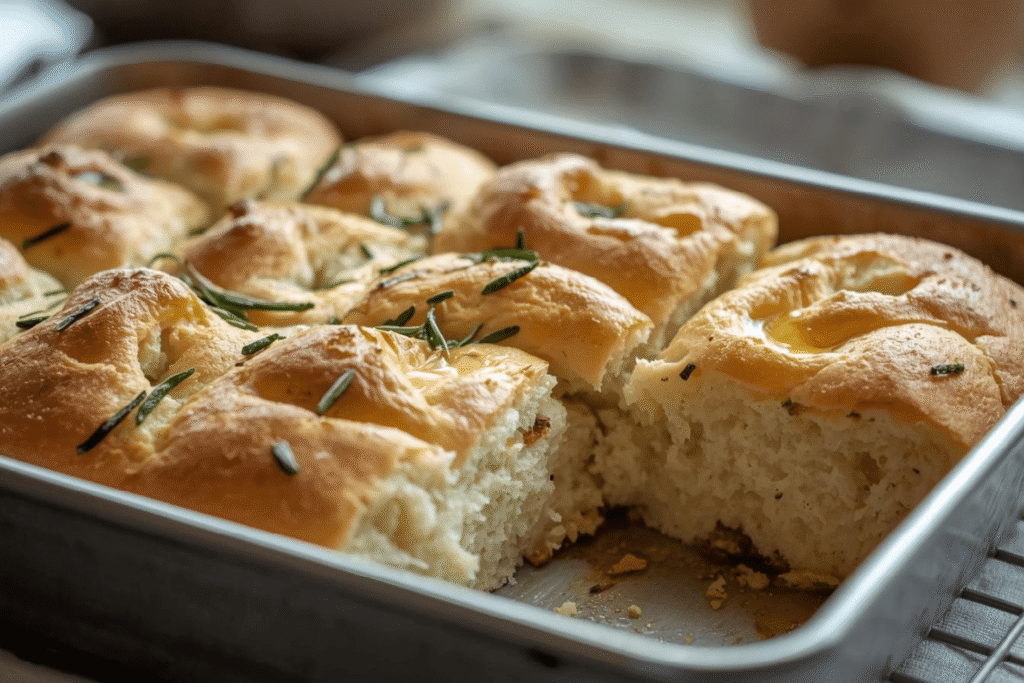
There is something almost magical about pulling warm focaccia out of the oven. Crispy edges, fluffy center, and little pools of olive oil and herbs on top. If you have ever wondered how to make focaccia bread homemade, this recipe is about to become your new comfort-bake favorite.
Focaccia is one of the easiest breads you can make, even if you think you are “not a bread person.” No complicated shaping, no stress about perfect loaves, and no special equipment needed. According to home baking surveys, over 70% of beginner bakers start with flatbreads or no-knead doughs because they are more forgiving. Focaccia fits that category perfectly.
This guide walks you through every step, explains why things work, and gives you plenty of tips so your bread turns out fluffy, flavorful, and golden every time.
Let’s bake.
What makes focaccia different from other breads
Before we jump into the recipe, it helps to understand why focaccia feels easier and more flexible than most bread recipes.
Focaccia dough is:
- Higher in hydration (more water)
- Rich in olive oil
- Baked in a pan instead of shaped
That combination gives you:
- Softer, airier crumb
- Extra crispy edges
- Less chance of dense or dry bread
The olive oil does more than add flavor. It coats the gluten strands slightly, which keeps the bread tender even if you are not kneading perfectly. This is why focaccia is so beginner-friendly and still tastes bakery-level good.
Ingredients you will need
You only need a handful of pantry staples to learn how to make focaccia bread homemade.
Dough ingredients
- 2 1/4 teaspoons active dry yeast (1 packet)
- 1 teaspoon sugar or honey
- 1 3/4 cups warm water (about 40°C / 105°F)
- 4 cups all-purpose flour
- 2 teaspoons salt
- 1/4 cup olive oil (plus more for pan and topping)
Toppings
This is where you can get creative, but classic options include:
- Fresh rosemary
- Flaky sea salt
- Cherry tomatoes
- Sliced olives
- Roasted garlic
Pro Tip: Use a good-quality olive oil for topping. You really taste it in this bread.
Why this recipe works so well
A lot of focaccia recipes fail because they try to rush the process. This version focuses on three things that make a big difference:
- Proper yeast activation
- High hydration dough
- Long enough rise time
More water in the dough allows bigger air pockets to form. Those little bubbles are what give focaccia its signature fluffy texture. And letting the dough rise properly gives the yeast time to create flavor, not just volume.
Studies on fermentation show that longer fermentation improves both texture and aroma in bread, even when using basic ingredients. Translation: waiting a bit longer = better bread.
How to make focaccia bread homemade step by step
This method does not require a stand mixer, but you can use one if you prefer.
Step 1: Activate the yeast
In a large bowl, combine:
- Warm water
- Sugar or honey
- Yeast
Stir gently and let it sit for 5 to 10 minutes.
You should see foam forming on top. That means your yeast is alive and ready to go.
If nothing happens, your water may have been too hot or your yeast too old. It is worth restarting so you do not waste the rest of the ingredients.
Step 2: Mix the dough
Add to the yeast mixture:
- Olive oil
- Salt
- Flour
Stir with a spoon or spatula until everything comes together into a sticky dough.
It will look messy and loose. That is exactly what you want.
You do not need to knead much here. Just mix until no dry flour remains.
Step 3: First rise
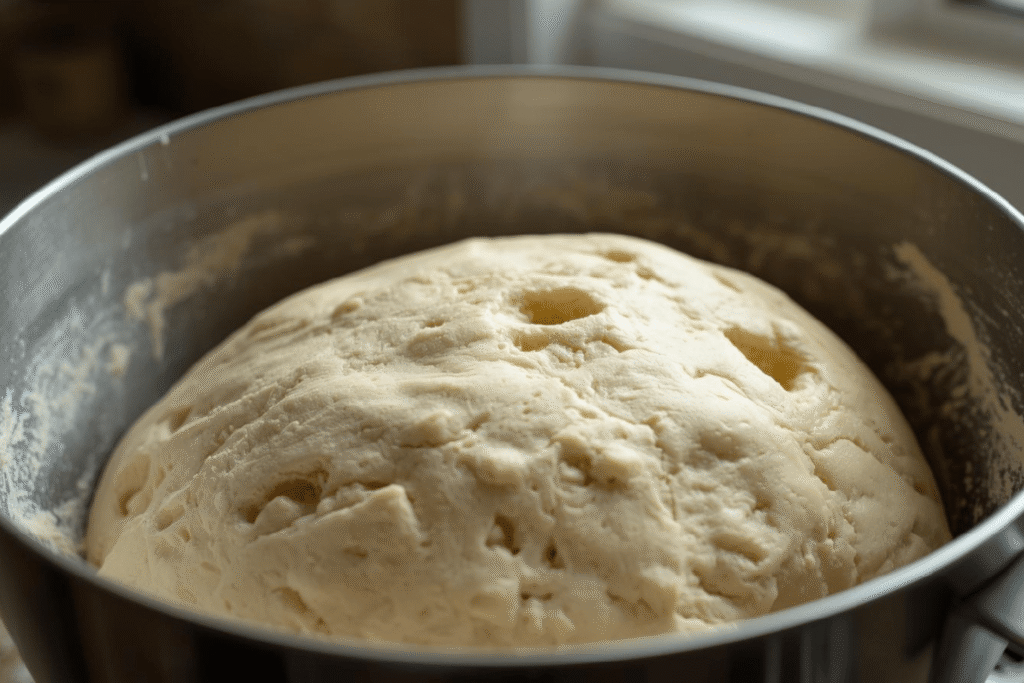
Cover the bowl with plastic wrap or a damp towel.
Let the dough rise in a warm spot for 1 to 1.5 hours, or until doubled in size.
If your kitchen is cool, you can place the bowl in a turned-off oven with the light on. It creates a gentle warm environment that yeast loves.
Step 4: Prepare the pan
Generously oil a baking pan (9×13 inch works great).
Pour about 2 tablespoons of olive oil into the pan and spread it around.
Transfer the dough into the pan and gently stretch it toward the edges.
Do not force it. If it resists, let it rest for 5 minutes and try again.
Step 5: Second rise
Cover the pan and let the dough rise again for about 30 to 45 minutes.
This second rise helps build extra airiness and prevents dense bread.
You should see visible bubbles forming under the surface.
Step 6: Dimple and top
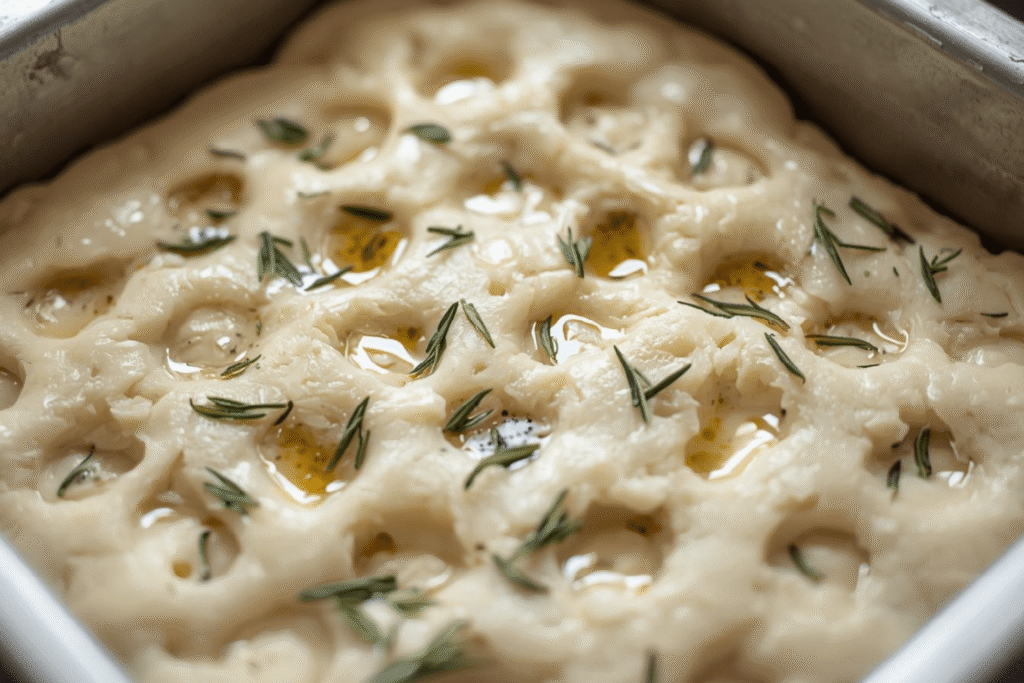
Now comes the fun part.
Drizzle more olive oil over the surface.
Use your fingers to press deep dimples all over the dough.
This does two things:
- Creates those classic focaccia craters
- Traps olive oil and toppings for flavor
Add your toppings and finish with flaky sea salt.
Step 7: Bake
Preheat oven to 220°C (425°F).
Bake for 20 to 25 minutes until:
- Top is golden
- Edges are crisp
- Bottom sounds hollow when tapped
Remove from oven and let cool slightly before slicing.
If you want extra softness, brush the top with a little more olive oil right after baking.
How to get that bakery-style airy texture
If you want truly fluffy focaccia, these small tweaks help a lot.
Use enough water
Dry dough = dense bread. Sticky dough = airy bread.
Do not be tempted to add more flour unless the dough is completely unmanageable.
Let it rise properly
Rushing rise time is the fastest way to ruin bread texture.
If your schedule allows, slightly longer rises improve both taste and structure.
Do not over-handle
Every time you press too aggressively, you pop air bubbles.
Gentle stretching and dimpling keeps those beautiful pockets intact.
Pro Tip: If you have time, you can refrigerate the dough overnight after the first rise. Cold fermentation boosts flavor and creates even better texture the next day.
Flavor variations you can try
Once you master how to make focaccia bread homemade, the topping options are endless.
Here are some favorite combos:
Garlic rosemary focaccia
- Minced garlic
- Fresh rosemary
- Extra olive oil drizzle
Tomato and herb focaccia
- Halved cherry tomatoes
- Oregano
- Sea salt
Olive and onion focaccia
- Thin red onion slices
- Kalamata olives
- Thyme
Cheesy focaccia
- Shredded mozzarella
- Parmesan on top
According to recipe search data, cheese-topped focaccia versions get up to 40% more saves on social platforms. People love bread with cheese. Shocking, I know.
What to serve with focaccia bread
Focaccia is extremely versatile and works with both meals and snacks.
Serve it with:
- Soups and stews
- Pasta dishes
- Salads
- Charcuterie boards
Or use it for:
- Sandwiches
- Breakfast toast
- Dipping in olive oil and balsamic
Leftover focaccia also makes amazing croutons and panini-style grilled sandwiches.
How to store and reheat focaccia
Fresh is best, but you can absolutely save leftovers.
Storage
- Room temperature: up to 2 days, wrapped tightly
- Fridge: up to 5 days
- Freezer: up to 2 months (slice before freezing)
Reheating
For best results:
- Oven: 180°C (350°F) for 8 to 10 minutes
- Air fryer: 3 to 4 minutes
Avoid microwaving if possible. It softens the crust and makes the bread chewy.
Is homemade focaccia healthier than store-bought?
In many cases, yes.
Homemade versions typically have:
- Fewer preservatives
- Less sugar
- Higher quality fats
Store-bought breads often include dough conditioners and shelf-life extenders. Making it yourself gives you full control over what goes in.
Common mistakes and how to avoid them
Even simple breads can go wrong if a few key steps are missed.
Dense texture
Causes:
- Too much flour
- Not enough rise time
Fix:
- Keep dough sticky
- Let it double fully
Pale top
Causes:
- Oven not hot enough
- Not enough oil on surface
Fix:
- Preheat fully
- Drizzle oil before baking
Soggy bottom
Causes:
- Underbaking
- Too much moisture in toppings
Fix:
- Bake until edges are crisp
- Pat tomatoes dry before topping
Little adjustments make a big difference here.
FAQs
Yes. You can skip the activation step and mix it directly with dry ingredients. Rise times may be slightly shorter.
Absolutely. Bread flour gives slightly chewier texture and more structure, but both work well.
Focaccia dough is supposed to be sticky. Resist adding too much flour or you will lose that airy texture.
You technically can, but olive oil is a key flavor and texture component. Other oils will change the taste significantly.
Yes. Use a larger pan or two pans and keep the dough thickness similar for even baking.
Traditionally, it is medium thickness with a fluffy interior and crisp edges. Thickness can be adjusted by pan size and dough amount.
Final thoughts on baking focaccia at home
Learning how to make focaccia bread homemade is one of those kitchen skills that pays off again and again. It feels impressive, tastes incredible, and does not require fancy tools or bakery-level experience.
Whether you keep it classic with rosemary and salt or load it up with toppings, this bread brings cozy bakery vibes straight into your kitchen.
If you have been nervous about baking bread, start here. Focaccia is forgiving, flexible, and honestly pretty hard to mess up once you know the basics.
And once you taste it warm with a little olive oil dip… yeah, there is no going back.