If you have ever googled how to make sauerkraut from cabbage and felt slightly intimidated, you are not alone. Fermentation can sound a bit science-y and mysterious, but the truth is, this is one of the simplest food traditions in the world, and people have been doing it for thousands of years with nothing more than cabbage, salt, and time.
Homemade sauerkraut is crunchy, tangy, full of gut-friendly goodness, and way cheaper than buying tiny jars at the store. Plus, there is something very satisfying about turning one humble cabbage into a jar of probiotic magic on your kitchen counter.
In this guide, I will walk you through everything step by step, with no fancy tools, no complicated techniques, and no stress. If you can slice cabbage and massage it a little, you can absolutely make this.
What is sauerkraut and why it is so good for you
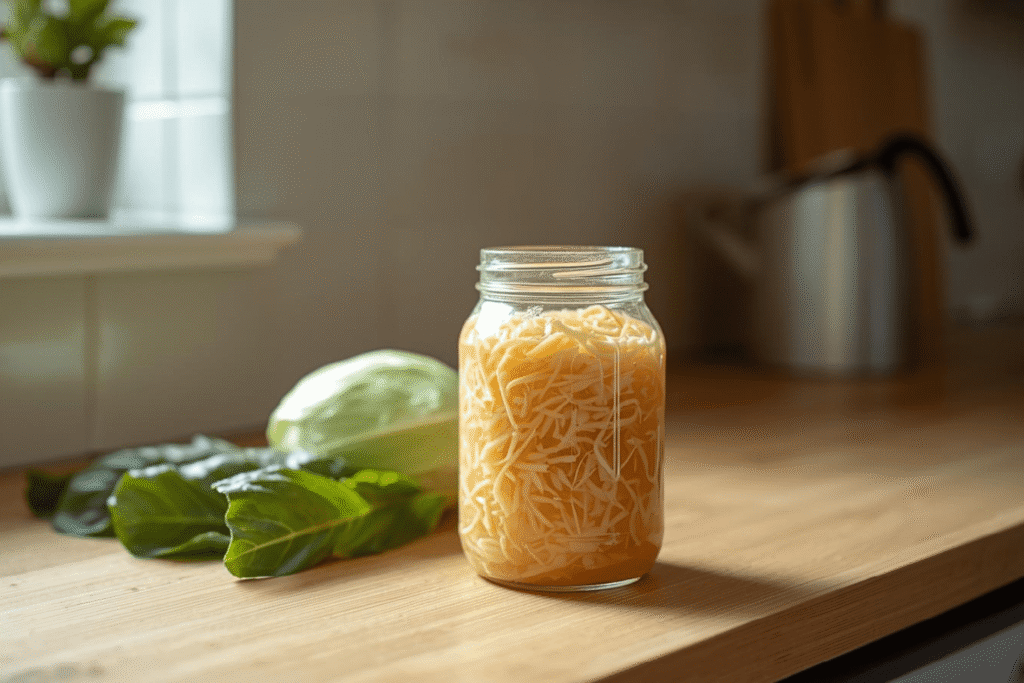
Sauerkraut is simply fermented cabbage. That is it. No vinegar, no cooking, no added cultures needed.
Fermentation and probiotics in simple terms
When you salt cabbage and pack it tightly, it releases liquid and creates an environment where good bacteria thrive and bad bacteria cannot survive. These good bacteria (mostly lactobacillus) turn the natural sugars in cabbage into lactic acid. That is what gives sauerkraut its tangy flavor and also what preserves it.
Why does this matter? Because fermented foods are linked to better digestion, improved gut health, and even immune support. Some studies suggest fermented foods can increase gut microbiome diversity in as little as 4 weeks, which is huge for overall health.
If you want to nerd out a little more, Healthline has a great overview of probiotic benefits in fermented foods.
Store-bought vs homemade sauerkraut
Not all sauerkraut is created equal. Many supermarket brands are:
- Heat-treated (which kills probiotics)
- Preserved with vinegar instead of fermentation
- Sitting on shelves instead of in the fridge
Homemade sauerkraut, on the other hand, is:
- Raw and alive with beneficial bacteria
- Free from additives
- Adjustable to your taste (more or less sour)
Pro Tip: If you ever buy sauerkraut, look for jars in the refrigerated section that say raw or unpasteurized. Shelf-stable jars usually do not contain live cultures.
What you need to make sauerkraut from cabbage
This is refreshingly simple. No special fermentation kits required.
Ingredients
- 1 medium green cabbage (about 2 to 2.5 lbs / 900 g to 1.1 kg)
- 1 to 1.5 tablespoons sea salt or kosher salt (non-iodized)
That is literally it.
Why not iodized salt? Iodine can interfere with fermentation and slow things down. Stick to plain salt for best results.
Equipment
- Large mixing bowl
- Sharp knife or mandoline
- Clean glass jar or fermentation crock
- Something to weigh the cabbage down (smaller jar, fermentation weight, or clean stone)
- Cloth or loose lid
You do not need an airlock, but if you have one, feel free to use it.
How to make sauerkraut from cabbage step by step
This is the heart of the process. Once you do it once, you will wonder why you ever thought it was complicated.
Step 1 – Prep and salt the cabbage
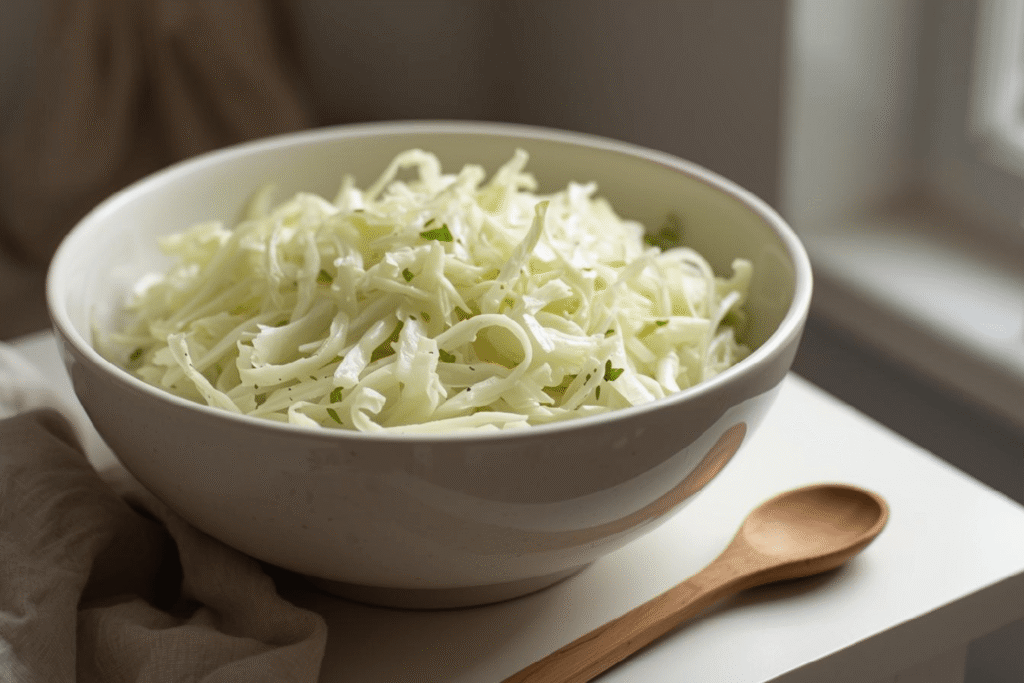
Remove the outer wilted leaves and set one aside for later. Cut the cabbage into quarters, remove the core, and slice it thinly.
Place the shredded cabbage in a large bowl and sprinkle the salt evenly over it.
At this point, it will not look like much is happening. That changes fast.
Step 2 – Massage until juicy
Now comes the fun part. Use clean hands to massage and squeeze the cabbage for about 5 to 10 minutes.
You are breaking down the cell walls so the cabbage releases its natural juices. It will go from dry and fluffy to soft and very wet.
You should end up with cabbage sitting in a pool of its own liquid. This liquid is your fermentation brine.
Pro Tip: If your hands get tired, take short breaks. You cannot really over-massage cabbage here, so do not worry about being too rough.
Step 3 – Pack into the jar
Transfer the cabbage and all the liquid into your clean jar. Press it down firmly with your fist or a spoon to remove air pockets.
The goal is to have the cabbage completely covered by liquid. This creates an oxygen-free environment that keeps bad bacteria away.
Fold the reserved cabbage leaf and place it on top to help keep the shredded cabbage submerged.
Step 4 – Keep it submerged
Place your weight on top of the cabbage leaf to keep everything below the brine.
If your cabbage is not fully covered, you can make a small amount of extra brine by dissolving 1 teaspoon salt in 1 cup water and topping it up.
Cover the jar with a cloth and rubber band or loosely screw on a lid. You want gases to escape, not build up pressure.
Step 5 – Ferment and wait
Place the jar somewhere out of direct sunlight at room temperature. Ideal temperature is around 18–22°C (65–72°F), but normal kitchen conditions usually work fine.
Check it daily to make sure the cabbage stays submerged. You may see bubbles. That is a good sign.
After a few days, it will start smelling pleasantly tangy and fresh.
How long to ferment sauerkraut and what to expect
Fermentation time is mostly about taste preference.
Flavor stages explained
Here is a general guide:
- 3–5 days: Very mild, lightly tangy, still quite crunchy
- 7–10 days: Classic sauerkraut flavor, balanced sourness
- 2–4 weeks: Stronger tang, deeper flavor, softer texture
You can start tasting after day 5. Use a clean fork each time and keep everything else submerged.
Once it tastes good to you, move it to the fridge. Cold temperatures slow fermentation way down and lock in the flavor.
Pro Tip: Write the start date on a piece of tape and stick it on the jar. It is surprisingly easy to forget how long it has been sitting there.
Common mistakes and how to avoid them
Fermentation is forgiving, but a few things can go wrong. The good news is most issues are preventable.
Mold, softness, and bad smells
Mold on the surface:
White fuzzy or green/black mold means you should discard the batch. This usually happens when cabbage is exposed to air.
Fix: Always keep cabbage submerged and use enough brine.
Soft or slimy kraut:
This can happen if the temperature is too warm or salt was too low.
Fix: Stick to the salt ratio and ferment in a cooler spot if possible.
Strong rotten smell:
Sauerkraut should smell tangy, fresh, and slightly sulfur-y, not putrid.
Fix: When in doubt, trust your nose. If it smells truly bad, toss it.
For food safety guidelines around fermentation, the CDC has helpful info on safe food preservation practices.
Flavor variations you can try once you master the basics
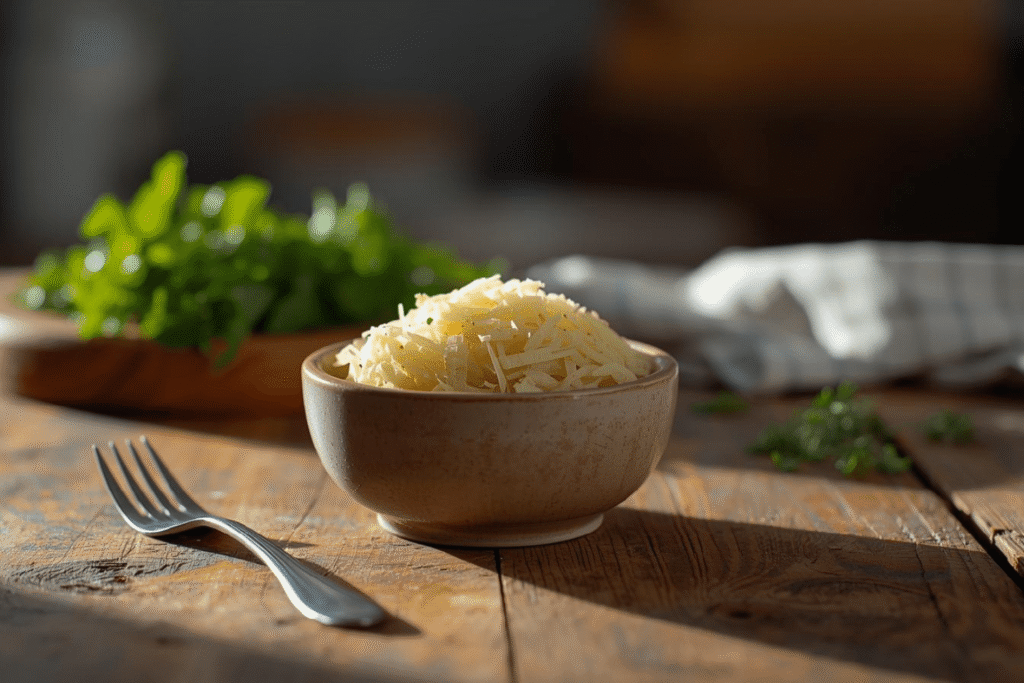
Once you know how to make sauerkraut from cabbage, you can start playing with flavors.
Add these during the massage step:
- Caraway seeds (classic and digestive-friendly)
- Juniper berries (great with pork dishes)
- Garlic and chili flakes for a spicy kick
- Shredded carrots for color and sweetness
- Ginger for a fresh, zingy note
Start small. A teaspoon or two of spices per cabbage is plenty.
Pro Tip: Try making two small jars with different flavors instead of committing a whole batch to one experiment.
How to store your sauerkraut and how long it lasts
Once refrigerated, sauerkraut can last several months, often up to 6 months or longer if kept clean and submerged.
Storage tips:
- Always use clean utensils
- Keep cabbage below brine level
- Close the lid tightly after opening
Over time, flavor will continue to develop slowly, becoming more sour and complex.
If you ever notice mold in the fridge stage, discard the batch.
How to use sauerkraut in everyday meals
Sauerkraut is not just for sausages and hot dogs, although those are still excellent choices.
Easy ways to eat it more often:
- Add to avocado toast for crunch and tang
- Toss into salads for probiotic boost
- Add to grain bowls with roasted veggies
- Mix into scrambled eggs after cooking
- Use as a topping for baked potatoes
Try not to cook it if you want probiotic benefits. High heat kills the beneficial bacteria.
Pro Tip: Add sauerkraut to hot dishes at the very end, just before serving, to keep more probiotics alive.
FAQs
Yes, absolutely. Red cabbage ferments just as well and turns a beautiful deep pink color. The flavor is slightly earthier and a bit sweeter.
A good rule of thumb is 2 percent salt by weight of cabbage. For most home cooks, 1 to 1.5 tablespoons per medium cabbage works well and keeps things simple.
You do not need full sterilization, but jars should be very clean. Hot soapy water and air-drying is enough.
You can rinse it lightly before eating or mix it with fresh cabbage in salads or bowls to mellow the flavor.
It is better to start fresh. Old brine can throw off the balance of bacteria in new fermentation and lead to inconsistent results.
When done correctly, yes. The salt and acidic environment protect against harmful bacteria. If it smells bad, shows mold, or tastes off, discard it.
Final thoughts
Learning how to make sauerkraut from cabbage is one of those kitchen skills that feels way more impressive than it actually is. It costs almost nothing, takes very little active time, and gives you a food that is both delicious and genuinely good for your body.
Once you make your first batch, it becomes second nature. Slice, salt, massage, pack, wait. That is it.
And honestly, there is something very grounding about having a jar of bubbling cabbage quietly doing its thing on your counter. It feels a little old-school, a little magical, and very satisfying.