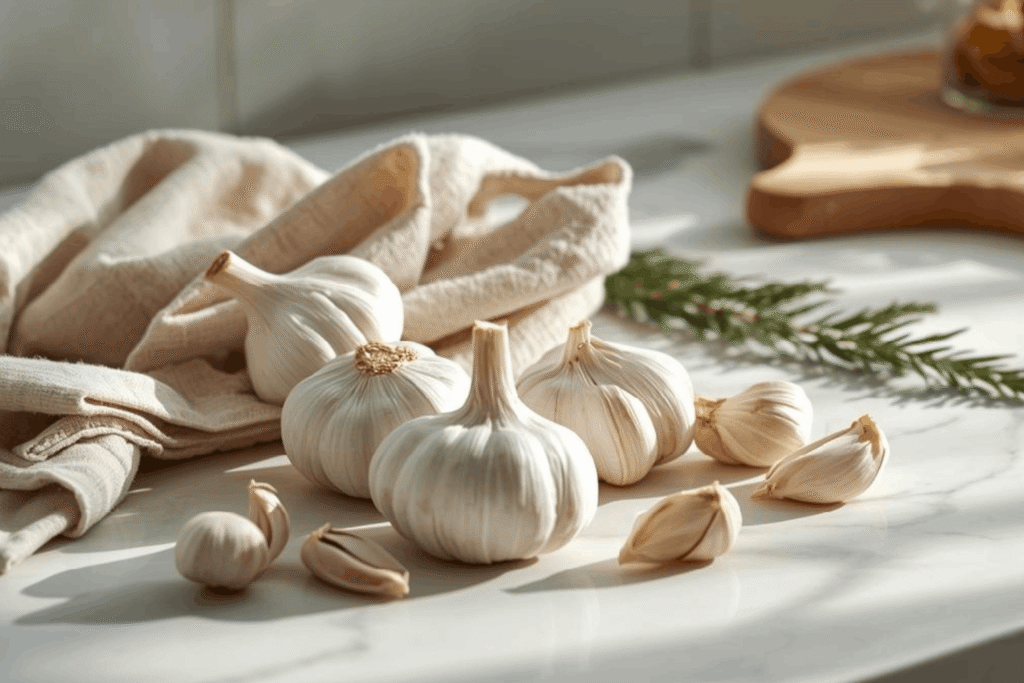
If you’ve ever bought a beautiful bulb of fresh garlic and then found half of it shriveled, sprouting, or moldy two weeks later, you’re not alone. Garlic is one of those kitchen staples we use constantly, yet it somehow manages to spoil faster than we expect.
Learning how to preserve fresh garlic properly can save you money, reduce food waste, and make weeknight cooking faster and more joyful. No more sticky cloves hiding in the back of the fridge. No more green shoots turning bitter. No more throwing out half-used bulbs.
In this guide, you’ll learn the best storage methods for whole bulbs, peeled cloves, chopped garlic, and long-term preservation techniques like freezing and oil storage. You’ll also learn what not to do so your garlic stays fresh, flavorful, and safe.
Let’s make your garlic work harder for you.
Why proper garlic storage matters more than you think
Garlic isn’t just a flavor booster. It’s also packed with allicin, a compound linked to antibacterial and immune-supporting benefits. Studies show garlic contains antioxidants that help reduce oxidative stress and inflammation.
But here’s the catch. Once garlic is damaged, chopped, or stored incorrectly, its quality drops fast.
Poor storage leads to:
- Loss of flavor intensity
- Mold growth and spoilage
- Bitter taste from sprouting
- Increased food waste
- Potential food safety risks when stored in oil improperly
According to food waste studies, the average household throws away up to 30–40% of produce annually, often due to improper storage habits. Garlic may seem small, but it adds up.
A few small storage tweaks can easily double or triple the usable life of your garlic.
How long fresh garlic actually lasts
Garlic shelf life depends on how it’s stored and whether it’s whole, peeled, or processed.
Here’s a quick overview:
- Whole bulbs stored properly – 3 to 6 months
- Individual unpeeled cloves – 3 to 4 weeks
- Peeled cloves in fridge – 7 to 10 days
- Chopped garlic in fridge – 24 to 48 hours
- Frozen garlic – 6 to 12 months
Temperature, humidity, air circulation, and light exposure all affect longevity.
Understanding these timelines helps you choose the right preservation method based on how quickly you plan to use your garlic.
How to store whole garlic bulbs correctly
This is the simplest and most important method to master.
Best environment for whole bulbs
Whole garlic prefers:
- Cool temperatures (55–65°F / 13–18°C)
- Dry air
- Good ventilation
- Darkness or low light
Ideal locations include:
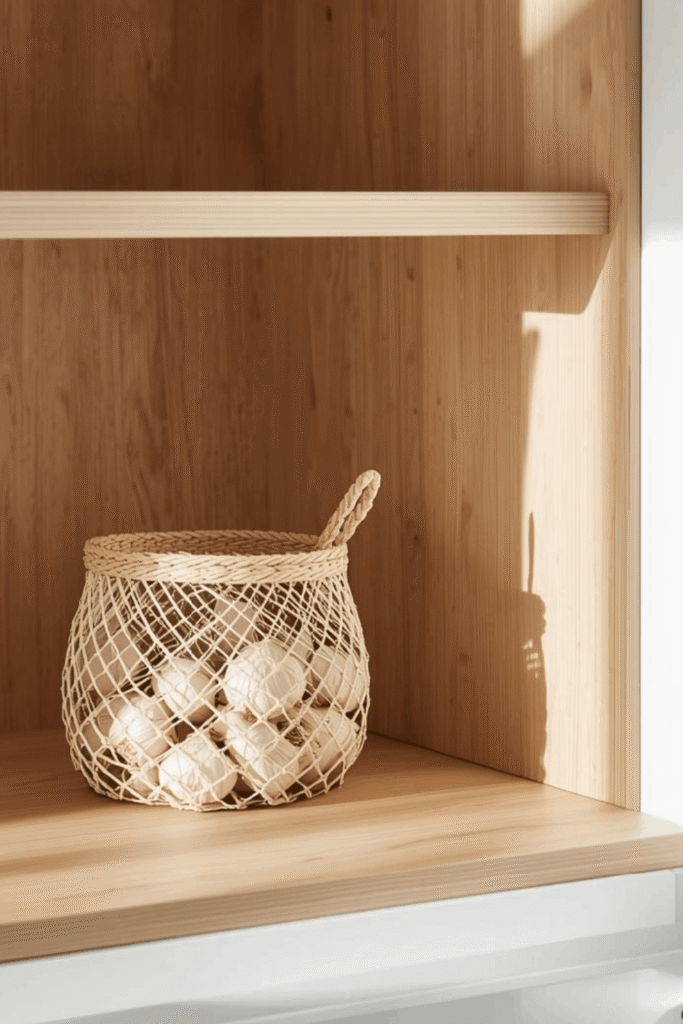
- Pantry shelves
- Mesh baskets
- Paper bags
- Wire hanging baskets
Avoid:
- Plastic bags (trap moisture)
- Refrigerators (encourage sprouting)
- Direct sunlight
- Sealed containers
Garlic needs to breathe. Trapped moisture leads to mold and premature decay.
Pro Tip: Store garlic away from onions. Onions release moisture and gases that shorten garlic’s shelf life.
How to store peeled garlic safely
Once garlic is peeled, the clock starts ticking.
Refrigerator storage method
- Place peeled cloves in a clean airtight glass container.
- Add a dry paper towel to absorb moisture.
- Seal tightly and refrigerate.
- Use within 7–10 days.
This works well if you meal prep frequently or cook multiple times per week.
What to avoid
- Leaving peeled garlic at room temperature
- Storing in water (invites bacteria)
- Keeping in loosely sealed bags
Peeled garlic absorbs odors easily, so keep it tightly sealed.
How to store chopped or minced garlic
Chopped garlic deteriorates fastest because more surface area is exposed to oxygen.
Short-term fridge method
- Store in a small airtight container.
- Drizzle lightly with olive oil to limit oxidation.
- Use within 24–48 hours.
Freezer method for longer storage
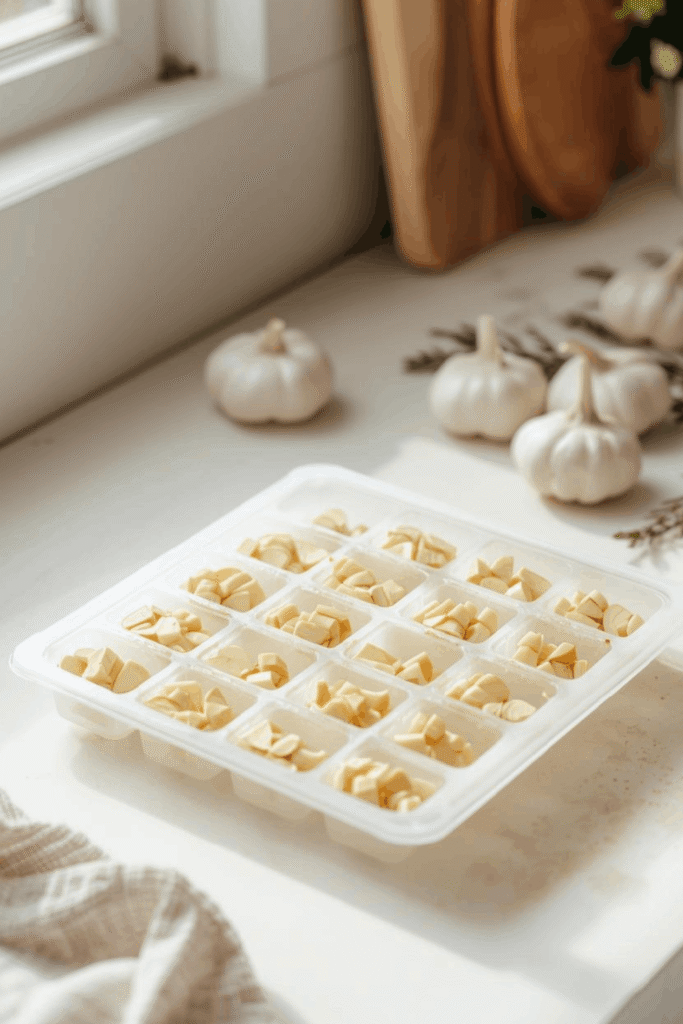
- Spoon minced garlic into ice cube trays.
- Cover lightly with oil or water.
- Freeze until solid.
- Transfer cubes into freezer bags.
Each cube equals roughly one tablespoon of garlic.
This makes weeknight cooking incredibly fast.
Pro Tip: Label freezer bags with date and quantity so you can rotate batches easily.
How to freeze fresh garlic properly
Freezing is one of the easiest long-term preservation methods.
Three freezer options
Option 1 – Freeze whole cloves
- Peel cloves.
- Place in freezer bag.
- Remove excess air.
- Freeze up to 12 months.
Best for roasting and sautéing.
Option 2 – Freeze chopped garlic
- Chop or mince garlic.
- Portion into ice cube trays.
- Freeze and store cubes.
Best for sauces and soups.
Option 3 – Freeze garlic paste
- Blend garlic with a little oil.
- Spoon into small portions.
- Freeze and store.
Best for marinades and stir-fries.
Flavor holds well, though texture softens slightly after thawing.
How to preserve garlic in oil safely
Garlic in oil is delicious but must be handled carefully.
When garlic sits in oil without oxygen, it creates an environment where botulism bacteria can grow if stored improperly.
Safe method
- Always refrigerate garlic oil immediately.
- Use within 7 days.
- Never store at room temperature.
- Use clean utensils only.
If you want longer storage, freeze garlic oil cubes instead.
For official safety guidance, the USDA provides clear food safety recommendations on garlic-in-oil storage.
How to dry garlic for long-term storage
Drying creates shelf-stable garlic flakes or powder.
Air drying method
- Peel and slice garlic thinly.
- Spread on mesh rack in dry ventilated space.
- Allow 7–14 days until fully dry.
Oven or dehydrator method
- Set temperature to 115–125°F (46–52°C).
- Dry for 6–10 hours until brittle.
Once fully dry:
- Blend into powder or store as flakes.
- Store in airtight jars away from light.
Dried garlic retains flavor for up to 1 year.
Does preserving garlic change the flavor?
One common concern when learning how to preserve fresh garlic is whether storage methods change the taste or cooking performance. The good news is that garlic stays remarkably flavorful when preserved correctly, but each method creates slightly different results in the kitchen.
Frozen garlic tends to lose a bit of its sharp bite but becomes beautifully mellow and sweet when cooked. This makes it perfect for soups, sauces, and roasted vegetables. Dried garlic concentrates flavor, which means you often need less than you would with fresh cloves. Garlic stored in oil absorbs subtle richness from the fat, making it ideal for dressings and marinades.
Texture matters too. Frozen garlic softens after thawing, so it’s better for cooked dishes rather than raw applications like salads or bruschetta. Understanding these differences helps you choose the right preservation method for how you actually cook, not just what lasts the longest.
Signs your garlic has gone bad
Knowing when to toss garlic prevents unpleasant flavors and health risks.
Discard garlic if you see:
- Mold (blue, green, black fuzz)
- Soft mushy texture
- Sour or chemical smell
- Excessive sprouting with bitterness
- Sticky residue
If in doubt, throw it out.
Fresh garlic should smell clean and sharp, never musty or sour.
Common garlic storage mistakes
Avoid these common traps.
Refrigerating whole bulbs
Encourages sprouting and moisture buildup.
Storing in plastic
Traps humidity and accelerates mold growth.
Keeping near heat sources
Heat dries cloves prematurely and reduces flavor.
Leaving chopped garlic uncovered
Oxidizes rapidly and absorbs fridge odors.
Storing garlic oil at room temperature
Unsafe and risky.
How to choose garlic that lasts longer
Preservation starts at the store.
Look for:
- Tight papery skins
- Firm heavy bulbs
- No soft spots
- No green shoots
- No mold
Farmers market garlic often lasts longer due to freshness.
Creative ways to use preserved garlic
Preserved garlic saves time and sparks creativity.
Ideas:
- Garlic butter cubes
- Herb compound oils
- Frozen stir-fry starter packs
- Soup base prep
- Roasted garlic spreads
- Salad dressing flavor boosters
Batch prep once, cook faster all week.
Pro tips for maximizing garlic freshness
Pro Tip: Keep a small breathable garlic basket in your pantry instead of hiding bulbs in cabinets.
Pro Tip: Rotate garlic monthly so older bulbs get used first.
Pro Tip: Freeze garlic in tablespoon portions for effortless cooking.
Pro Tip: Store peeled garlic on the top fridge shelf where temperature stays consistent.
Pro Tip: Keep garlic dry at all times. Moisture is the enemy.
FAQs
Freezing peeled cloves or chopped garlic provides the longest shelf life, up to 12 months with minimal flavor loss.
Only peeled or chopped garlic should be refrigerated. Whole bulbs should stay at room temperature in a dry ventilated space.
Yes, but only if refrigerated and used within 7 days or frozen for longer storage.
Sprouting occurs when garlic is exposed to moisture, warmth, or refrigeration. Sprouted garlic is safe to eat but may taste bitter.
You can freeze whole bulbs, but peeling beforehand saves prep time later.
Firm cloves with no mold, sour smell, or mushiness are safe to use.
Freezing preserves most nutrients and flavor, especially compared to leaving garlic to spoil.
Final thoughts
Learning how to preserve fresh garlic is one of those small kitchen upgrades that quietly improves your daily life. You waste less food, cook faster, save money, and always have bold flavor ready when inspiration hits.
Whether you store whole bulbs correctly, freeze prepped cloves, or experiment with dried garlic, the key is matching the method to how you cook.
Once you dial this in, garlic stops being a fragile ingredient and starts becoming your reliable kitchen sidekick.