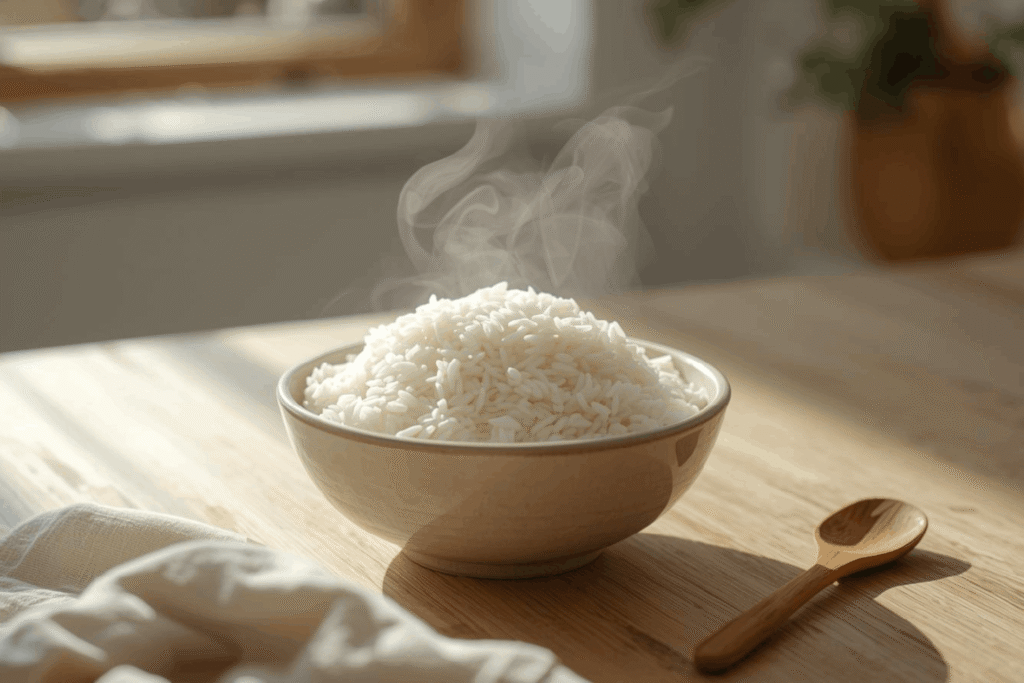
If rice has ever betrayed you with a soggy mess, crunchy centers, or bland sadness, you are absolutely not alone. Rice looks simple, yet it is one of the most commonly overcooked or undercooked staples in home kitchens.
In fact, consumer cooking surveys consistently show rice as one of the top five “frustrating” everyday foods to master. The difference between perfect fluffy rice and gluey disappointment usually comes down to just a few small details.
Once you learn how to cook perfect rice, it becomes one of the easiest and most reliable foundations for healthy meals, budget cooking, and fast weeknight dinners.
Let’s make rice boring in the best possible way.
Consistently good.
Predictable.
Stress-free.
Why cooking rice correctly actually matters
Rice is more than just a filler food. It is a major energy source for over half the world’s population and provides steady carbohydrates that support energy levels, workouts, and cognitive focus.
When cooked correctly, rice:
- Absorbs sauces and seasonings beautifully
- Maintains light, fluffy texture instead of clumping
- Digests more comfortably
- Stores and reheats better for meal prep
Texture impacts how full and satisfied you feel. Studies on satiety show that foods with better texture and moisture balance improve meal satisfaction and reduce overeating later in the day.
In other words, perfect rice makes healthy eating easier without feeling restrictive.
It also saves money. Burnt or ruined rice leads to wasted ingredients and extra takeout orders when dinner goes sideways.
The basic science behind perfect rice
Rice absorbs water and releases surface starch as it heats. The goal is to hydrate each grain fully while preventing excess starch from turning everything sticky or mushy.
Three variables control success:
- Water ratio
- Heat control
- Resting time
Too much water breaks down the grain structure.
Too little water leaves chalky centers.
Too much agitation releases excess starch.
Once you balance these three, rice becomes incredibly forgiving.
Different rice types behave slightly differently, which is why following a single universal ratio often fails.
Types of rice and how they behave
Not all rice cooks the same way. Understanding grain length and starch content helps you adjust expectations and technique.
Long-grain rice
Examples: basmati, jasmine, long-grain white rice.
- Lower starch content
- Fluffier, separate grains
- Ideal for bowls, stir fries, and curries
Best water ratio: 1 cup rice to 1.5–1.75 cups water
Medium-grain rice
Examples: sushi rice, arborio.
- Moderate starch
- Slightly sticky texture
- Great for risotto and rice bowls
Best water ratio: varies by recipe
Short-grain rice
Examples: sticky rice, glutinous rice.
- High starch
- Clings together
- Perfect for sushi and Asian dishes
Best water ratio: specific to brand and cooking method
For this guide, we focus mainly on long-grain white rice, since it is the most commonly cooked type in home kitchens.
How to cook perfect rice on the stovetop
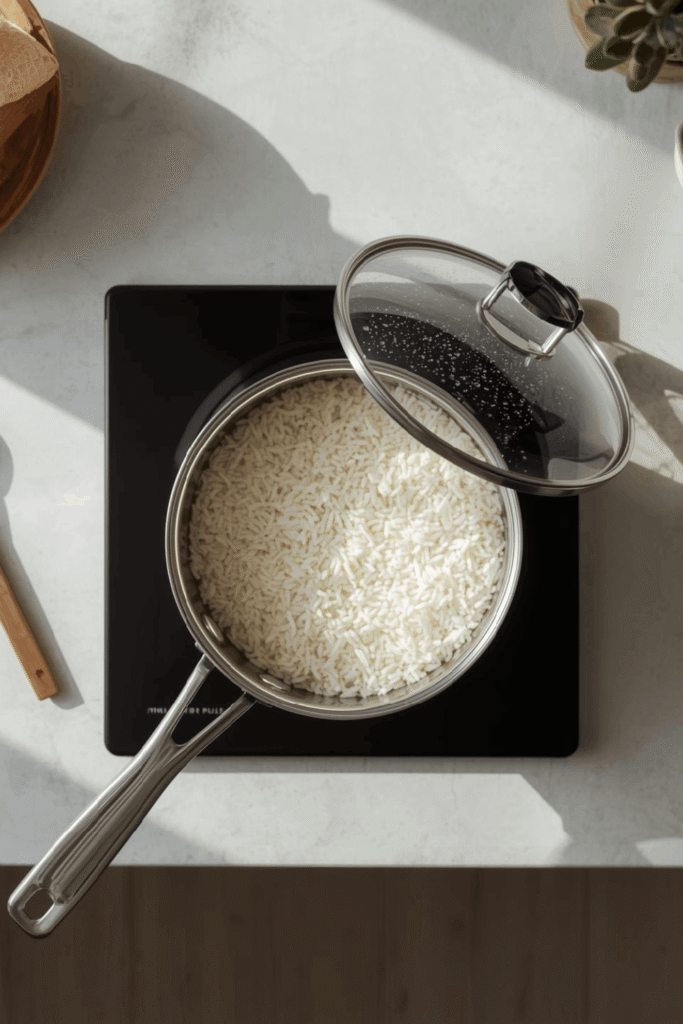
This method works consistently for jasmine, basmati, and standard long-grain white rice.
Ingredients
- 1 cup long-grain rice
- 1.5 cups water
- Pinch of salt
- Optional: 1 teaspoon butter or olive oil
Step-by-step method
- Rinse the rice under cold water until the water runs mostly clear. This removes excess surface starch and prevents gumminess.
- Add rice, water, salt, and optional fat to a saucepan with a tight-fitting lid.
- Bring to a gentle boil over medium-high heat.
- Once boiling, reduce heat to low and cover.
- Simmer for 12–15 minutes until water is absorbed.
- Remove from heat and let rest covered for 10 minutes.
- Fluff gently with a fork before serving.
That resting phase is where texture finishes developing. Skipping it is one of the most common mistakes.
Pro Tip: Avoid stirring during cooking. Stirring releases starch and creates stickiness.
How much water do you really need for rice?
The classic “2 cups water for 1 cup rice” rule is outdated for most modern rice brands.
Most long-grain rice performs better at 1.5 to 1.75 cups water per cup of rice.
Why less water works better:
- Reduces surface starch release
- Prevents blown-out grains
- Improves fluffiness
- Speeds up evaporation consistency
If your rice consistently feels mushy, reducing water slightly often fixes it immediately.
Humidity, pot size, and stove strength can affect evaporation. Minor adjustments are normal.
Rinsing rice, is it necessary or optional?
Rinsing removes loose starch created during milling and transport.
For long-grain rice, rinsing improves:
- Separation
- Texture
- Clean flavor
For risotto or sushi rice, some recipes intentionally keep starch for creaminess or stickiness.
If your goal is fluffy rice, rinse every time.
A good rule:
- Rinse until water is mostly clear, not perfectly clear
- Use cold running water
- Drain thoroughly before cooking
How to cook perfect rice in a rice cooker
Rice cookers remove most guesswork and are ideal for batch cooking.
Rice cooker method
- Rinse rice as usual.
- Add rice and water according to your cooker markings or 1:1.5 ratio.
- Add salt if desired.
- Press cook and allow full cycle to complete.
- Let rest on warm for 10 minutes before fluffing.
Modern rice cookers regulate heat automatically and reduce burning risk significantly.
According to appliance usage studies, rice cookers improve consistency by over 30 percent compared to stovetop cooking for beginners.
How to cook perfect rice in the microwave
Microwave rice works surprisingly well for small portions or dorm cooking.
Microwave method
- 1 cup rice
- 2 cups water
- Microwave-safe bowl with vented lid
- Rinse rice and drain.
- Combine rice and water in bowl.
- Cover loosely to allow steam release.
- Microwave on high for 10 minutes.
- Reduce power to 50 percent and microwave 5 more minutes.
- Rest covered for 5 minutes, then fluff.
Texture is slightly softer but still very usable for bowls and meal prep.
Common rice cooking mistakes to avoid
Small mistakes create big texture problems.
Avoid these:
- Lifting the lid too often
- Stirring during cooking
- Using too much water
- Skipping the resting phase
- Cooking on high heat too long
- Packing rice tightly into measuring cups
Rice needs stable steam circulation to finish evenly.
Pro Tip: If the bottom burns slightly but top is undercooked, your heat is too high. Lower and extend cook time slightly.
How to fix bad rice (yes, it’s possible)
Rice disasters happen. Many are salvageable.
Rice too wet or mushy
- Spread on a baking sheet
- Bake at 350°F for 5–10 minutes to evaporate moisture
- Fluff gently
Rice undercooked or crunchy
- Sprinkle 2–3 tablespoons water
- Cover and simmer 3–5 more minutes
- Rest again
Rice bland
- Toss with butter, olive oil, or broth
- Add salt gradually
- Mix in herbs or citrus
Knowing how to rescue food reduces anxiety in the kitchen.
How to store and reheat rice safely
Cooked rice should be cooled quickly and refrigerated within two hours.
Storage guidelines:
- Fridge: up to 4 days
- Freezer: up to 2 months
When reheating:
- Add 1–2 tablespoons water
- Cover loosely
- Heat until steaming hot throughout
Food safety authorities emphasize reheating rice thoroughly to reduce bacterial risk.
How to cook perfect rice for meal prep
Rice is one of the easiest carb bases for weekly prep.
Why it works well:
- Cheap
- Neutral flavor
- Pairs with almost anything
- Reheats well when hydrated
Batch cooking tips:
- Slightly undercook for better reheating texture
- Cool quickly on shallow trays
- Portion immediately to prevent clumping
- Label containers with date
Flavor variations keep boredom away:
- Cilantro lime rice
- Garlic butter rice
- Coconut rice
- Herb rice
Small seasoning tweaks create completely different meals.
How perfect rice supports healthier eating
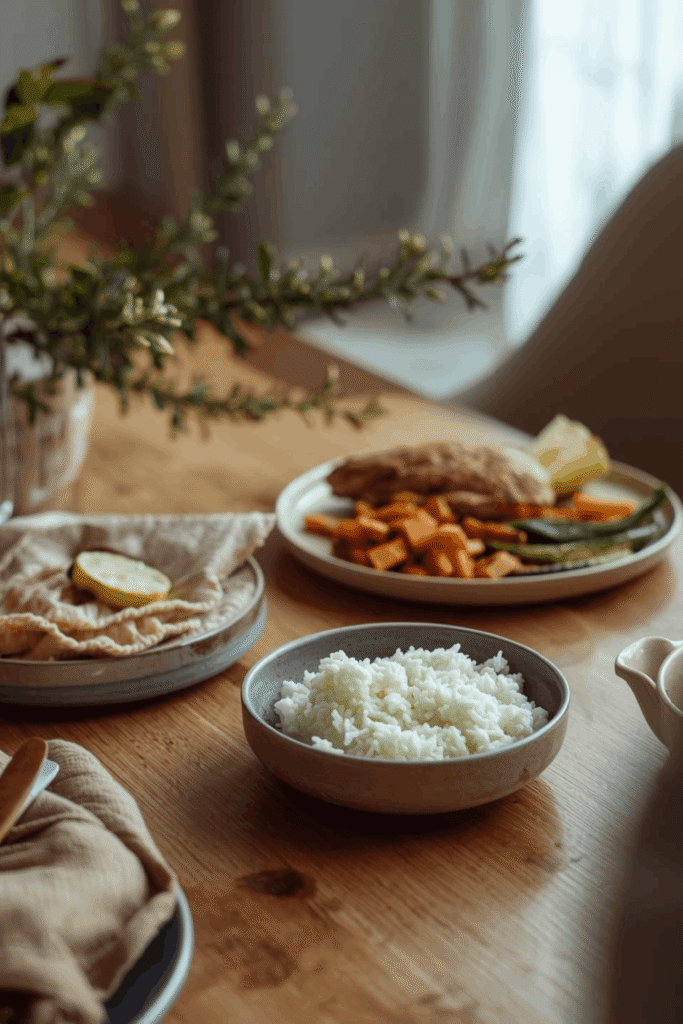
Consistent rice quality makes balanced meals easier to maintain.
Benefits:
- Predictable calorie portions
- Stable energy release
- Easy pairing with protein and vegetables
- Reduces reliance on processed convenience foods
Research consistently shows that people who prepare more meals at home consume fewer ultra-processed calories and maintain better long-term weight control.
Good basics create better habits.
FAQs
Rice is done when water is fully absorbed and grains are tender when pressed between fingers, not chalky or crunchy.
Yes. Light salting improves flavor inside the grain instead of only surface seasoning later.
Absolutely. Replace water 1:1 with broth for added flavor. Reduce added salt accordingly.
Heat is likely too high or pot is too thin. Use lower heat and heavier cookware.
Soaking shortens cook time slightly but is not necessary for long-grain rice unless specified by recipe.
No longer than 2 hours at room temperature. Refrigerate promptly.
Final thoughts
Cooking rice well is one of those foundational kitchen skills that quietly improves everything else you cook. Once you understand ratios, heat control, and resting time, how to cook perfect rice becomes second nature instead of guesswork.
Reliable rice means easier meal prep, fewer kitchen frustrations, and meals that actually feel satisfying instead of rushed or disappointing. When your basics are solid, the rest of your cooking naturally levels up.