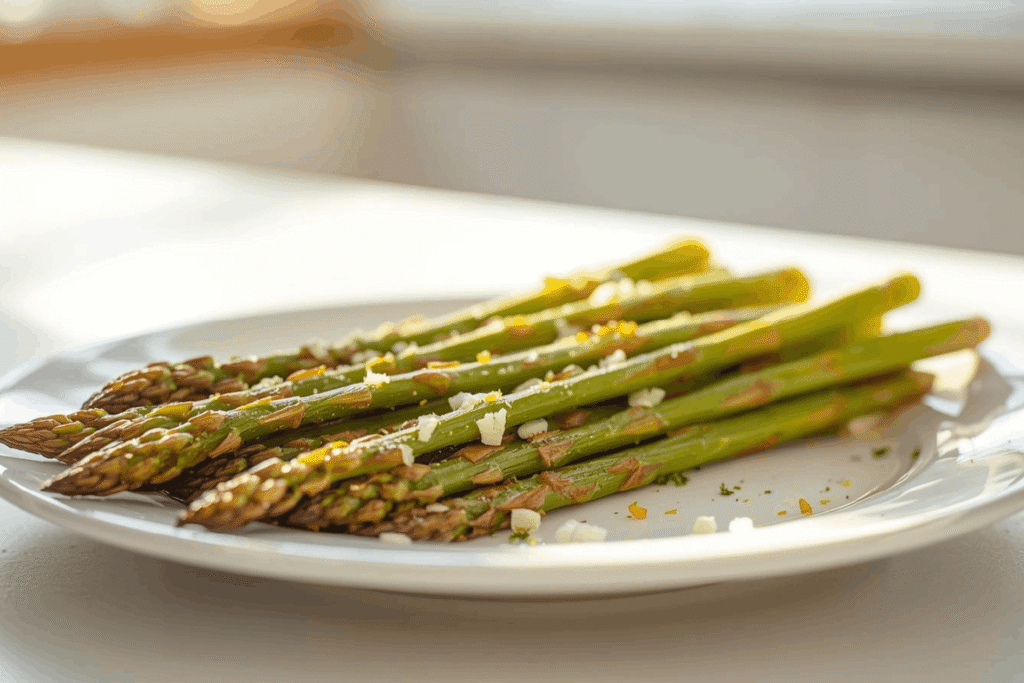
If you’ve ever pulled limp, soggy asparagus out of the oven and wondered where you went wrong, you’re not alone. Asparagus is delicate, cooks fast, and reacts dramatically to heat and moisture.
The good news? Once you understand a few simple principles, learning how to bake asparagus in the oven becomes one of the easiest ways to make a delicious, healthy side dish that actually tastes exciting.
Oven-baked asparagus delivers crispy edges, tender centers, and deep roasted flavor without complicated prep. It’s perfect for weeknight dinners, meal prep, brunch spreads, or impressing guests with minimal effort.
Even better, asparagus is naturally low in calories and high in fiber, folate, and vitamin K. One cup contains roughly 27 calories and 2.8g of fiber, making it a smart choice for balanced eating and weight management.
Let’s walk through the exact method, plus tips, flavor ideas, and mistakes to avoid so your asparagus comes out perfect every time.
Why baking asparagus in the oven works so well
Roasting uses dry heat, which helps remove surface moisture and caramelize natural sugars.
That caramelization is what gives you those lightly browned tips and nutty flavor notes that steaming or microwaving simply can’t match.
High heat also keeps the inside tender while crisping the outside. This texture contrast is what makes roasted vegetables feel satisfying instead of boring.
There’s also a practical bonus. Oven baking lets you cook large batches at once with almost zero hands-on time. Perfect if you’re juggling work, workouts, or family life.
Pro Tip: According to food science research, vegetables roasted at higher temperatures retain more flavor compounds than those cooked slowly at low heat. Faster cooking = better taste.
Ingredients you’ll need
You only need a few basics to master how to bake asparagus in the oven.
Core ingredients
- Fresh asparagus spears
- Olive oil or avocado oil
- Salt
- Black pepper
Optional flavor boosters
- Garlic powder or minced garlic
- Lemon zest or juice
- Parmesan cheese
- Chili flakes
- Balsamic glaze
Choose medium-thick spears if possible. Very thin spears cook too fast and can burn, while super thick ones may need extra time.
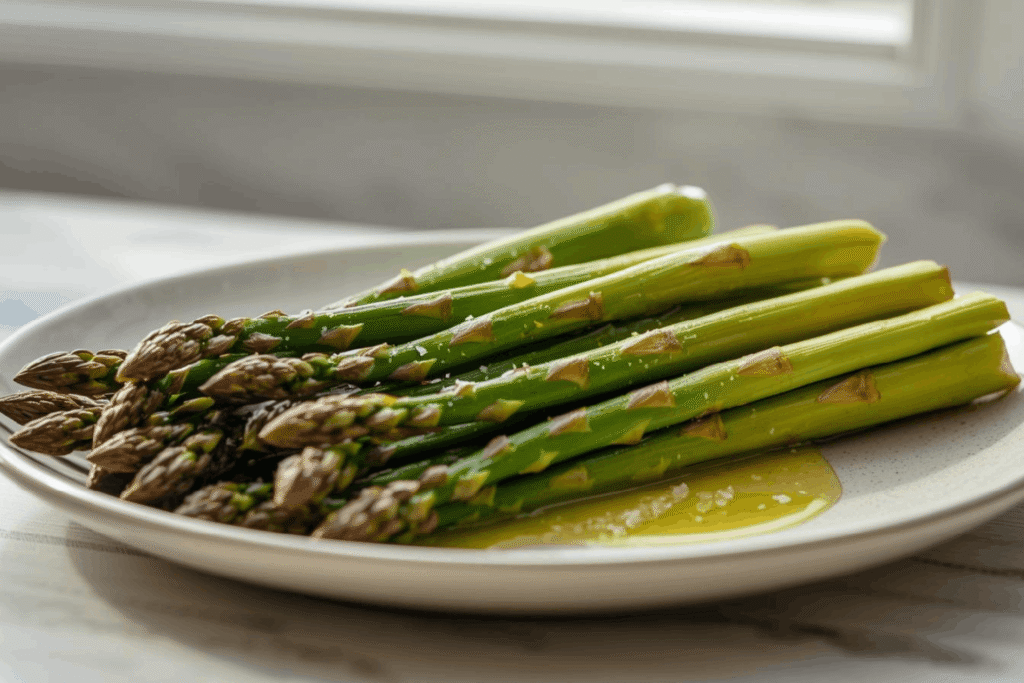
Fresh asparagus should feel firm, snap cleanly at the ends, and have tightly closed tips.
How to prepare asparagus for baking
Good prep sets you up for success.
Step 1: Wash and dry thoroughly
Rinse under cold water to remove grit.
Pat completely dry with a towel. Moisture prevents browning and causes steaming instead of roasting.
Step 2: Trim the woody ends
Hold one spear and gently bend it until it snaps. That natural breaking point removes the tough section.
Line the rest of the spears up and trim them to match.
Step 3: Preheat your oven
Set your oven to 425°F (220°C).
This high temperature gives you crispy edges without drying out the interior.
Serious Eats recommends roasting vegetables at high heat to maximize browning and flavor development.
How to bake asparagus in the oven step by step
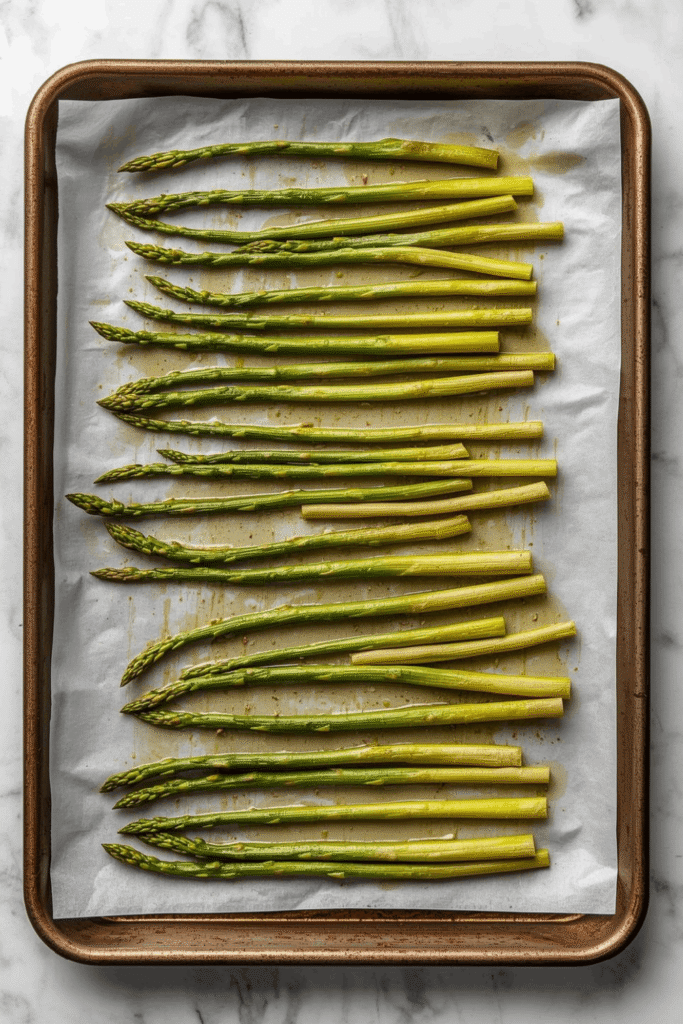
This is the core method you’ll use again and again.
Step 1: Arrange on a baking sheet
Spread asparagus in a single layer on a lined baking sheet.
Avoid crowding. If spears overlap, they’ll steam instead of roast.
Use two trays if needed.
Step 2: Season generously
Drizzle with oil. About 1 to 1.5 tablespoons per pound works well.
Sprinkle salt and pepper evenly.
Toss gently with your hands or tongs until every spear is lightly coated.
Step 3: Roast
Place the tray on the middle rack.
Bake for 12–18 minutes, depending on thickness.
Halfway through, flip or shake the pan for even browning.
Step 4: Finish and serve
Remove when tips are lightly browned and stems are fork-tender.
Add optional toppings like lemon juice, Parmesan, or chili flakes.
Serve immediately for best texture.
How long to bake asparagus in the oven by thickness
Thickness changes everything when roasting vegetables.
Use this quick guide:
- Thin spears: 10–12 minutes
- Medium spears: 12–15 minutes
- Thick spears: 15–18 minutes
Always check at the lower end first. Overcooked asparagus turns mushy fast.
Pro Tip: The tips cook faster than the stems. If your spears vary in size, place thicker ones toward the outer edges of the pan where heat is slightly higher.
Best temperature for oven baked asparagus
425°F (220°C) is the sweet spot.
Lower temperatures like 375°F produce softer texture and less browning. Higher than 450°F increases burning risk before the interior softens.
High heat gives you:
- Better caramelization
- Faster cook time
- Brighter flavor
- Less sogginess
If your oven runs hot, drop to 400°F and add 2–3 minutes.
How to make crispy baked asparagus
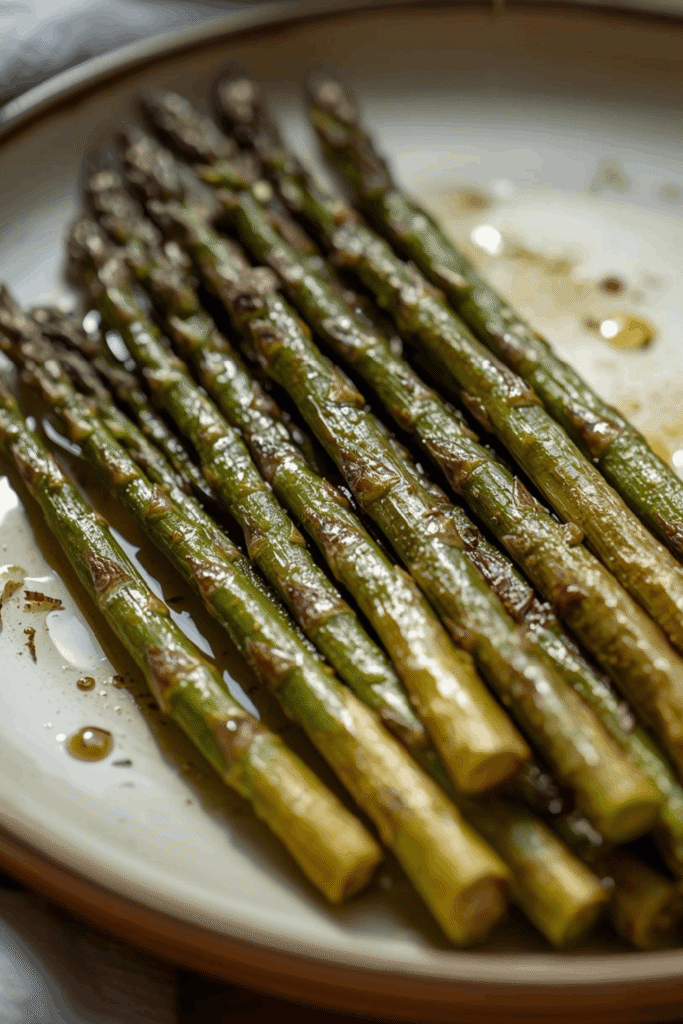
If crispiness is your goal, a few tweaks make a big difference.
Use enough oil
Oil conducts heat and promotes browning. Too little oil leads to dryness without crisp.
Space the spears out
Crowding traps steam.
Use convection if available
Convection circulates hot air and speeds up browning.
Finish with a broil burst
Optional: Broil for 1–2 minutes at the end for extra char.
Just keep a close eye to prevent burning.
Flavor variations to keep things exciting
Once you master the base method, flavor swaps keep your meals interesting.
Lemon garlic asparagus
Add minced garlic halfway through baking.
Finish with fresh lemon juice and zest.
Bright, fresh, and perfect with fish or chicken.
Parmesan roasted asparagus
Sprinkle finely grated Parmesan during the last 3 minutes of baking.
Let it melt and lightly crisp.
Savory and comforting.
Spicy honey asparagus
Drizzle with chili flakes before baking.
Finish with a light drizzle of honey.
Sweet heat balance that works beautifully for entertaining.
Balsamic glaze asparagus
Roast normally.
Finish with balsamic glaze drizzle.
Adds tang and depth without extra prep.
Nutrition benefits of baked asparagus
Asparagus is a nutritional powerhouse for its calorie count.
Per cup cooked, asparagus provides:
- Over 50% of daily vitamin K needs
- High folate for energy and cell health
- Fiber for digestion
- Antioxidants that support immune function
Harvard Health notes that fiber intake supports gut health and helps regulate blood sugar.
Because oven baking uses minimal oil, calories stay controlled while flavor stays high.
It’s ideal for anyone balancing health goals with busy schedules.
Common mistakes when baking asparagus
Avoid these and your results improve instantly.
Overcrowding the pan
Leads to steaming and soggy texture.
Skipping drying step
Wet asparagus won’t brown properly.
Underseasoning
Vegetables need salt to bring out natural sweetness.
Overbaking
Even 2 extra minutes can push asparagus into mushy territory.
Using dull baking sheets
Dark or warped pans heat unevenly and cause burning.
How to store and reheat baked asparagus
Roasted asparagus keeps well if stored properly.
Storage
Let cool completely.
Store in an airtight container in the fridge for up to 3–4 days.
Reheating
Best method: Reheat in oven or air fryer at 375°F for 5–7 minutes.
Microwave works but softens texture.
Pro Tip: Leftover asparagus is fantastic chopped into omelets, grain bowls, or salads.
Can you bake frozen asparagus in the oven?
Yes, but texture will differ slightly.
Frozen asparagus contains more moisture, so crispiness is harder to achieve.
How to bake frozen asparagus
- Do not thaw first
- Preheat oven to 425°F
- Spread frozen spears in a single layer
- Add oil and seasoning
- Roast 18–25 minutes, flipping halfway
Expect softer centers and less browning, but still tasty and convenient.
How to make baked asparagus for meal prep
Oven baked asparagus is a meal prep hero.
Batch cooking tips
- Roast two trays at once
- Slightly undercook so reheating doesn’t overcook
- Store portions in glass containers
Easy pairings
- Grilled chicken or salmon
- Quinoa bowls
- Pasta dishes
- Breakfast eggs
Prepping once saves multiple weeknight decisions.
How to bake asparagus in the oven for special diets
This recipe adapts easily to most dietary needs.
Vegan
Naturally vegan using olive oil and herbs.
Gluten-free
Asparagus contains no gluten.
Low-carb / keto
Extremely low carb and high fiber.
Dairy-free
Skip cheese toppings.
This flexibility makes it a reliable staple no matter your eating style.
FAQs
Asparagus is done when the tips are lightly browned and the stems pierce easily with a fork but still hold their shape.
Yes. Parchment prevents sticking and easier cleanup. Foil works but can increase browning faster.
If spears are very thick and fibrous, peeling the lower third improves tenderness.
Yes. Bake slightly underdone and reheat briefly in the oven before serving.
Olive oil, avocado oil, or grapeseed oil all work well due to higher smoke points.
Most often from overcrowding the pan or not drying the spears thoroughly before baking.
Final thoughts
Learning how to bake asparagus in the oven gives you a fast, reliable way to add color, nutrition, and flavor to almost any meal.
With just a hot oven, a little oil, and smart spacing, you’ll get crisp edges, tender centers, and endless flavor flexibility. Once this becomes part of your weekly rotation, you’ll wonder how you ever settled for bland vegetables.