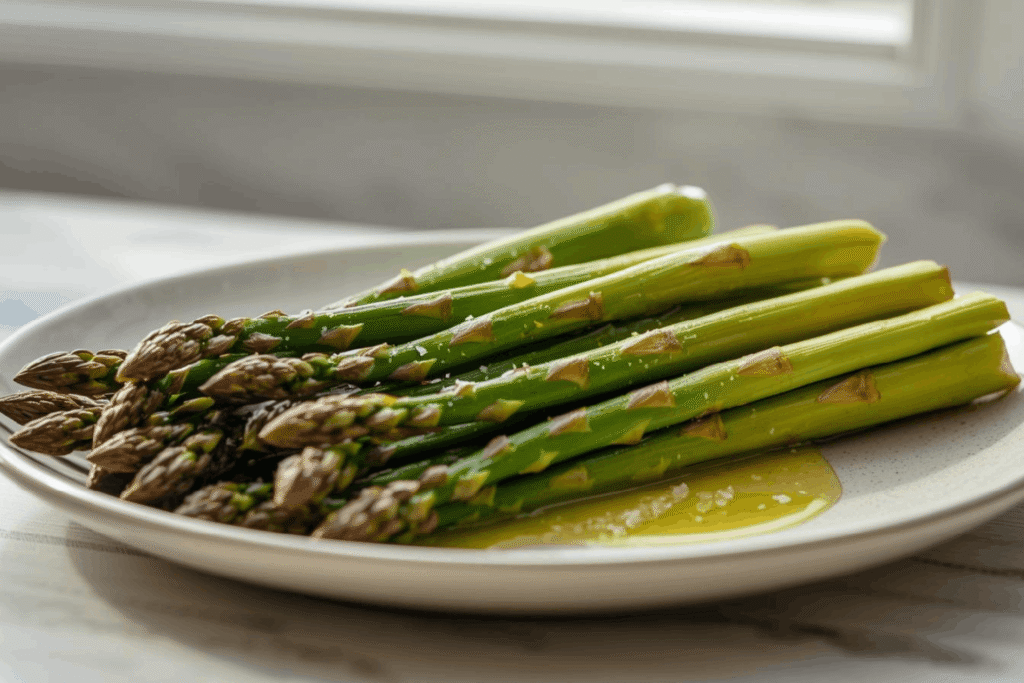
If you’ve ever pulled asparagus out of the oven too early and found it crunchy, or left it in a little too long and ended up with limp green noodles, you already know the struggle.
Asparagus walks a fine line between tender-crisp perfection and mushy disappointment. And when you’re cooking after a long day, guessing the timing isn’t exactly relaxing.
That’s why understanding exactly how long to bake asparagus in oven makes such a difference. Once you dial in the timing based on thickness, temperature, and pan setup, this veggie becomes one of the easiest and most reliable sides you can make.
As a bonus, asparagus is nutrient dense without being calorie heavy. One cup of cooked asparagus contains roughly 27 calories, 2.8g of fiber, and more than half your daily vitamin K needs. That’s a lot of payoff for something that takes under 20 minutes to cook.
Let’s break down timing, temperature, texture cues, and common mistakes so your asparagus comes out golden, flavorful, and satisfying every time.
Why baking time matters more than you think
Asparagus cooks faster than most vegetables because it has:
- High water content
- Thin cellular structure
- Delicate tips that brown quickly
A difference of just 2–3 minutes can completely change the texture.
Undercooked asparagus stays fibrous and squeaky when you bite it. Overcooked asparagus releases too much moisture and collapses into softness with dull flavor.
Roasting at the correct time lets natural sugars caramelize while keeping the inside tender. That’s where the slightly nutty, savory flavor comes from.
Pro Tip: High-heat roasting preserves more aroma compounds than low-heat slow cooking. Faster roasting = better flavor development.
The ideal oven temperature for baking asparagus
Before timing matters, temperature comes first.
The sweet spot for roasting asparagus is 425°F (220°C).
This temperature:
- Encourages browning without burning
- Evaporates surface moisture quickly
- Keeps the interior juicy
- Shortens cooking time
Lower temperatures like 375°F often produce softer, less flavorful asparagus. Higher than 450°F increases burning risk before the stems soften.
If your oven runs hot, use 400°F and add 2–3 extra minutes.
Serious Eats recommends high-heat roasting for optimal vegetable caramelization and texture.
How long to bake asparagus in oven by thickness
Thickness determines timing more than anything else.
Use this guide as your baseline.
Thin asparagus (pencil thin)
- Bake time: 9–12 minutes
- Texture: Lightly crisp, very tender
- Best for: Salads, quick sides, delicate plating
Thin spears cook extremely fast and can burn easily at the tips.
Medium asparagus (most grocery store bunches)
- Bake time: 12–15 minutes
- Texture: Tender with lightly crisp edges
- Best for: Everyday dinners, meal prep
This is the most forgiving size and easiest to control.
Thick asparagus (jumbo spears)
- Bake time: 15–18 minutes
- Texture: Meaty and hearty
- Best for: Roasting with proteins, bold flavors
Consider peeling the bottom third for extra tenderness.
Pro Tip: If your bundle contains mixed thickness, place thicker spears around the outer edges of the pan where heat is slightly stronger.
How pan spacing affects baking time
Crowding changes everything.
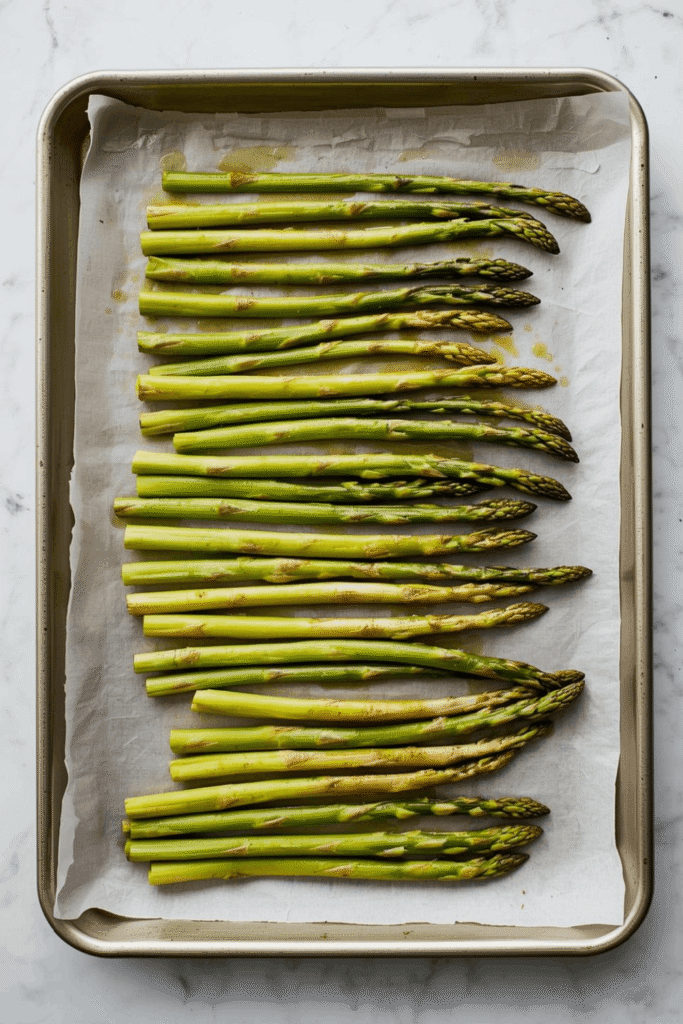
When asparagus spears touch or overlap, moisture gets trapped and creates steam instead of roast heat. This slows browning and extends cook time.
Proper spacing:
- Promotes crisp edges
- Prevents sogginess
- Keeps timing predictable
If needed, use two baking sheets instead of forcing everything onto one.
How oil amount influences bake time and texture
Oil helps transfer heat and encourages browning.
Too little oil:
- Slows caramelization
- Dries the surface
- Creates dull flavor
Too much oil:
- Can cause greasiness
- Slows evaporation
Aim for 1–1.5 tablespoons of oil per pound of asparagus.
Olive oil, avocado oil, and grapeseed oil all work well.
How long to bake asparagus in oven at different temperatures
If you’re adjusting temperature, adjust time accordingly.
375°F (190°C)
- 18–25 minutes
- Softer texture, less browning
400°F (205°C)
- 14–18 minutes
- Balanced browning
425°F (220°C)
- 12–15 minutes
- Ideal crisp-tender balance
450°F (230°C)
- 10–12 minutes
- Fast browning, higher burn risk
Higher heat works best when you can monitor closely.
How to tell when asparagus is perfectly baked
Forget strict timers. Learn the visual and tactile cues.
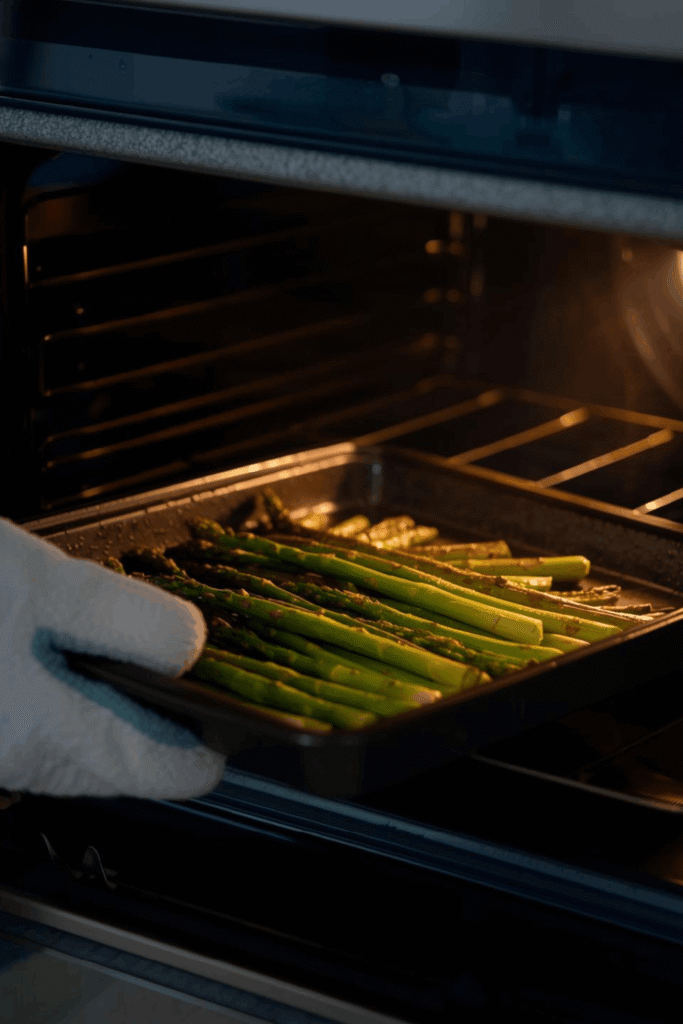
Perfectly baked asparagus should have:
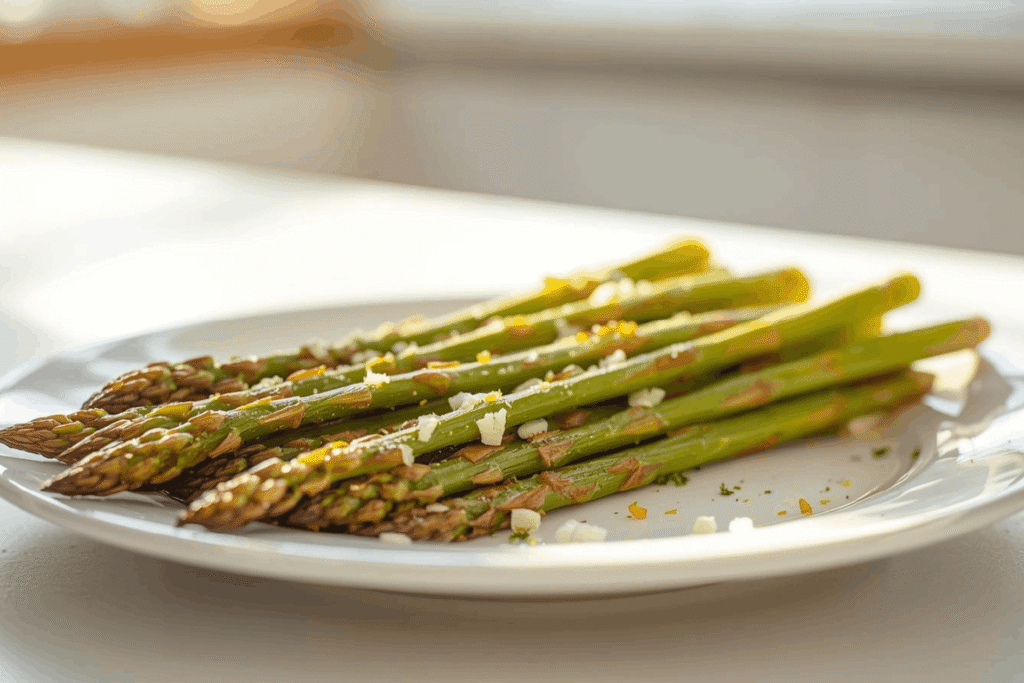
- Light golden or brown tips
- Slight blistering on the skin
- Bright green color (not dull olive)
- Fork slides in easily but spears still hold shape
When you bite, you want a gentle snap followed by tenderness, not crunch or mush.
Pro Tip: The tips brown first. If they’re golden but stems still feel firm, give it another 1–2 minutes.
Step by step baking timing method
Here’s a foolproof timing workflow.
Step 1: Preheat fully
Let oven reach full temperature before baking. Partial preheat alters timing.
Step 2: Prep asparagus
Wash, dry thoroughly, trim woody ends.
Drying is critical for accurate timing.
Step 3: Season and space
Oil, salt, pepper. Spread in single layer.
Step 4: Start checking early
Check at minimum time based on thickness.
Flip or shake pan halfway.
Step 5: Final doneness check
Use fork test and visual browning.
Remove immediately once done.
How frozen asparagus changes baking time
Frozen asparagus contains more moisture and ice crystals.
Expect:
- Longer bake time
- Less crisp texture
- Softer interior
Frozen asparagus timing at 425°F (220°C)
- 18–25 minutes, flipping halfway
Do not thaw beforehand or moisture increases further.
Still delicious for quick meals and meal prep.
How altitude and oven type affect bake time
Small variables can impact timing.
Convection ovens
- Reduce time by 10–15%
- Air circulation speeds browning
High altitude
- Slightly longer bake time due to moisture evaporation differences
Dark baking sheets
- Brown faster
- Monitor closely
Knowing your equipment helps dial consistency.
How long to bake asparagus in oven for meal prep
Meal prep benefits from slightly underbaking.
Aim for:
- 1–2 minutes less than full doneness
This prevents mush when reheating later.
Store in airtight containers up to 4 days.
Reheat in oven or air fryer for best texture.
Nutrition benefits of oven baked asparagus
Asparagus delivers impressive nutrition for minimal calories.
Per cup cooked:
- 27 calories
- 2.8g fiber
- High folate
- Strong antioxidant content
Harvard Health highlights fiber’s role in digestive health and blood sugar regulation.
Roasting preserves nutrients better than boiling, which leaches water-soluble vitamins.
That makes oven baking a smart balance of flavor and nutrition.
Flavor additions that don’t change timing
You can upgrade flavor without altering bake time.
Try:
- Lemon zest or juice
- Garlic powder
- Chili flakes
- Parmesan (add final 2–3 minutes)
- Balsamic glaze drizzle after baking
Small touches keep this side dish exciting week after week.
Common timing mistakes to avoid
Overcrowding the pan
Extends cooking time and causes steaming.
Starting in a cold oven
Creates uneven cooking and soggy texture.
Not drying asparagus
Moisture delays browning.
Walking away too long
Asparagus overcooks quickly.
Relying only on timers
Always confirm visually.
How long to bake asparagus in oven for different dishes
Different uses benefit from slightly different textures.
Salads and bowls
- Slightly firmer: 10–12 minutes
Dinner sides
- Classic tender-crisp: 12–15 minutes
Pasta or casseroles
- Fully tender: 14–18 minutes
Match texture to how you’ll serve it.
How seasoning timing affects bake time and texture
When you season asparagus isn’t just about flavor. It actually impacts how long it takes to bake and how crispy the final result feels.
Salt draws moisture to the surface. If you salt too early and let the asparagus sit for several minutes before baking, that moisture can slow browning and slightly increase bake time. You may notice softer texture instead of crisp edges.
That doesn’t mean you should avoid salt. It simply means timing matters.
For best results:
- Toss asparagus with oil first
- Add salt and pepper immediately before placing on the tray
- Get it into the oven while the surface is still dry
This keeps evaporation fast and caramelization strong.
Garlic behaves similarly. Fresh minced garlic can burn quickly at high heat, especially during longer bake times. If you love garlic flavor but want perfect timing control, use garlic powder before baking and finish with fresh garlic or garlic oil afterward.
Cheese also impacts timing. Parmesan melts and browns quickly, so adding it during the final 2–3 minutes prevents burning while still giving you that salty, crispy finish.
Pro Tip: If you’re experimenting with bold toppings, keep your base asparagus timing consistent first. Once you nail doneness, layer flavors afterward so timing stays predictable.
This small adjustment improves texture consistency without adding complexity, exactly what busy weeknight cooking needs.
FAQs
Most medium asparagus bakes in 12–15 minutes at 425°F.
Yes. Expect 14–18 minutes depending on thickness.
Likely due to overcrowding, excess moisture, or too much oil.
Yes. Flipping halfway improves even browning.
Yes, but foil browns faster and may require closer monitoring.
Place thicker ends toward hotter pan edges and monitor during final minutes.
Final thoughts
Once you understand exactly how long to bake asparagus in oven, this vegetable becomes one of the easiest wins in your kitchen. Timing based on thickness, temperature, and spacing gives you reliable results without stress. Add a hot oven, smart oil use, and simple seasoning, and you’ll get consistent crispy-tender asparagus every single time.