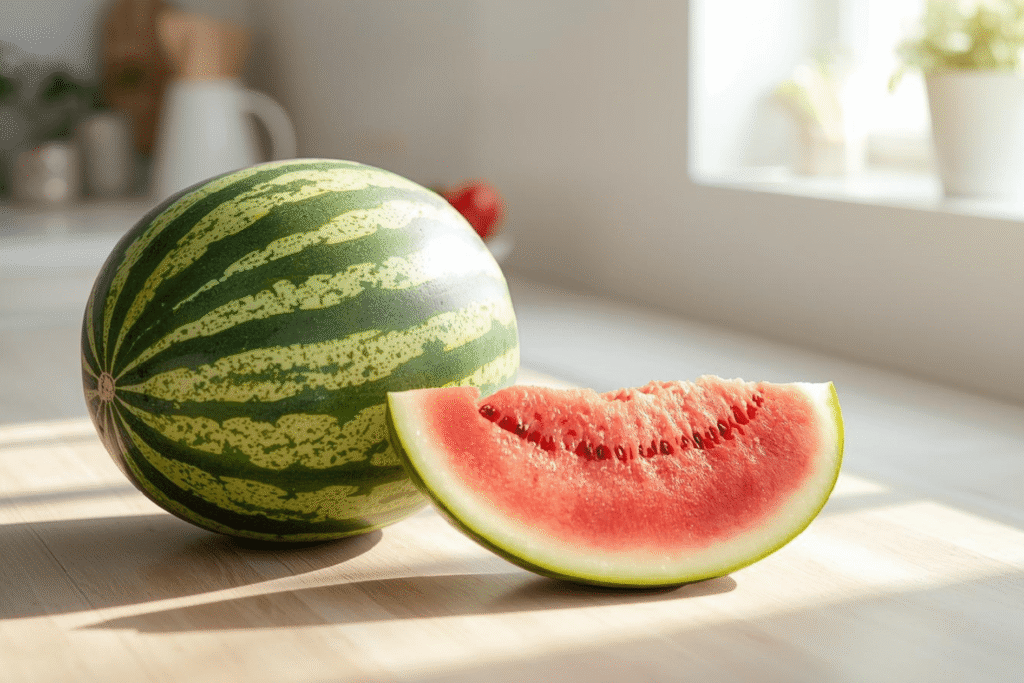
If you have ever cut into a watermelon that looked perfect but tasted bland, you are not alone. According to consumer surveys, nearly 1 in 3 shoppers say they are disappointed by at least one watermelon they buy each summer. That is a lot of sad fruit salads.
The good news is that choosing a sweet, juicy watermelon is not random. There are clear signs that tell you whether a watermelon is likely to be crisp, ripe, and full of flavor.
In this guide, you will learn exactly how to choose a good watermelon using simple visual and touch-based checks you can do right in the store or at the market. No cutting, no guessing, and no awkward knocking rituals that make you feel like you are testing doors in a horror movie.
By the end, you will know what to look for, what to ignore, and how to avoid the most common watermelon mistakes.
Pro Tip: The best watermelon is not always the biggest one. Sweetness is about ripeness and growing conditions, not just size.
Why picking the right watermelon actually matters
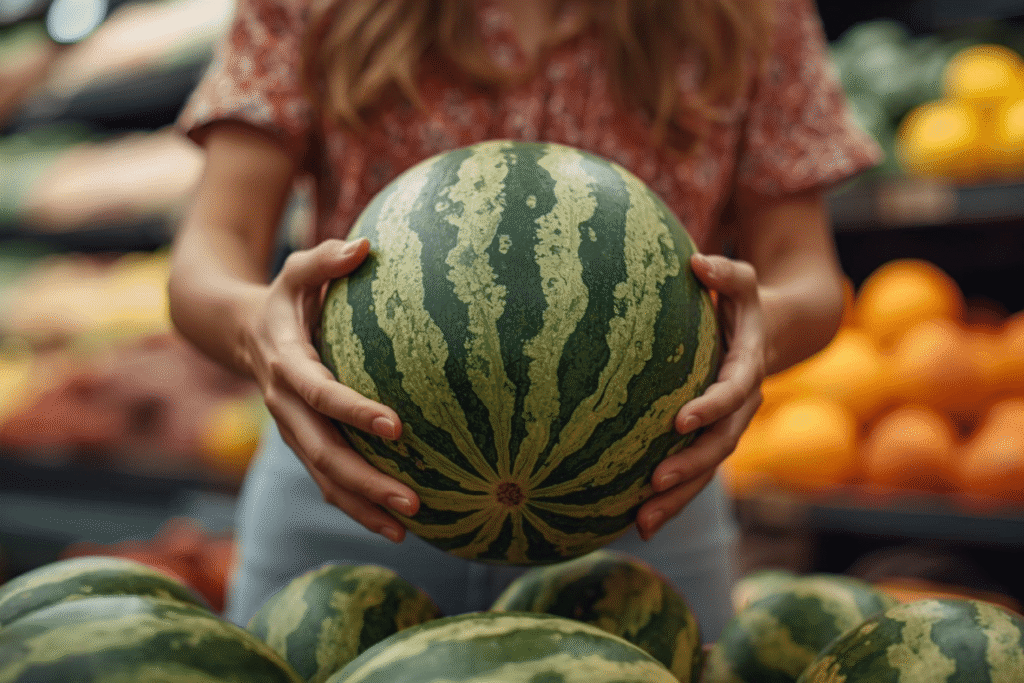
Watermelons do not continue to ripen after they are picked. Once they leave the vine, their sugar levels are locked in. That means you cannot fix an underripe watermelon by letting it sit on your counter.
Watermelons are about 90 percent water, so when the sugar content is low, the flavor feels flat and watery. A ripe watermelon, on the other hand, can reach 12 to 14 percent natural sugar, which is why good ones taste candy-sweet without any added sugar.
Beyond flavor, texture matters too. A good watermelon should be:
- Firm and crisp
- Juicy without being mushy
- Bright red or deep pink inside
Choosing the right one saves you money, prevents food waste, and makes everything from salads to smoothies taste better.
And honestly, nothing kills a summer mood faster than slicing into a disappointing watermelon.
Check the field spot first
The field spot is the creamy patch on the watermelon where it rested on the ground while growing. This is one of the most reliable signs of ripeness.
If a watermelon did not have enough time to mature on the vine, that spot will be pale or almost white. A ripe one will have a rich yellow or even orange-toned spot.
What color should the field spot be
Look for these colors:
- Deep yellow or golden – best choice
- Light yellow – acceptable but not ideal
- White or very pale – likely underripe
The darker the yellow, the longer the watermelon had to develop sugars in the sun.
Pro Tip: If you are choosing between two similar-looking melons, always pick the one with the darker field spot.
Look for a symmetrical shape
A good watermelon should look fairly even and balanced. Odd bumps, dents, or lopsided shapes can mean uneven growing conditions, which may affect texture and sweetness.
You want a watermelon that is:
- Round or oval
- Even on all sides
- Free from soft spots or major dents
Misshapen melons are not always bad, but they are more likely to have inconsistent texture inside. That can mean some parts are juicy while others are dry or grainy.
Symmetry usually means the watermelon received steady water and sunlight, which supports even sugar development.
Pick it up and feel the weight
This step is simple and surprisingly effective.
A ripe watermelon should feel heavy for its size. That weight comes from high water content, which usually goes hand in hand with juiciness.
When comparing similar-sized melons:
- Pick up two or three
- Choose the one that feels heaviest
A lighter watermelon may be dried out inside or harvested too early.
This is also why small to medium watermelons can sometimes taste better than giant ones. Bigger does not always mean juicier or sweeter.
Pro Tip: If lifting feels awkward, tilt the watermelon in your hands. You can still feel which one has more density without fully lifting it.
Find the webbing and scars
Those brown, rough patches that look like scars are often called webbing or sugar scars. While they may not look pretty, they can be a good sign.
Webbing is thought to be linked to pollination. More pollination can lead to better fruit development and higher sugar levels.
Look for:
- Rough brown patches
- Slightly raised, corky textures
Avoid melons with: - Soft or wet-looking marks
- Mold or sunken spots
While webbing is not a guarantee of sweetness, many experienced shoppers swear by it as a helpful bonus sign when combined with other indicators.
Check the stripes and overall color
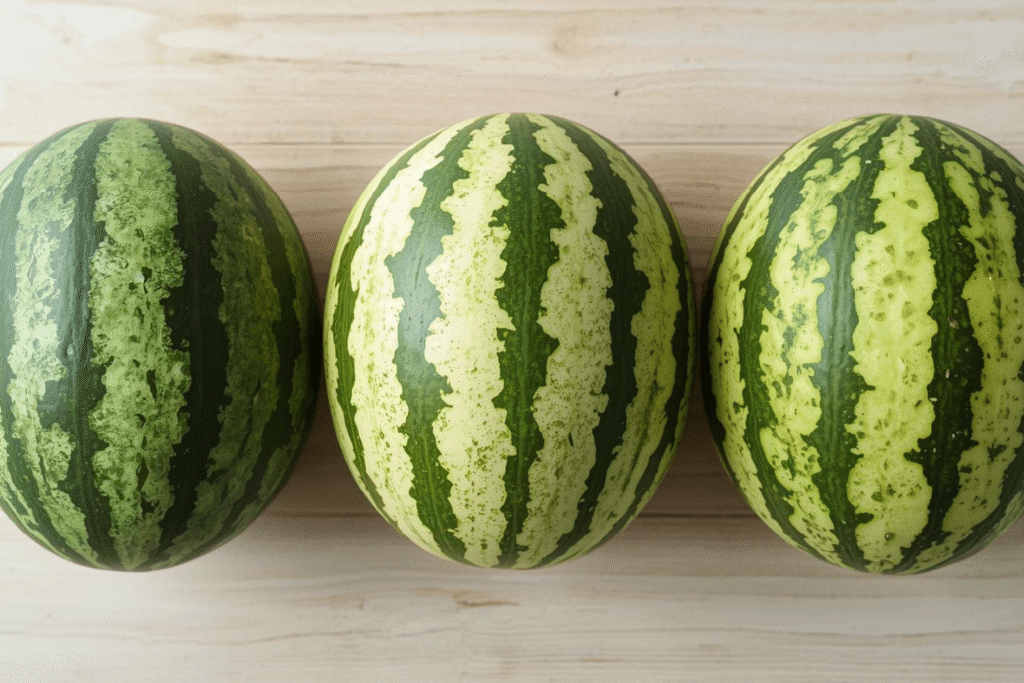
Color contrast matters more than you might think.
A good watermelon should have:
- Dark green stripes
- Light green areas that are creamy, not pale
If the whole watermelon looks shiny or very light, it may be underripe.
Dull skin is usually better than glossy skin. Glossiness can mean the fruit was picked too early.
Also check that the stripes are clearly defined. Fuzzy or blurry striping can indicate poor maturity.
Pro Tip: Step back and look at the watermelon from a little distance. Good contrast is easier to spot when you are not inches away from it.
Tap test, does it really work
Yes, tapping can help, but only if you know what you are listening for.
Gently knock on the watermelon and listen:
- A deep, hollow sound is what you want
- A dull or flat sound can mean it is overripe or watery
The hollow sound suggests firm flesh and high water content.
That said, tapping should be used as a supporting check, not your only test. It works best when combined with field spot color, weight, and shape.
If you feel awkward tapping melons in public, you are not alone. Just remember, everyone else in the produce aisle is silently judging their own fruit too.
What about the stem and sugar spot
If the watermelon still has a stem attached, take a look at it.
- Dry, brown stem – good sign of maturity
- Green stem – may have been picked too early
Not all store-bought watermelons have stems, so this is not always an option.
Some people also talk about a sugar spot, which looks like a darker patch or crack. These can happen when sugar leaks through the rind during growth.
They are not always present, but if you see one along with good field spot color and weight, it can be a nice extra hint of sweetness.
Common watermelon myths you can ignore
There are a few tips that sound convincing but are not very reliable.
Here are some you can safely stop stressing about:
- Male vs female watermelon belly buttons: there is no scientific proof that this affects sweetness
- Perfect roundness alone: shape matters, but it is not enough by itself
- Shaking the watermelon: movement does not reliably indicate ripeness
Stick to signs that relate directly to how the watermelon grew and matured, not viral internet tricks.
According to agricultural studies, sugar accumulation is mainly influenced by sun exposure, time on the vine, and water balance, not external shape quirks alone.
How to choose a good watermelon at the store vs farmers market
Where you shop can change how much information you have to work with.
Grocery store tips
At supermarkets, your best tools are visual checks and weight.
Focus on:
- Field spot color
- Weight for size
- Stripe contrast
Also check the bottom of the display bin. Sometimes heavier and better-quality melons sink to the lower layers because fewer people want to lift them.
If pre-cut watermelon is available, look at the color: - Deep red or dark pink is best
- Pale pink usually means bland
Avoid pieces with lots of white streaks or watery pooling in the container.
Farmers market tips
Farmers markets give you one major advantage, you can ask questions.
Ask things like:
- When were these harvested?
- What variety is this?
- Are these from local fields or shipped in?
Local watermelons often spend less time in transit, which means they are harvested closer to peak ripeness.
Some popular sweet varieties include: - Sugar Baby
- Crimson Sweet
- Jubilee
If the farmer offers samples, always say yes. That is the ultimate test.
Pro Tip: Build a relationship with one or two produce vendors. They will often tell you exactly which melons are best that week.
How to tell if a watermelon is bad after cutting
Even when you pick well, storage matters.
Once you cut into the watermelon, check for:
- Slimy or sticky texture
- Sour or fermented smell
- Large white or yellow streaks through the flesh
Fresh watermelon should smell clean and slightly sweet. Any strong or odd odor means it is time to toss it.
For storage: - Whole watermelon can sit at room temperature for about 7 days
- Cut watermelon should be refrigerated and eaten within 3 to 4 days
Store cut pieces in airtight containers to keep them crisp and prevent odor absorption from the fridge.
FAQs
You cannot know for sure, but the best indicators are a deep yellow field spot, heavy weight for its size, strong stripe contrast, and dull skin. When these signs line up, your chances of sweetness are much higher.
Not necessarily. Bigger watermelons can be watery if they grew too fast. Medium-sized melons with strong ripeness signs often have better flavor and texture.
No. Watermelons do not continue to ripen after harvest. Letting them sit will not increase sweetness, only soften the texture over time.
It can help identify firmness and water content, but it should be used together with visual and weight checks. On its own, it is not very reliable.
Not at all. Many seedless varieties are bred specifically for sweetness and consistent texture. Sugar levels depend more on growing conditions than seed presence.
Peak season is usually May through September, depending on where you live. During peak season, melons are more likely to be harvested at full maturity, which improves flavor.
Final thoughts
Learning how to choose a good watermelon is one of those small life skills that pays off all summer long.
Once you know what to look for, you stop guessing and start picking with confidence. That means fewer disappointing slices and more sweet, juicy, refreshing bowls of fruit that actually taste like summer.