If you’ve ever opened a box of strawberries and spotted tiny specks of dirt or that first sign of fuzz, you know the frustration. Strawberries are one of the most delicate fruits you can buy, and they tend to spoil faster than almost anything else in your fridge.
Learning how to clean strawberries with vinegar is genuinely life changing when it comes to saving money, reducing waste, and keeping your fruit fresher for longer. Most people don’t realize that strawberries are among the top five most pesticide contaminated fruits, according to the Environmental Working Group, which makes proper cleaning even more important.
Using a vinegar wash helps you:
- Remove dirt and bacteria
- Reduce pesticide residue
- Extend shelf life by up to 1 week
- Keep berries plump and fresh rather than mushy
Most households throw away 15 to 20 percent of their fresh produce because it spoils too quickly. With strawberries being one of the most expensive berries, keeping them fresh is a win for your budget and your kitchen.
What you need to clean strawberries with vinegar
This method is incredibly simple, yet so effective. You only need three ingredients and a bowl.
Ingredients
- Fresh strawberries
- White vinegar
- Cold water
Tools
- A large bowl
- A strainer or colander
- Paper towels or a clean kitchen towel
- An airtight container (optional for storage)
Why vinegar is so effective
Vinegar contains acetic acid, which naturally breaks down bacteria and mold spores. You’re not just rinsing the berries, you’re actually sanitizing them in a gentle way that doesn’t affect flavor.
The best part is that vinegar is safe, natural, and leaves zero aftertaste when used correctly.
How the vinegar cleaning method works
Before we jump into the step by step process, it helps to know exactly what vinegar does.
Strawberries grow close to the ground, which means they’re exposed to:
- Soil
- Dust
- Insects
- Fertilizer residue
When you soak strawberries in a vinegar solution, the acidic environment helps detach dirt and neutralize surface contaminants. It also slows down mold growth, which is the number one reason strawberries spoil quickly.
This method works better than rinsing under running water because water alone doesn’t break down bacteria or mold spores.
The easiest method for how to clean strawberries with vinegar
This is the most reliable method and the one food safety experts often recommend. It’s fast, gentle, and incredibly effective at removing dirt, bacteria, and mold spores without damaging the fruit. The best part is how much longer your strawberries stay fresh. Many people notice an extra 5 to 7 days of shelf life simply by using this method.
Step by step instructions
- Make your vinegar mixture
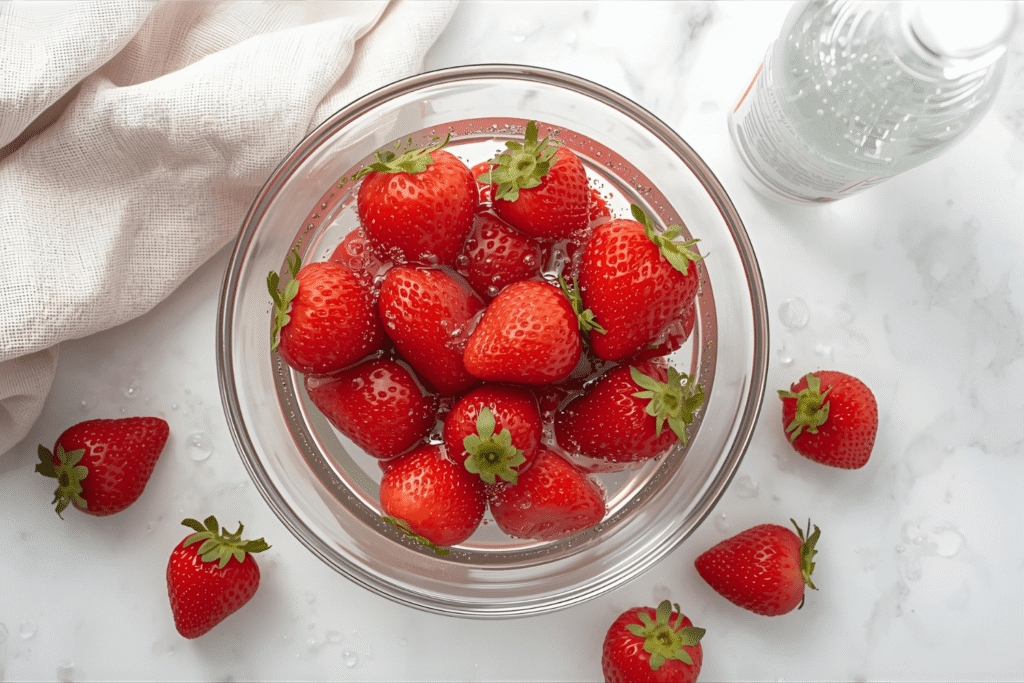
Start by filling a large bowl with 3 cups of cold water. Add 1 cup of white distilled vinegar and gently stir the mixture.
This creates the ideal 1 to 3 ratio, which has been shown to remove surface contaminants without softening the fruit or leaving behind any noticeable smell.
Using cold water also helps keep the strawberries firm, since warm or hot water can cause them to lose their crisp texture. - Add your strawberries
Place your strawberries into the bowl one handful at a time. Adding them gradually prevents splashing and keeps delicate berries from getting bruised.
Try to make sure the berries are fully submerged. If the bowl is crowded, split the batch into two washes. Proper circulation lets the vinegar mixture reach every strawberry, even the ones with hidden dirt around the leaves. - Soak for 5 to 10 minutes
Let the berries sit in the vinegar mixture for about 5 to 10 minutes, depending on how dirty they are.
The vinegar immediately begins breaking down bacteria, softening debris, and neutralizing mold spores.
As the soaking continues, you may notice tiny specks floating in the water. These can be dust, residual soil, or natural plant debris that the vinegar helps lift away.
If you’re cleaning organic strawberries, you may even spot tiny insects that are almost impossible to remove with water alone. - Rinse thoroughly
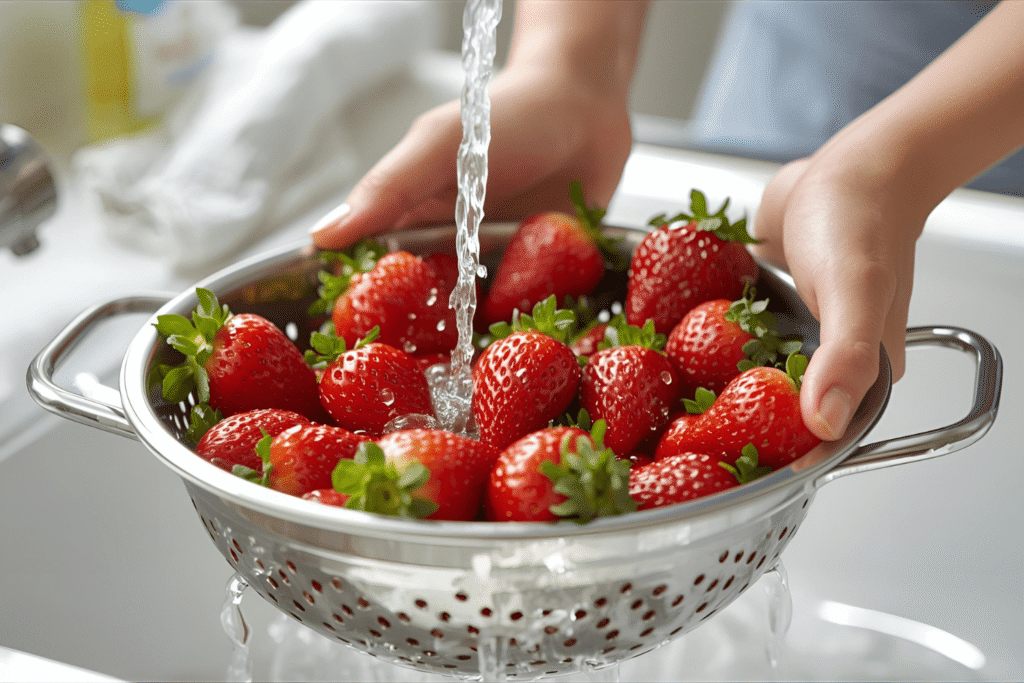
Once the soak is complete, pour the entire bowl into a colander or strainer. Rinse your strawberries under cold running water for at least 20 to 30 seconds.
This step removes any lingering vinegar scent or flavor, leaving you with perfectly fresh tasting berries.
You can also move the berries around gently with your hands while rinsing to help wash off any last bits of loosened dirt. - Dry your strawberries completely
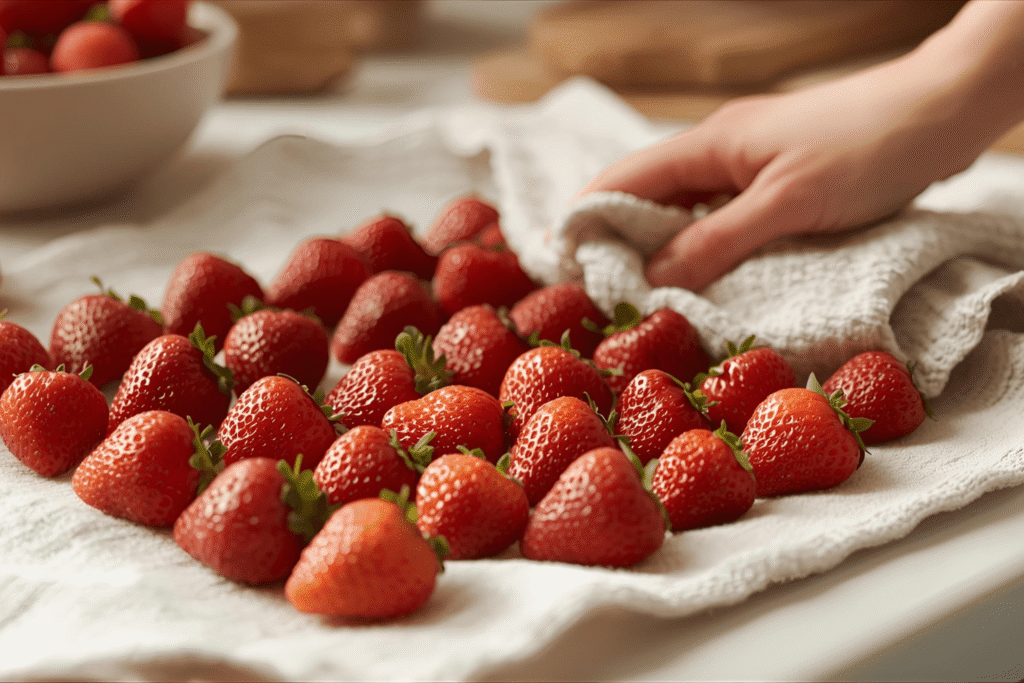
Transfer the rinsed strawberries to a clean kitchen towel or paper towel. Spread them out so none are stacked on top of each other.
Use another towel to pat them gently.
This is one of the most crucial parts of the entire process because moisture is the number one reason strawberries grow mold quickly.
Take your time here. If needed, let them air dry for an extra 10 to 15 minutes before storing. - Store correctly
After the berries are fully dry, place them into a clean container lined with a fresh paper towel.
You can use either an airtight container or a breathable one, depending on your preference. Airtight containers keep the berries hydrated, while breathable containers reduce condensation.
The paper towel will catch any remaining moisture and help the strawberries stay fresh for up to one full week, sometimes even longer if the berries were very fresh to begin with.
Your strawberries are now clean, fresh, and safe to eat. They’ll stay crisp, bright, and delicious far longer than strawberries washed with water alone.
Notes
- Never soak strawberries for more than 10 minutes because they absorb water easily and can turn mushy.
- Use only white distilled vinegar. Apple cider vinegar or balsamic vinegar can affect both taste and aroma.
- If your berries are already very soft or slightly overripe, shorten the soaking time to 3 to 5 minutes to keep them from breaking down.
Pro Tip
Place a clean paper towel at the bottom of your storage container and replace it every 2 days. It absorbs excess moisture and keeps your strawberries firm, juicy, and mold free for much longer.
Alternative natural cleaning methods
While vinegar is the most effective, here are some other options if you’re out of vinegar.
Cleaning strawberries with salt water
Salt is a natural antimicrobial and can loosen dirt.
- Mix 1 teaspoon of salt per cup of warm water
- Let berries soak for 5 minutes
- Rinse well
This method is gentle but not as effective at extending shelf life as vinegar.
Cleaning strawberries with baking soda
Baking soda helps lift away dirt and residue.
- Add 1 teaspoon of baking soda to a bowl of water
- Soak for 3 to 5 minutes
- Rinse thoroughly
This method works best for lightly dirty berries.
Cleaning strawberries with just water
Running water removes about 60 to 80 percent of surface bacteria.
Not perfect, but still helpful when you’re in a rush.
How to store strawberries after cleaning
Cleaning is only half the battle. Storage determines how long your berries stay fresh.
You can store them:
In a paper towel lined container
This method absorbs moisture and prevents mold. Replace the towel when it gets damp.
In a breathable container
Store berries without sealing the lid fully. Airflow prevents condensation.
In a glass jar
This trending method keeps berries cold and crisp for up to 2 weeks. Just make sure they are fully dry before placing them inside.
What to avoid
- Do not freeze wet strawberries. Always dry first.
- Do not put them back in the original plastic container without washing it.
- Do not wash berries until you are ready to eat unless you use the vinegar method.
Fun ways to use freshly cleaned strawberries
Once your strawberries are clean and ready, here are some delicious ways to use them.
Sweet ideas
- Strawberry yogurt bowls
- Smoothies
- Strawberry shortcake
- Chocolate dipped strawberries
- Overnight oats with strawberry topping
Savory ideas
- Strawberry and feta salads
- Strawberry basil bruschetta
- Grilled chicken with strawberry salsa
Drinks
- Strawberry iced tea
- Strawberry infused water
- Fresh berry lemonade
Pro Tip
If you have strawberries that are just slightly overripe, freeze them and use them for smoothies. They blend beautifully and taste sweeter once frozen.
Troubleshooting common issues
Here are the most common problems people face and how to fix them.
Why did my strawberries get mushy?
They soaked too long or were already very ripe. Reduce soaking time next time.
Why can I still taste vinegar?
The berries need to be rinsed a little longer. Vinegar rinses off completely if rinsed under cold water.
Why did mold grow even after washing?
Either the berries were not completely dry or the storage container had moisture inside.
Why is there white residue on my berries?
This is usually just natural seeds or surface fibers. It’s safe. Rinsing removes it.
Why do my strawberries spoil fast even after washing?
Make sure you’re using fresh berries. Old berries will spoil quickly no matter how you wash them.
FAQs
Not at all. As long as you rinse them thoroughly, the vinegar taste disappears completely.
Technically yes, but it can leave a slight taste. White vinegar is best.
5 to 10 minutes. Longer soaking can make them mushy.
With the vinegar method, yes. It actually extends their shelf life.
Yes. As long as you dry them well, they’ll stay fresh for up to a week.
Yes. Acetic acid in vinegar helps break down bacteria and mold spores on the surface.
Absolutely. Blueberries, grapes, apples, and cherries all benefit from a vinegar rinse.
Yes. Vinegar is natural and non toxic. Just rinse well.
Final thoughts
Learning how to clean strawberries with vinegar is one of those small kitchen habits that pays off massively. Your berries stay fresher longer, you save money, and you reduce waste without adding extra chemicals.
This method is quick, natural, and incredibly effective. Once you try it, you’ll never go back to just rinsing them under water.