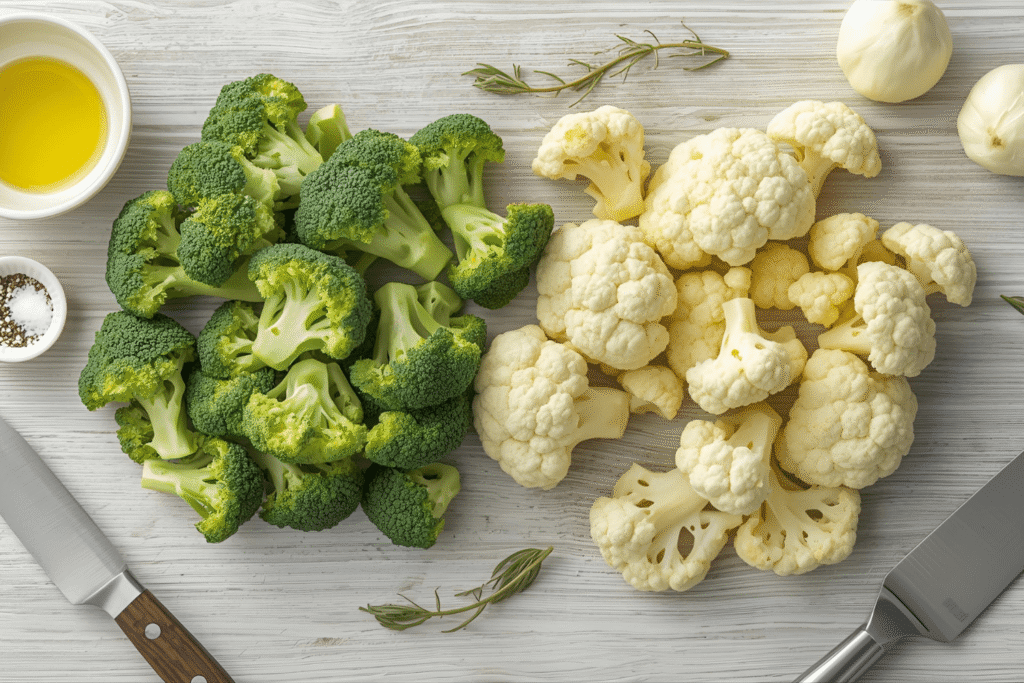
Broccoli and cauliflower are two of the easiest, healthiest, and most versatile vegetables you can cook.
They’re packed with fiber, vitamins, and antioxidants that support your gut, skin, and energy levels.
They also have a huge fan base. According to the USDA, broccoli consumption has increased by more than 400 percent in the last 30 years. Cauliflower has become just as trendy, especially thanks to cauliflower rice, cauliflower wings, and low carb recipes flooding social feeds.
What makes these veggies even better is that they fit into almost every diet.
Low calorie, low carb, high fiber, and naturally gluten free.
And because they absorb flavors so well, you can make them taste incredible using super simple methods.
Learning how to cook broccoli and cauliflower gives you a go to side dish you’ll rely on any night of the week.
Pro Tip: If you ever feel stuck in a dinner rut, toss broccoli or cauliflower into your meal. They work with almost everything.
How to prep broccoli and cauliflower the right way
Great veggies start with great prep.
The way you wash and cut broccoli and cauliflower can completely change how they cook.
Washing
Rinse under cold water and gently rub away any dirt trapped between the florets.
For cauliflower especially, a quick soak in salted water for 5 minutes helps remove tiny bugs that sometimes hide inside the florets.
Cutting
Turn the veggie upside down and cut off the large stem.
Then pull apart the florets using your hands or a knife.
Cutting into evenly sized florets ensures everything cooks at the same speed.
When to keep stems vs remove them
Don’t throw stems away.
Both broccoli and cauliflower stems are completely edible and high in fiber.
Slice them thinly for sautéing or steaming.
Thick stem pieces take longer to soften, so slicing them evenly is important.
How to size florets for even cooking
Aim for florets that are about the size of a golf ball.
Smaller than that cooks faster and becomes softer, while larger florets take longer and may stay too firm.
Even sizing equals perfect texture.
Pro Tip: If you want crisp tender veggies, cut them slightly smaller. If you want soft and creamy, cut them larger.
How to cook broccoli and cauliflower
Both veggies can be cooked using tons of different methods.
Each method brings out a different texture and flavor, so it’s worth trying a few until you find your favorite.
Roasting
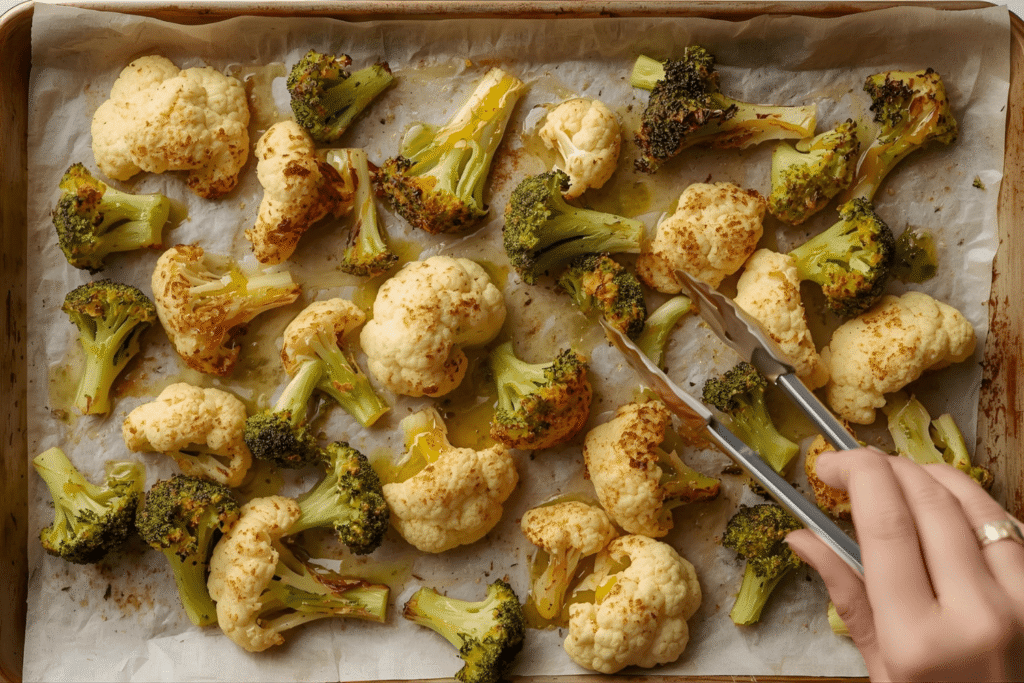
Roasting is the most popular method because it gives veggies a delicious golden brown finish.
How to roast:
- Preheat oven to 425°F (220°C)
- Toss florets with olive oil, salt, and pepper
- Spread evenly on a baking tray
- Roast for 20 to 25 minutes, flipping halfway
Roasting enhances sweetness and gives you crispy edges.
Why it works: High heat caramelizes natural sugars, giving the veggies a restaurant style flavor.
Steaming
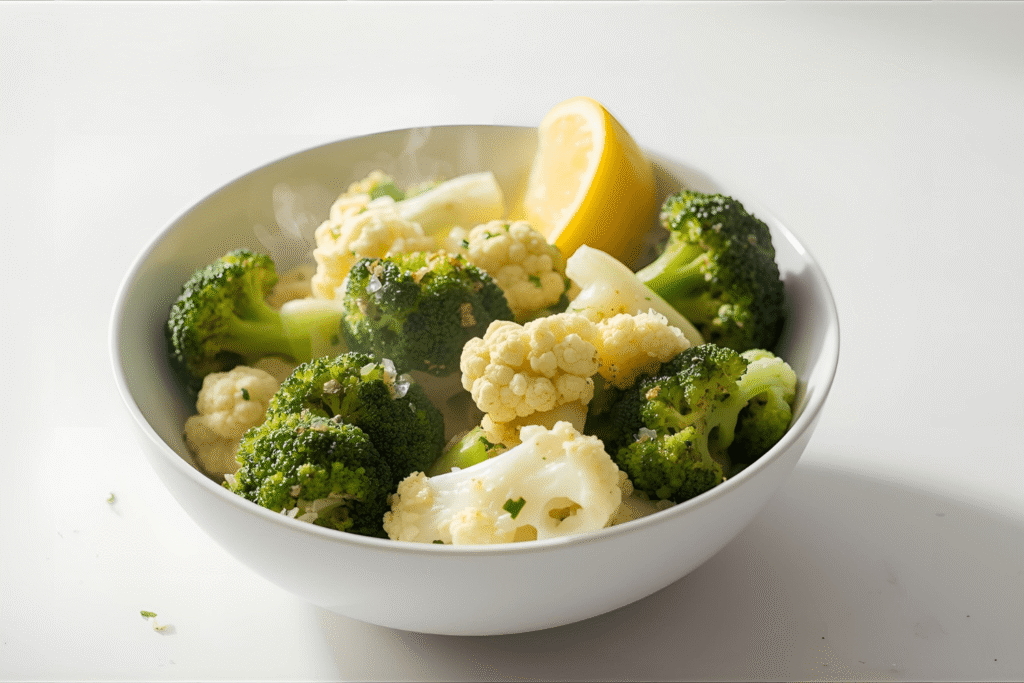
Steaming keeps veggies bright, nutrient rich, and tender.
How to steam:
- Add water to a pot and bring to a boil
- Place florets in a steam basket
- Cover and steam for 5 to 7 minutes
Why it works: Steaming preserves up to 90 percent of nutrients according to several food science studies.
Sautéing
Sautéing gives a slightly crispy surface with a soft inside.
How to sauté:
- Heat olive oil or butter in a pan
- Add florets and optional garlic
- Cook for 8 to 10 minutes, stirring often
Why it works: The stovetop method gives you more control over texture while adding delicious flavor from browning.
Boiling
Boiling is quick and easy, especially for meal prep.
How to boil:
- Bring salted water to a boil
- Add florets
- Cook 4 to 6 minutes until tender
- Drain and season
Why it works: Great for mashing, blending into soups, or fast cooking.
Air frying
Air fryers create crispy roasted style veggies in less time.
How to air fry:
- Preheat to 375°F (190°C)
- Toss with oil and seasoning
- Air fry for 10 to 12 minutes, shaking halfway
Why it works: Air fryers use rapid hot air to crisp edges without needing much oil.
Grilling
Grilling gives a smoky, summery flavor that tastes amazing with both veggies.
How to grill:
- Toss florets with oil
- Place in a grill basket
- Grill on medium heat for 10 to 12 minutes
Why it works: Smoke plus char equals maximum flavor.
Microwave cooking
This is the fastest method of all.
How to microwave:
- Place florets in a microwave safe bowl
- Add 2 tablespoons of water
- Cover
- Microwave 3 to 4 minutes
Why it works: Perfect for quick lunches or when you don’t want to turn on the oven.
Blanching for meal prep
Blanching keeps veggies crisp, bright, and ready for meal prep containers.
How to blanch:
- Boil water
- Add florets for 2 to 3 minutes
- Drop immediately into an ice bath
Why it works: Blanching stops enzymes that dull color and texture.
Pro Tip: Blanch broccoli before adding it to salads. It stays bright green and tastes fresher.
Flavor boosters that make broccoli and cauliflower irresistible
Plain veggies can be boring, but the right seasonings turn them into a crave worthy side dish.
Try these flavor options:
- Garlic powder or fresh garlic
- Paprika
- Lemon pepper
- Chili flakes
- Parmesan cheese
- Soy sauce or tamari
- Butter and fresh herbs
- Tahini
- Caesar dressing
- Everything bagel seasoning
If you want a more elevated flavor profile, try:
- Harissa
- Curry powder
- Turmeric
- Smoked paprika
- Ginger and garlic paste
Pro Tip: Always season before and after cooking for the best flavor.
How long to cook broccoli and cauliflower
Here’s a handy timing chart so you never overcook your veggies again.
Roasting: 20 to 25 minutes
Steaming: 5 to 7 minutes
Sautéing: 8 to 10 minutes
Boiling: 4 to 6 minutes
Air frying: 10 to 12 minutes
Microwave: 3 to 4 minutes
Grilling: 10 to 12 minutes
Blanching: 2 to 3 minutes
Cook slightly less for crisp tender texture, slightly more for soft and creamy.
Healthy benefits you get from broccoli and cauliflower
Both veggies are nutritional powerhouses.
Here’s what you get in a single serving:
- High fiber for better digestion
- Vitamin C to support immunity
- Vitamin K for bone health
- Folate, essential for energy
- Antioxidants that reduce inflammation
- Plant compounds that support detoxification
Broccoli also contains sulforaphane, one of the most researched plant compounds for cancer prevention.
Cauliflower is naturally low carb and great for blood sugar control.
A study from the Journal of Nutrition found that cruciferous vegetables like broccoli and cauliflower may reduce inflammation markers by up to 25 percent.
Pro Tip: Cook broccoli lightly to preserve sulforaphane. Overcooking reduces this powerful compound.
Common mistakes when cooking broccoli and cauliflower
Avoid these so your veggies turn out perfect every time.
- Cutting uneven florets that cook unevenly
- Overboiling until mushy
- Not salting the cooking water
- Skipping oil when roasting
- Crowding the pan so veggies steam instead of crisp
- Adding garlic too early which can burn
- Forgetting to dry the veggies fully before roasting
Pro Tip: Give your veggies space on the baking sheet. Crowding is the number one reason they don’t crisp.
How to store cooked broccoli and cauliflower
Once your veggies are cooked, storing them properly keeps them fresh and tasty.
Fridge:
Store in an airtight container for 3 to 5 days.
Freezer:
Freeze cooled, cooked florets for up to 3 months.
Blanching before freezing helps preserve color and texture.
Meal prep:
Broccoli and cauliflower reheat beautifully, making them ideal for weekly lunches.
If you want even better reheating results, reheat in the air fryer for crisp edges.
FAQs
Yes, as long as you cut them into similar sized florets so they cook evenly.
Broccoli cooks slightly faster because the florets are lighter and more tender.
Steam or blanch instead of boiling. An ice bath keeps the color vibrant.
Yes, both are low calorie and high in fiber, helping you feel full longer.
Yes, the stems are edible and packed with nutrients. Slice them thin for even cooking.
Steaming preserves the most nutrients, but roasting gives the best flavor. Both are healthy choices.
Yes, but blanching first results in better texture after freezing.
Final thoughts
Learning how to cook broccoli and cauliflower opens up endless possibilities in your kitchen.
You can roast them for crispy edges, steam them for nutrient rich meals, or sauté them for a quick flavorful side.
They’re budget friendly, easy to prepare, and incredibly good for you.
Once you master these methods, you’ll always have a reliable go to veggie dish that fits into any meal plan.
If you ever feel uninspired in the kitchen, broccoli and cauliflower are the perfect veggies to fall back on. They’re simple, forgiving, and pair beautifully with almost any cuisine. With just a few seasoning twists or cooking method swaps, you can turn them into comforting, flavorful sides that never feel boring. Try experimenting with different textures, spices, and sauces to discover your personal favorite version.