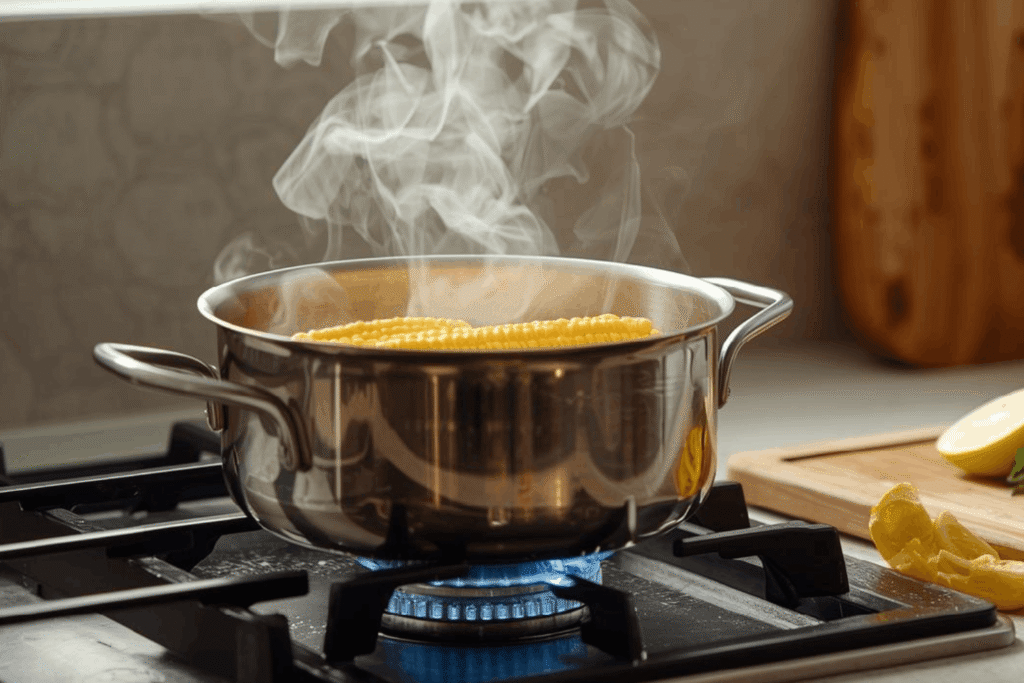
If you’ve ever stood in your kitchen wondering how to cook corn on the cob on the stove without turning it mushy or bland, you’re not alone. Corn feels simple, yet somehow it’s easy to mess up. Too long in boiling water and it turns rubbery. Too little time and it’s starchy and underwhelming.
The good news? Stove-top corn is one of the fastest, most reliable ways to get sweet, juicy, tender kernels every time. No grill setup, no special equipment, and no guesswork.
Even better, it fits beautifully into busy weeknight cooking. From fridge to plate in under 15 minutes? Yes please.
In this guide, you’ll learn exactly how to cook corn on the cob on the stove step-by-step, how long it should cook, how to season it like a pro, and how to avoid the most common mistakes.
Let’s turn corn into your new go-to side dish.
Why stovetop corn beats boiling, grilling, and microwaving
Corn can be cooked a dozen ways, but stovetop cooking hits the sweet spot between convenience and flavor.
Here’s why it works so well:
- Speed – Fresh corn cooks in 5–7 minutes once the water boils.
- Consistent texture – Even heat means no burnt spots or undercooked kernels.
- Minimal cleanup – One pot, one strainer.
- Energy efficient – Faster than oven roasting or grilling.
Flavor matters too. Corn naturally contains sugar that converts into starch over time after harvesting. Cooking it quickly helps preserve that sweetness.
According to the USDA, one medium ear of corn contains roughly 90 calories, 3g of fiber, and important nutrients like vitamin C and magnesium.
That makes it a filling but light side dish that works with almost any meal.
Microwaving can dry corn out. Grilling is delicious but weather-dependent and time consuming. Stove-top cooking gives you reliable results without babysitting the pan.
Pro Tip: If your corn is ultra-fresh (picked within 24 hours), the sweetness will be noticeably higher. Farmer’s market corn tends to shine here.
What you’ll need to make perfect corn on the stove
Keep it simple. Corn doesn’t need fancy ingredients.
Ingredients
- Fresh corn on the cob (2–6 ears)
- Water
- Salt (for seasoning after cooking)
- Butter or olive oil (optional)
Equipment
- Large pot with lid
- Tongs
- Colander or strainer
That’s it. If you can boil pasta, you can absolutely nail this.
Step-by-step: how to cook corn on the cob on the stove
This method works whether you’re cooking two ears or feeding a small crowd.
Step 1: Prep the corn
Remove the husks and silk from each ear. Rinse under cold water to remove any leftover strands.
If your corn is very long and your pot is small, you can snap the ears in half. They’ll cook just as evenly.
Pat dry lightly if desired, but it’s not required.
Step 2: Bring the water to a boil
Fill a large pot with enough water to fully submerge the corn.
Place it on high heat and bring to a rolling boil. This usually takes 5–8 minutes depending on your stove.
Do not salt the water yet. Salt can toughen the corn skins slightly and slow down tenderizing.
Step 3: Cook the corn
Carefully place the corn into the boiling water using tongs.
Cover the pot and reduce heat slightly to maintain a steady boil.
Cook for:
- 5–7 minutes for fresh corn
- 7–9 minutes for thicker or older ears
You’re looking for bright yellow kernels that feel tender when pierced with a fork.
Step 4: Drain and season
Remove the corn using tongs or drain into a colander.
Season immediately while hot:
- Butter or olive oil
- Salt and pepper
- Optional flavor add-ins (see seasoning section below)
Serve hot and enjoy that sweet, juicy bite.
Pro Tip: Tossing corn with butter while it’s steaming helps the butter melt evenly and coat every kernel.
How long to cook corn on the stove (timing guide)
Timing makes or breaks corn texture.
Here’s a quick cheat sheet:
- Very fresh corn: 4–5 minutes
- Standard grocery store corn: 5–7 minutes
- Large or mature ears: 7–9 minutes
- Frozen corn on the cob: 8–10 minutes
Overcooking causes kernels to lose moisture and become chewy. If in doubt, test one ear early.
A fork should slide in easily without resistance.
How to tell when corn is perfectly cooked
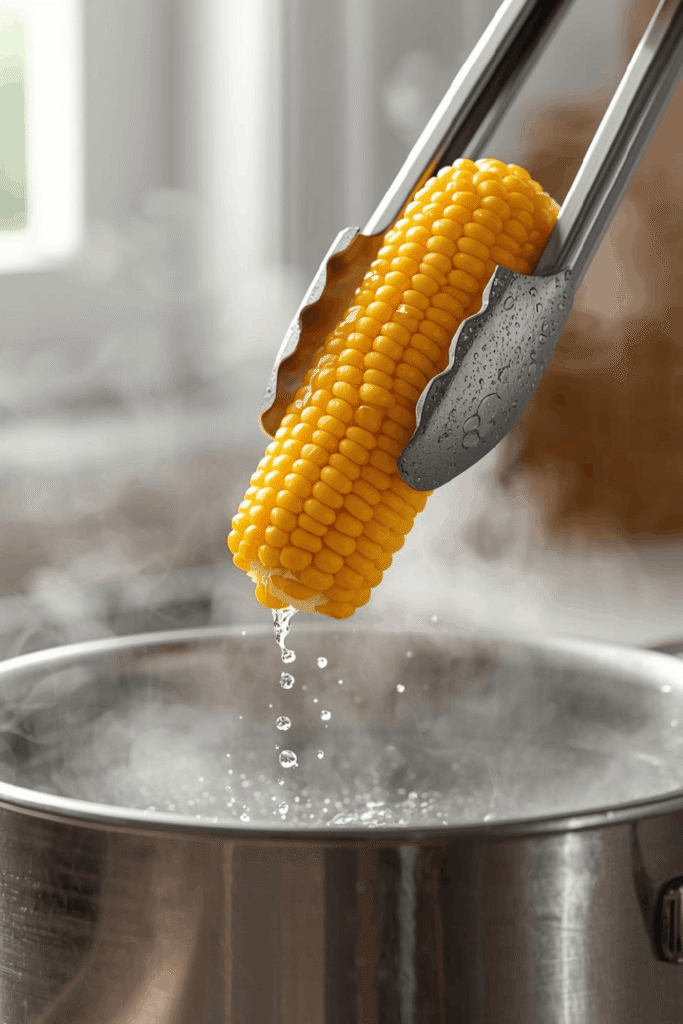
Use all three senses.
Visual cues
- Kernels appear plump and glossy
- Color deepens slightly to a richer yellow
Touch cues
- Kernels feel tender when pressed gently with a fork
Taste test
- Sweet and juicy, not starchy
- No chalky texture
If it tastes bland or firm, give it another 60–90 seconds.
Flavor upgrades and seasoning ideas
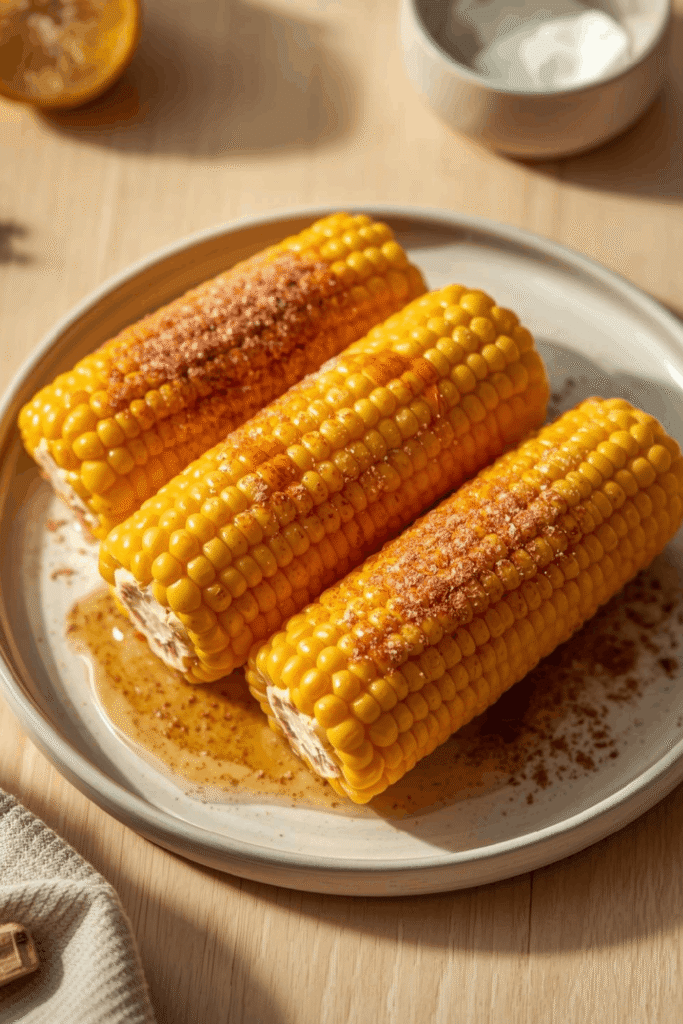
Plain buttered corn is classic, but a few simple additions can make it restaurant-worthy.
Sweet and cozy
- Butter + honey
- Cinnamon sugar sprinkle
- Maple butter drizzle
Savory and herby
- Garlic butter + parsley
- Parmesan + black pepper
- Thyme or rosemary infused butter
Fresh and zesty
- Lime juice + chili flakes
- Cilantro + cotija cheese
- Lemon zest + sea salt
Spicy kick
- Chili crisp drizzle
- Cajun seasoning
- Smoked paprika + cayenne
Pro Tip: Rolling hot corn directly in seasoning instead of sprinkling helps it stick better.
If you want deeper flavor inspiration, Serious Eats has some excellent compound butter ideas worth browsing.
Healthy benefits of corn on the cob
Corn often gets unfairly labeled as “just carbs,” but it brings real nutritional value to your plate.
One medium ear provides approximately:
- 90 calories
- 3g fiber – supports digestion and fullness
- 2g protein
- Vitamin C – immune support
- Magnesium and potassium – muscle and hydration balance
Fiber intake is especially important. Studies show most adults fall short of the recommended 25–30g daily fiber target. Corn contributes meaningfully toward closing that gap.
Pair corn with protein or healthy fats and you’ve got a balanced, satisfying side.
It’s also naturally gluten-free and kid-friendly, making it great for mixed diets and gatherings.
Common mistakes to avoid when cooking corn on the stove
Even simple recipes can go sideways. Avoid these pitfalls.
Salting the water too early
Salt can toughen kernels slightly. Season after cooking instead.
Overcrowding the pot
Corn needs space for even heat distribution. Cook in batches if needed.
Overcooking
Beyond 10 minutes, kernels begin losing juiciness.
Using old corn without adjusting time
Older corn may need slightly longer cooking to soften properly.
Skipping seasoning entirely
Corn shines with even a pinch of salt or squeeze of citrus.
How to store and reheat leftover corn
If you have leftovers (rare, but possible), here’s how to keep them tasting great.
Refrigerator
- Store in an airtight container
- Keeps for up to 3 days
Freezer
- Cut kernels off the cob
- Freeze in freezer bags for up to 6 months
- Perfect for soups, salads, and stir-fries
Reheating options
- Microwave: Cover with a damp paper towel and heat 30–60 seconds
- Stovetop: Warm gently with a little butter in a pan
- Boiling water: Reheat for 1–2 minutes only
Avoid over-reheating or the texture will suffer.
FAQs
Fresh corn typically takes 5–7 minutes once the water is boiling. Larger or older ears may take up to 9 minutes.
No. It’s best to season after cooking. Salting the water can slightly toughen the kernels.
Yes. Add frozen corn directly to boiling water and cook for 8–10 minutes until heated through and tender.
Use the freshest corn possible and avoid overcooking. Adding a small amount of butter or honey after cooking enhances natural sweetness.
Yes. You can steam corn in a shallow layer of water with a lid for slightly more concentrated flavor.
Corn is relatively low calorie, high in fiber, and filling. Portion awareness matters, especially with butter and toppings.
You can, but whole cobs retain moisture better and cook more evenly.
Final thoughts
Learning how to cook corn on the cob on the stove gives you a fast, reliable side dish you can lean on year-round. It’s affordable, nourishing, endlessly customizable, and ready in minutes.
Once you master the timing and seasoning, corn stops being “just a side” and starts becoming a highlight on your plate.
Whether you’re meal prepping, hosting friends, or throwing together a last-minute dinner, this method keeps things simple and delicious.
If you’re building confidence in the kitchen, mastering simple staples like corn is a game changer. Once you know exactly how to cook corn on the cob on the stove, you’ll never second-guess dinner sides again. It’s fast, affordable, and endlessly adaptable to your cravings and seasons. Keep a few ears in your weekly shop and you’ll always have a fresh, colorful vegetable ready in minutes.