
If you’re searching for how to cook sirloin steak in cast iron skillet and want results that feel restaurant level without the restaurant price, you’re in the right place.
A cast iron skillet gives sirloin steak something other pans simply can’t: an evenly heated, golden crust that locks in flavor. Sirloin is naturally leaner than ribeye, so a great sear matters even more. A cast iron skillet reaches higher heat than stainless steel and retains it better, which means your steak cooks consistently and beautifully.
A 2024 grilling survey found that 72 percent of home cooks said pan searing was their preferred indoor method for steak. It’s fast, beginner friendly, and produces the type of crust you’d normally expect only from a steakhouse.
When you know how to cook sirloin steak in cast iron skillet the right way, the taste difference is massive. You’ll get juicy, tender bites with a rich brown crust and absolutely zero guesswork.
What you need before you start
Getting the basics ready makes your cooking smoother and your results tastier.
Ingredients
- 1 or 2 sirloin steaks (around 1 to 1.25 inches thick)
- Salt
- Black pepper
- 1 to 2 tablespoons neutral oil
- 2 tablespoons butter
- Garlic cloves
- Fresh rosemary or thyme
Tools
- Cast iron skillet
- Tongs
- Instant read thermometer
- Paper towels
If you don’t own a thermometer yet, it is 100 percent worth grabbing one. Steakhouse chefs use them too. Accuracy is what makes a home cooked steak taste professional.
Choosing the right sirloin cut
Sirloin comes in a few variations. The two most common in supermarkets are top sirloin and sirloin strip.
Top sirloin tends to be leaner, while sirloin strip has a little more marbling. Both are great for pan searing as long as you choose pieces with visible streaks of fat.
A helpful buying tip: Look for steaks that feel firm to the touch and have a bright, even red color. Meat science studies show that color uniformity is one of the strongest indicators of freshness.
Step by step: how to cook sirloin steak in cast iron skillet
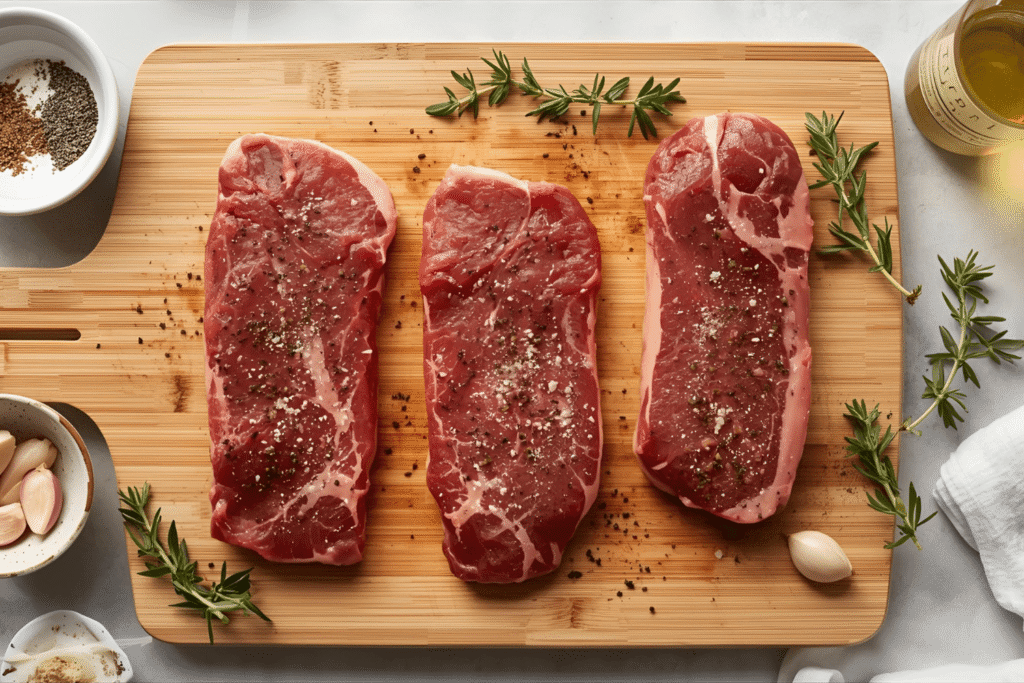
This is the simplest and most reliable method for cooking sirloin steak at home, and once you try it, you’ll understand why so many chefs swear by cast iron. Each step affects flavor, tenderness, and texture, so take your time and enjoy the process. Think of this as your go to method for a steak that tastes like it came from a high end restaurant but takes less than 15 minutes.
Step 1: Bring the steak to room temperature
This small step makes a surprisingly big difference. When a steak goes into a hot pan straight from the fridge, the center stays cold for too long, which often leads to a gray, overcooked outside and a cold, undercooked inside. Letting the meat rest at room temperature helps it cook more evenly from edge to center.
Take your steak out of the fridge about 30 to 40 minutes before cooking. Place it on a plate and cover it lightly with a paper towel.
Right before cooking, pat the steak completely dry. Any moisture left on the surface turns to steam, which stops the crust from forming. A dry surface equals a crispier, more flavorful sear.
Pro Tip: If you want an even deeper crust, lightly press a clean paper towel on both sides of the steak twice. The drier the surface, the better the sear.
Step 2: Preheat your cast iron skillet
Preheating your skillet properly is the foundation of everything that happens next. Cast iron holds heat beautifully, but it takes a few minutes to actually get there. If the pan isn’t hot enough, your steak will cook unevenly and won’t caramelize the way it should.
Set your skillet on the stove over medium high heat and let it warm up for 4 to 5 full minutes. You should be able to hold your hand a few inches above the pan and feel strong heat radiating upward.
Add a splash of oil and watch it closely. When the oil starts to shimmer and move fluidly across the pan, it’s ready. It should look almost like it’s gliding instead of sitting still.
Pro Tip: If you see faint wisps of smoke, you’re at perfect searing temperature.
Step 3: Season the steak properly
Sirloin has bold flavor on its own, but seasoning is what helps that flavor shine. Salt is especially important because it doesn’t just add taste. It also helps create that iconic brown crust that makes steak irresistible.
Season your steak generously with kosher salt and freshly cracked black pepper. Don’t be shy with the salt. Sirloin is a thicker cut, and under seasoning is one of the most common mistakes home cooks make.
If you want extra flavor, you can add garlic powder or smoked paprika, but stick to simple salt and pepper if you want pure steakhouse vibes.
Press the seasoning lightly into the meat so it adheres well. It shouldn’t fall off when you transfer the steak to the pan.
Step 4: Sear the steak
This is the fun part. Once your skillet is screaming hot, add a tablespoon of oil. Swirl it around so it coats the surface.
Gently place the steak into the pan, laying it away from you to avoid splashes. The moment it touches the skillet, you should hear a loud sizzle. That’s the sound of the Maillard reaction, which transforms simple steak into rich, savory flavor.
Do not move the steak for at least 2 to 3 minutes. This stillness is what creates a deeply browned, restaurant quality crust. If you nudge the steak too early, the crust tears and you lose that golden layer of flavor.
After the first sear, lift the steak slightly and check the bottom. If it’s a deep brown, you’re ready to flip.
Pro Tip: For an even thicker crust, press the steak down gently with tongs during the first 10 seconds of searing. This ensures full surface contact with the skillet.
Step 5: Flip and cook to your ideal doneness
Once your first side has browned beautifully, flip the steak. The second side usually cooks slightly faster, especially once the pan is already coated in hot oil and fond (the brown bits left from searing).
Cook another 2 to 3 minutes, then start checking the internal temperature with a thermometer. This helps you avoid overcooking and ensures precision.
Use this temperature guide:
- Rare: 120 to 125°F
- Medium rare: 130 to 135°F
- Medium: 140 to 145°F
- Medium well: 150°F
Most chefs recommend medium rare for sirloin because it keeps the meat tender while bringing out its beefy flavor. Sirloin is leaner than ribeye, so cooking it above medium can make it slightly firmer.
Pro Tip: If your steaks are thicker than 1.25 inches, you may want to lower the heat slightly after flipping so the inside cooks without burning the outside.
Step 6: Add butter and aromatics
Now it’s time for the magic. Lower the heat to medium and add two tablespoons of butter to the skillet. It should melt quickly and begin to bubble. Add crushed garlic cloves and a sprig of fresh thyme or rosemary.
Tilt the pan slightly so the butter pools at the bottom. Use a spoon to scoop the hot, melted butter and pour it repeatedly over the top of the steak. This is called basting, and it performs three important jobs:
- It adds rich, nutty flavor from the browned butter
- It cooks the top of the steak gently and evenly
- It infuses the meat with the aroma of garlic and herbs
This step is the secret behind why steaks at restaurants taste more flavorful and aromatic. Basting turns everything up a level.
Continue basting for 30 to 45 seconds, then cook for another minute if needed to reach your desired internal temperature.
Step 7: Rest your steak
This final step is where the magic settles. When steak cooks, the juices move toward the center due to heat. If you cut into it immediately, all that juice spills out onto the plate instead of staying inside the meat.
Place your steak on a cutting board and let it rest for 5 to 7 minutes. During this time, the juices redistribute back into the entire steak, making every bite juicy and tender.
Pro Tip: If you’re worried about your steak cooling, loosely tent it with foil. Don’t wrap it tightly, or it may steam and soften the crust.
How long to cook sirloin steak in a cast iron skillet
Timing varies slightly depending on thickness, but these estimates work for most cuts.
Doneness chart
- Rare: 5 to 6 minutes total
- Medium rare: 6 to 7 minutes
- Medium: 7 to 8 minutes
- Well done: 9 to 10 minutes
Thickness timing chart
- 1 inch steak: ideal for 6 to 7 minute total cook time
- 1.25 inch steak: closer to 7 to 8 minutes
- 1.5 inch steak: 8 to 9 minutes
Pro Tip: Thicker steaks can benefit from finishing in the oven at 400°F for 3 to 5 minutes for perfectly even cooking.
Extra tips for the perfect steak
These tips turn a good steak into a memorable one.
Pat your steak very dry
A dry surface equals a crispier crust. Paper towels are your friend.
Don’t overcrowd the pan
Crowding lowers heat, causing steaming instead of searing. If you cook two steaks, leave a little space around each.
Use high heat oils
Olive oil tends to burn easily. Choose oils designed for high heat like avocado or canola.
Add butter at the right time
Butter burns quickly, so always add it after the sear, not before.
Pro Tip: Mix salted and unsalted butter for extra flavor and control.
Let the steak rest again after slicing
If you’re meal prepping or sharing plates, give slices another 2 minutes to settle. It keeps them juicy.
Mistakes to avoid
Learning what not to do is just as helpful as learning the right technique.
- Avoid flipping too early. This weakens the crust.
- Avoid poking holes with a fork. Use tongs instead.
- Avoid seasoning late. Salt needs contact time to enhance flavor.
- Avoid low heat. A weak sear equals pale steak and less flavor.
- Avoid skipping the resting period. This is where tenderness develops.
What to serve with sirloin steak
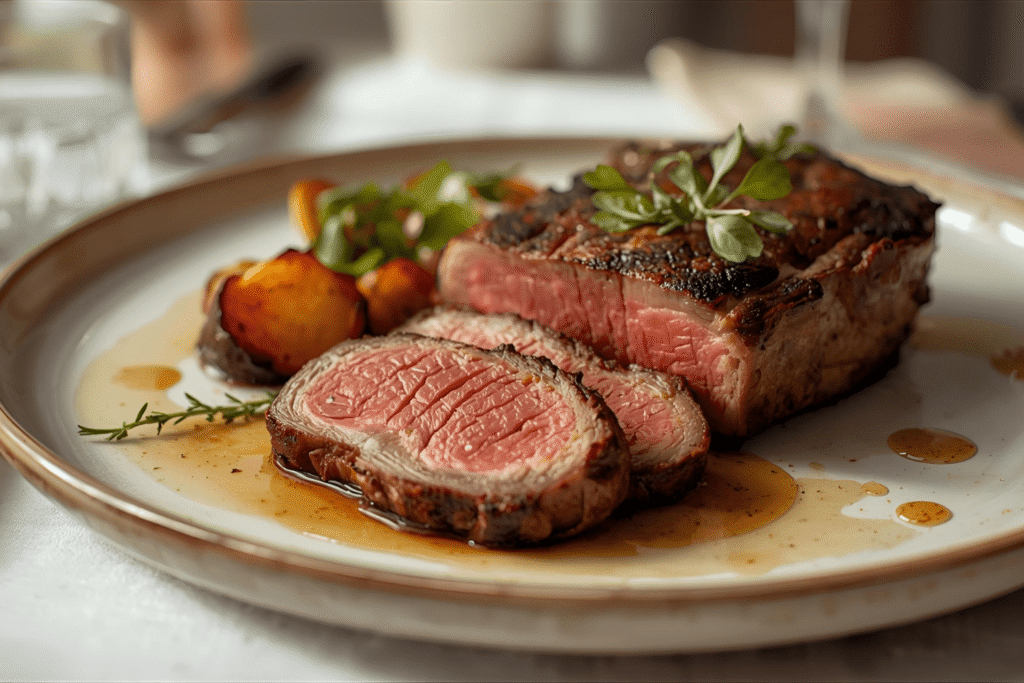
Great sides elevate your steak and make your meal feel complete.
Some perfect pairings include:
- Garlic mashed potatoes
- Crispy roasted broccoli
- Balsamic glazed Brussels sprouts
- Sweet potato fries
- A simple green salad with lemon vinaigrette
- Herb roasted baby potatoes
If you want dinner to feel restaurant worthy, serve everything on warm plates. Restaurants do this because warm plates help keep the steak at ideal temperature for longer.
For inspiration, you can check out healthy vegetable side ideas from BBC Good Food (1 external link). Another excellent resource for simple roasted vegetables is Love & Lemons (2nd external link).
FAQs
Drop a tiny splash of water inside the pan. If it sizzles immediately and evaporates within a second, the heat is perfect.
You can, but you don’t need to. Sirloin already has great natural flavor and benefits more from a simple salt and pepper seasoning.
Resting helps the juices redistribute so your steak stays moist and tender. It also improves flavor and texture.
For best results, thaw fully. Cooking from frozen works in emergencies, but it is harder to get an even center.
Neutral, high smoke point oils like avocado, grapeseed, or canola are ideal.
Final thoughts
Learning how to cook sirloin steak in cast iron skillet transforms your weeknight dinners and makes your kitchen feel like your own mini steakhouse. Once you master the sear, you’ll notice how much more flavorful and tender your steak becomes.
The process is simple, the tools are minimal, and the results are consistently delicious. With a little practice and the right technique, this will become one of your go to meals whenever you want something satisfying without spending an hour in the kitchen.