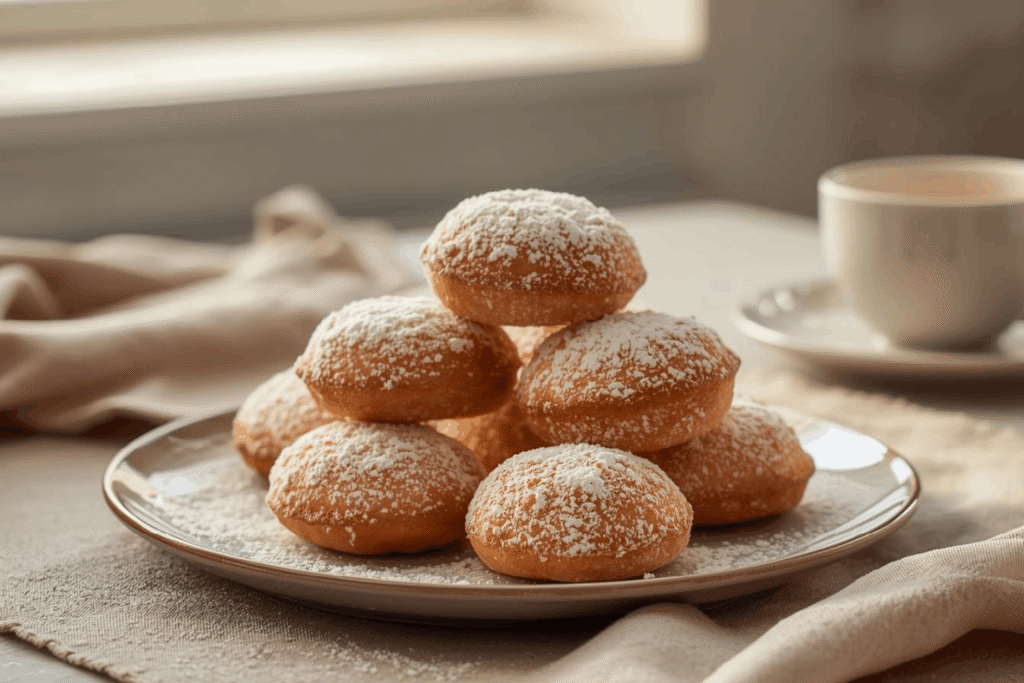
There’s something magical about biting into a warm beignet. That first crunch gives way to a soft, pillowy center dusted in a snowy cloud of powdered sugar. It feels indulgent, comforting, and just a little bit fancy.
If you’ve ever stood in line at a café dreaming of recreating that experience at home, you’re in the right place. Learning how to make beignets at home is easier than you think, even if yeast dough normally feels intimidating.
Homemade beignets give you control over freshness, sweetness, and portion size. Plus, making them yourself costs a fraction of what you’d pay at a bakery or brunch spot.
In this guide, you’ll learn exactly how to make beignets at home step by step, including dough tips, frying secrets, flavor ideas, and storage tricks so every batch turns out fluffy and irresistible.
What are beignets and why everyone loves them
Beignets are French-style fried dough pastries that became iconic in New Orleans. Traditionally square or rectangular, they’re fried until golden and buried under powdered sugar.
Think of them as a cross between a donut and a pillow. Light, airy, slightly chewy, and not overly sweet until you add toppings.
They gained massive popularity through New Orleans café culture, especially Café du Monde, which reportedly serves thousands of beignets per day during peak tourist seasons. That kind of volume tells you just how beloved they are.
Why people love them:
- Texture contrast – crisp outside, fluffy inside
- Customizable sweetness – from classic powdered sugar to filled versions
- Perfect for sharing – brunch, dessert, or cozy weekends
- Comfort factor – warm fried dough hits emotional happiness triggers
Food psychology studies show warm, carb-based comfort foods can increase perceived mood and satisfaction by up to 30 percent compared to cold desserts.
In other words, beignets literally make people happier.
Why making beignets at home is totally worth it
Ordering beignets out is fun, but homemade brings big perks.
Cost savings
A café order can easily run $8–$12 for a small plate. Homemade batches cost under $3 in ingredients.
Freshness control
Beignets peak within minutes of frying. At home, you eat them at their absolute best.
Customization freedom
You control sweetness, fillings, oils, and toppings.
Impress factor
Few people expect homemade fried pastries at brunch. Instant hero energy.
Pro Tip: If you’re hosting friends, prep the dough the night before and fry in the morning for stress-free entertaining.
Ingredients you’ll need for homemade beignets
Simple pantry staples make this surprisingly accessible.
Base ingredients
- Warm milk (about 110°F)
- Active dry yeast
- Granulated sugar
- Unsalted butter, melted
- Eggs
- All-purpose flour
- Salt
- Vegetable or canola oil for frying
- Powdered sugar for dusting
Optional upgrades
- Vanilla extract for aroma
- Nutmeg for subtle warmth
- Cinnamon sugar for dusting variation
Substitution ideas:
- Dairy-free milk works fine (almond or oat)
- Gluten-free blends can work but texture may vary
- Coconut oil for frying adds light sweetness
Equipment checklist for success
You don’t need specialty gear.
- Large mixing bowl or stand mixer
- Measuring cups and spoons
- Rolling pin
- Sharp knife or pizza cutter
- Heavy-bottomed pot or Dutch oven
- Thermometer (recommended)
- Slotted spoon or spider strainer
- Paper towels
- Cooling rack
A thermometer matters because oil temperature affects texture more than any other factor.
Ideal frying temperature: 350–360°F
Too low = greasy beignets
Too high = burned outside, raw inside
Step-by-step: how to make beignets at home
Follow these steps carefully and you’ll get consistently fluffy results.
Activate the yeast
In a large bowl, combine warm milk, yeast, and 1 tablespoon sugar. Stir gently and let sit for 5–10 minutes until foamy.
Foam = active yeast = fluffy dough success.
If nothing happens, your yeast may be expired or the milk too hot.
Mix and knead the dough
Add remaining sugar, melted butter, eggs, salt, and vanilla (if using). Mix until combined.
Gradually add flour until a soft dough forms.
Knead for 6–8 minutes until smooth and elastic. The dough should be slightly sticky but not wet.
Pro Tip: Slightly sticky dough produces lighter beignets than overly dry dough.
First rise
Transfer dough to a lightly greased bowl. Cover and let rise in a warm spot for 1–1.5 hours until doubled in size.
Warm environments speed fermentation and flavor development.
Roll and cut the dough
Punch down the dough gently.
Roll out to about 1/4 inch thickness on a floured surface. Cut into 2–3 inch squares or rectangles.
Uniform sizing ensures even frying.
Fry the beignets
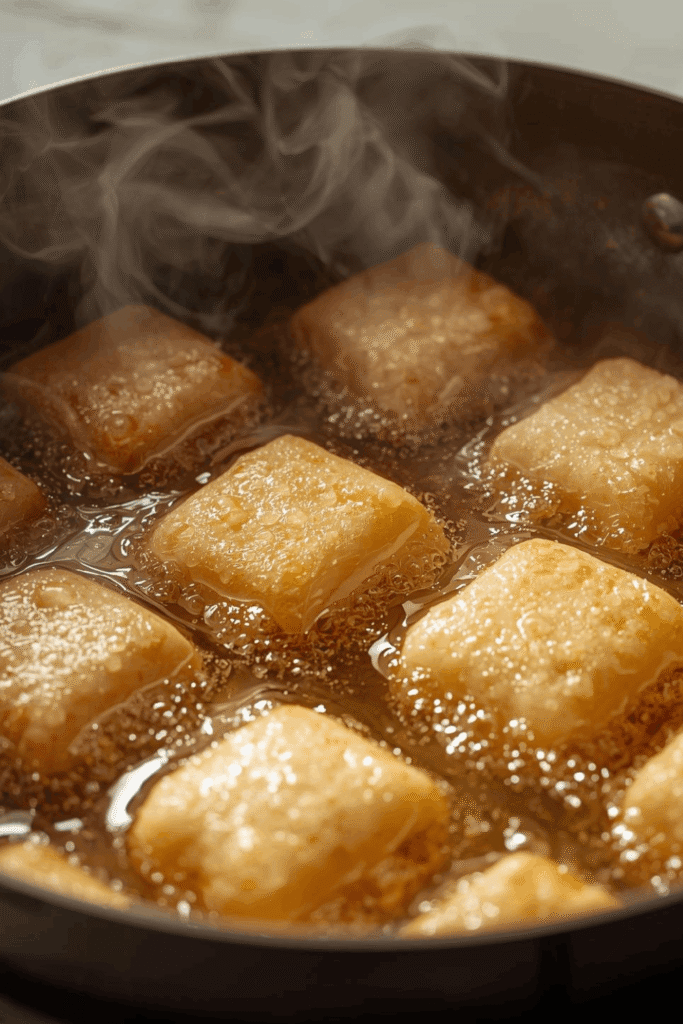
Heat oil to 350–360°F.
Fry 2–3 pieces at a time for about 60–90 seconds per side until golden brown and puffed.
Flip once only to prevent oil absorption.
Drain on paper towels or a rack.
Dust and serve
While still warm, generously dust with powdered sugar.
Serve immediately for best texture.
How long does it take to make beignets at home
Plan about 2–2.5 hours total from start to finish.
- Prep and mixing: 20 minutes
- First rise: 60–90 minutes
- Rolling and cutting: 15 minutes
- Frying and dusting: 15–20 minutes
Hands-on time is surprisingly low compared to payoff.
Pro tips for perfect fluffy beignets
- Use a thermometer for oil accuracy
- Don’t overcrowd the pot
- Keep dough slightly sticky
- Fry immediately after cutting
- Dust sugar while warm so it sticks
Pro Tip: If your kitchen is cold, place dough near a warm oven or sunny window to encourage rising.
Flavor variations and creative toppings
Classic powdered sugar is iconic, but experimenting is half the fun.
Sweet twists
- Cinnamon sugar dusting
- Chocolate drizzle
- Honey butter glaze
- Maple powdered sugar
Filled options
- Pastry cream
- Nutella
- Raspberry jam
- Lemon curd
Seasonal ideas
- Pumpkin spice sugar (fall)
- Berry compote (summer)
- Peppermint sugar (holidays)
If you love filling pastries, piping bags make clean work. King Arthur Baking has excellent filling techniques worth exploring.
How to serve beignets for brunch, parties, and cozy weekends
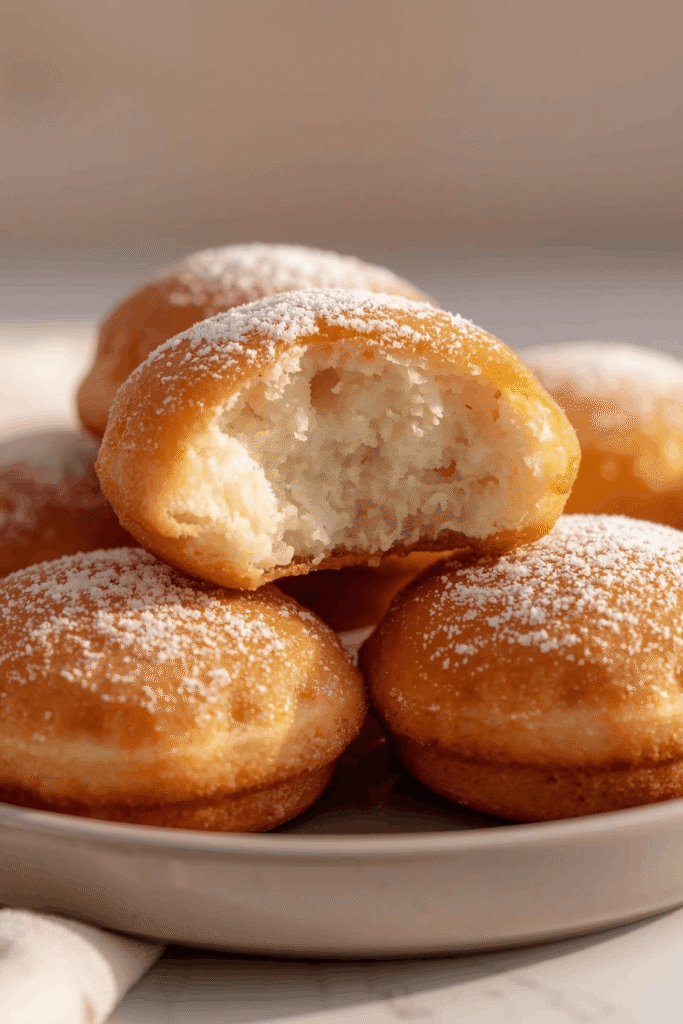
One of the best parts about learning how to make beignets at home is how effortlessly they fit into different occasions. They’re not just a dessert. They’re a full-on experience when styled and served thoughtfully.
For brunch, pair warm beignets with fresh berries, Greek yogurt, and a big pot of coffee or matcha lattes. The contrast between light sweetness and creamy or tangy sides keeps the plate balanced without feeling heavy. If you’re hosting, arrange beignets on a large platter and let guests dust their own powdered sugar. It feels interactive and fun.
For casual get-togethers, beignets shine as shareable finger food. Serve them with small dipping bowls:
- Chocolate sauce
- Vanilla glaze
- Raspberry jam
- Salted caramel
This creates variety without needing multiple batches.
On cozy weekends, treat beignets like a self-care ritual. Light a candle, make your favorite warm drink, and enjoy them slowly while they’re still warm. Small rituals like this increase perceived enjoyment and satisfaction. Research shows presentation alone can improve taste perception by up to 18 percent.
Pro Tip: If you want Instagram or Pinterest-worthy presentation, dust powdered sugar using a fine mesh sieve for even coverage and softer visuals.
If you’re building a hosting menu, beignets pair beautifully with savory brunch items like scrambled eggs, breakfast casseroles, or fresh salads. That sweet-salty balance keeps guests reaching for seconds.
They also work surprisingly well as dessert after a light dinner. Portion control feels easier when servings are small and airy instead of heavy cake slices.
Once you start making beignets at home regularly, you’ll notice how flexible they are. One base recipe can support brunch spreads, date nights, girls’ mornings, or solo comfort moments without extra effort.
Common mistakes to avoid
Using cold milk
Yeast won’t activate properly.
Overflouring the dough
Creates dense beignets.
Incorrect oil temperature
Leads to greasy or burnt results.
Overcrowding the fryer
Drops oil temperature rapidly.
Waiting too long to dust sugar
Sugar won’t stick well.
How to store and reheat beignets
Beignets are best fresh, but leftovers happen.
Short-term storage
- Room temperature for up to 12 hours in airtight container
Reheating
- Oven at 300°F for 5–7 minutes
- Air fryer at 320°F for 3–4 minutes
- Avoid microwave unless necessary
Powdered sugar can be refreshed after reheating.
FAQs
Hand mixing and kneading works perfectly. Expect slightly more elbow grease.
Yes. Refrigerate overnight after first rise and bring to room temperature before frying.
Neutral oils like canola, vegetable, or peanut oil perform best.
Oil temperature was likely too low or overcrowding occurred.
Baking changes the texture significantly. They become more bread-like than airy.
They’re similar but lighter and less sweet, with a more open crumb.
Final thoughts
Learning how to make beignets at home opens the door to bakery-quality treats without the café price tag. The process is approachable, rewarding, and endlessly customizable for different moods and seasons.
Once you’ve mastered the base dough, you’ll find yourself experimenting with flavors, fillings, and brunch spreads like a confident home baker.
Warm beignets, powdered sugar on your fingertips, and coffee nearby? That’s the kind of simple joy that never gets old.