
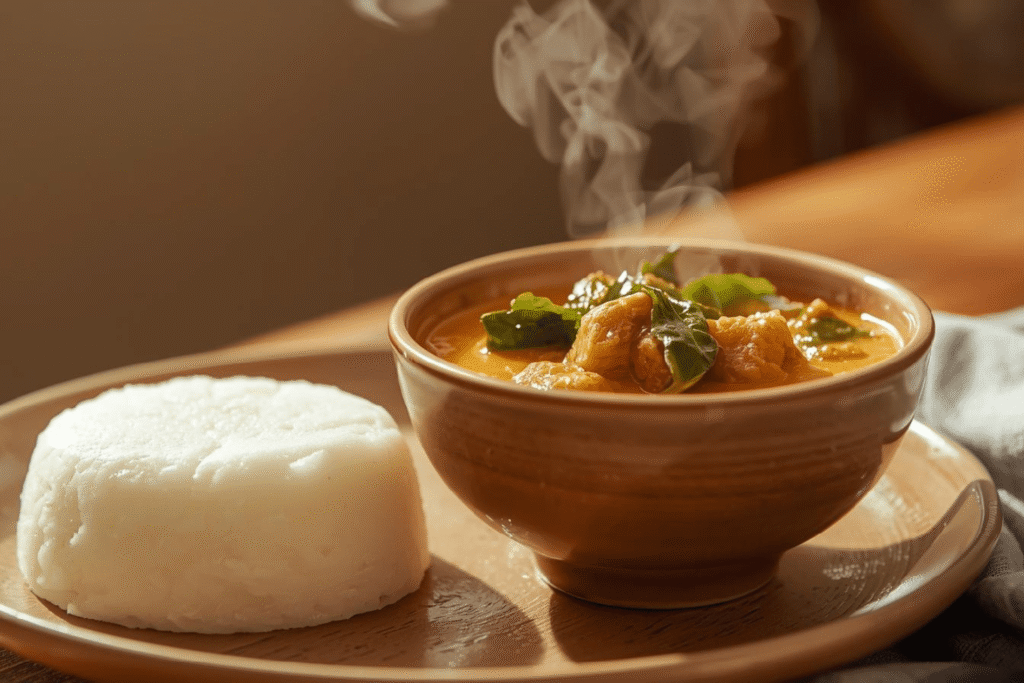
If you have been craving a cozy, filling, soul-warming meal, learning how to make fufu and egusi soup is about to become your new favorite kitchen skill.
This combo is one of the most loved comfort meals across West Africa, and for good reason. It is rich, hearty, packed with flavor, and surprisingly simple once you understand the steps.
Fufu gives you that soft, stretchy, satisfying swallow, while egusi soup brings bold, nutty, deeply savory goodness that feels like a hug in a bowl.
And the best part? You do not need fancy equipment or hard-to-find ingredients to make this at home.
Pro Tip: Once you master the base recipe, you can customize proteins and spice levels to match your mood and your fridge.
What is fufu and egusi soup and why everyone loves it
Fufu is a soft dough made from starchy foods like cassava, yam, or plantain. It is rolled into small balls and dipped into soup, not eaten with a fork.
Egusi soup is made from ground melon seeds, which give the soup its thick, creamy texture and nutty flavor. It is usually cooked with palm oil, leafy greens, peppers, and protein.
Together, they create a meal that is:
- Very filling
- High in energy
- Packed with bold flavors and rich textures
Cassava alone is a staple food for hundreds of millions of people worldwide, especially across Africa, which tells you just how reliable and satisfying it is as a base food.
Egusi seeds are rich in healthy fats and plant protein, which is why this soup feels indulgent but still nourishing.
This meal is often served at family gatherings, celebrations, and weekends when everyone is ready to eat properly and relax after a long week.
Ingredients you will need for fufu and egusi soup
Ingredients for egusi soup
You can adjust quantities depending on how many people you are feeding, but this is a great base for about 4 servings.
- 2 cups ground egusi (melon seeds)
- 1/2 cup palm oil
- 1 medium onion, blended
- 2 to 3 tablespoons ground crayfish
- 2 to 3 fresh peppers, blended (adjust to taste)
- 3 to 4 cups meat or fish stock
- Protein of choice: beef, goat, chicken, dried fish, or stockfish
- Leafy greens like spinach, pumpkin leaves, or bitterleaf
- Salt to taste
- Bouillon seasoning if you like extra depth
Pro Tip: Using mixed proteins gives the soup deeper flavor and more interesting texture.
Ingredients for fufu
Your fufu choice depends on what you prefer and what is available near you.
For traditional cassava fufu:
- Fresh or fermented cassava, pounded and cooked
For easy stovetop fufu using flour: - Cassava fufu flour or plantain fufu flour
- Water
For instant fufu: - Instant fufu mix
- Hot water
If this is your first time, using fufu flour or instant mix is totally fine and still very delicious.
How to prepare the egusi before cooking
This step makes a huge difference in how your soup turns out.
Egusi should not be dumped dry into hot oil. That usually leads to clumps and uneven cooking.
Instead, mix the ground egusi with:
- A bit of blended onion
- A small splash of water
You are aiming for a thick paste, not a watery batter.
This paste helps the egusi cook into soft, fluffy curds that thicken the soup naturally.
If you love chunky egusi with visible seed curds, keep the paste thick.
If you prefer smoother soup, add slightly more liquid so the egusi disperses more.
Pro Tip: Let the paste rest for 5 to 10 minutes before cooking. It helps the seeds absorb moisture and cook more evenly.
How to cook egusi soup step by step
Building the base flavor
Start by boiling your meat or protein until tender and well seasoned.
Use onions, salt, and seasoning at this stage so the stock becomes flavorful.
Once the meat is cooked, keep the stock, do not throw it away. That liquid is pure gold for your soup.
In a separate pot, heat palm oil on medium heat.
Add blended onions and cook until the oil starts to separate slightly and smell fragrant.
Then add blended peppers and crayfish.
Cook this mixture for several minutes until it thickens slightly and the raw pepper smell disappears.
This step builds the backbone of the entire soup flavor.
Adding the egusi paste
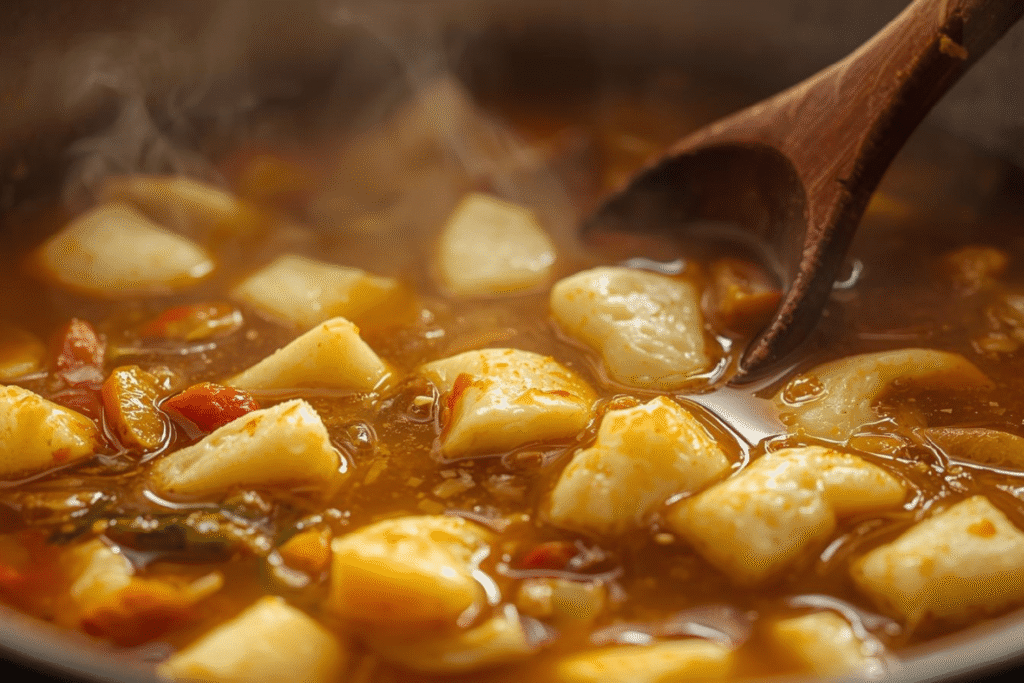
Now it is time for the egusi.
Spoon the paste gently into the sauce without stirring immediately.
Let the egusi sit and steam in the oil for about 5 minutes.
This helps it set and prevents it from dissolving into mush.
After that, gently stir to break the egusi into soft chunks.
Add your meat and some of the stock gradually until you reach your desired thickness.
Egusi soup should be thick and rich, not watery.
Let it simmer gently so the flavors blend and the oil rises slightly to the top.
Pro Tip: Do not rush this stage. Slow simmering makes the soup taste deeper and more balanced.
Final seasoning and texture check
Add your leafy greens last so they stay bright and fresh.
Stir gently and let them cook just until soft.
Taste and adjust salt or seasoning if needed.
At this point, your soup should be:
- Thick and creamy
- Slightly oily on top
- Packed with visible egusi and protein
Turn off the heat and let it rest for a few minutes before serving. This allows flavors to settle and intensify.
How to make fufu the easy way
Stovetop method
If you are using cassava or plantain fufu flour, this method is simple and reliable.
Bring water to a boil in a sturdy pot.
Gradually add the flour while stirring continuously with a wooden spoon or spatula.
The mixture will start to thicken quickly.
Keep turning and folding the dough to prevent lumps and burning.
Add small splashes of water if it becomes too stiff.
Cook for about 5 to 8 minutes until smooth and stretchy.
Scoop and shape into balls using a spoon and a bowl of water to prevent sticking.
Pro Tip: A heavy-bottom pot makes stirring much easier and prevents scorching.
Instant fufu option
Instant fufu is perfect for busy days when you still want comfort food.
Pour the mix into hot water and stir vigorously until smooth.
Cook briefly until it thickens and becomes elastic.
Shape and serve immediately.
While the texture may be slightly different from traditional fufu, it still pairs beautifully with egusi soup and saves a lot of time.
How to serve fufu and egusi soup properly
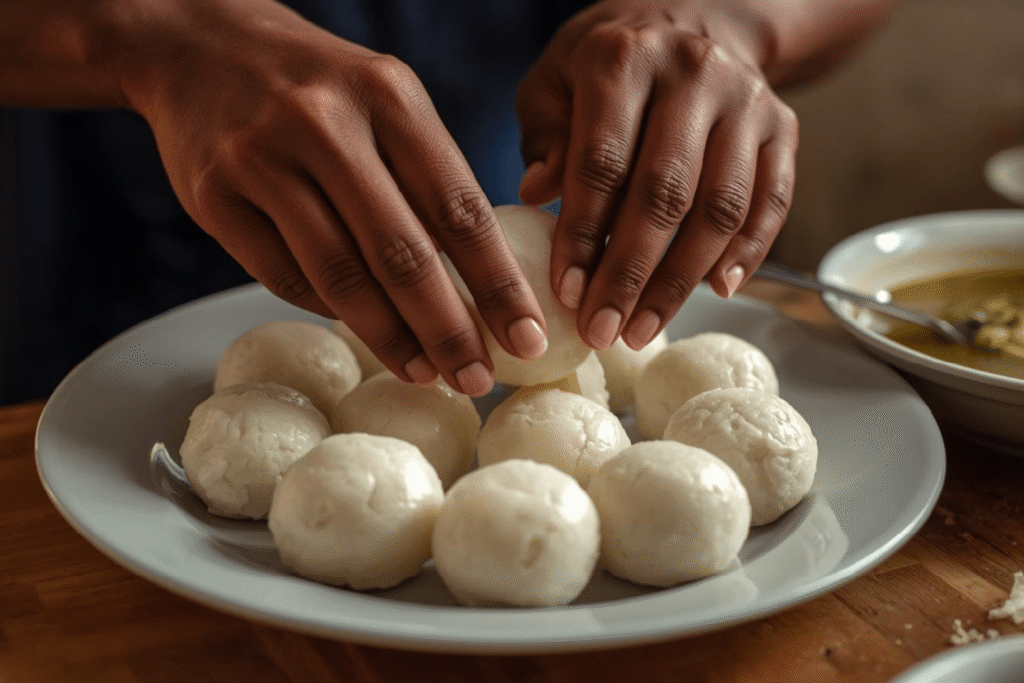
Fufu is not eaten with cutlery. It is rolled into small balls, dipped into soup, and swallowed without chewing.
To serve:
- Place fufu balls in a bowl or plate
- Ladle hot egusi soup over or beside the fufu
- Make sure there is enough soup to dip generously
If you are hosting, smaller portions of fufu look more inviting and are easier to handle.
This meal is best enjoyed hot, fresh, and unhurried. It is not fast food, it is sit-down, relax, enjoy-your-life food.
Common mistakes to avoid when making fufu and egusi soup
Even simple recipes can go wrong with small missteps.
Here are the most common ones to avoid:
- Adding egusi directly into hot oil without mixing into paste first
- Stirring egusi immediately before it sets
- Making the soup too watery
- Overcooking leafy greens until they lose color and flavor
- Undersalting the meat stock
Each of these can affect texture and depth of flavor more than you might expect.
Taking a few extra minutes at each stage really pays off in the final result.
Storage and reheating tips
Egusi soup actually tastes even better the next day once flavors fully develop.
To store:
- Let soup cool completely
- Store in airtight containers
- Refrigerate for up to 3 days or freeze for longer storage
Reheat gently on the stove, adding a splash of water or stock if needed to loosen the texture.
Fufu is best made fresh, but if you must store it, wrap tightly and reheat by steaming or microwaving with a damp cover.
Pro Tip: Freeze soup separately from fufu for better texture and easier reheating.
FAQs
Yes, when eaten in balanced portions. Egusi seeds are rich in healthy fats and plant protein, while leafy greens add fiber and vitamins. Pairing with fufu makes it a high-energy meal that keeps you full for hours.
You can, but the flavor will be very different. Palm oil gives egusi soup its signature taste and color. If you must substitute, use a neutral oil and expect a lighter flavor profile.
You can use plantain fufu, yam fufu, or even pounded yam. All pair beautifully with egusi soup and offer slightly different textures and flavors.
Bitterness usually comes from bitterleaf not being washed properly or from burnt palm oil. Always wash bitterleaf thoroughly and avoid overheating oil before adding ingredients.
Absolutely. Skip meat and fish, use vegetable stock, and add mushrooms for texture. The egusi itself provides richness and body to the soup.
Final thoughts
Learning how to make fufu and egusi soup is more than just learning a recipe, it is learning a comfort ritual that brings people together.
It is warm, filling, deeply flavorful, and incredibly satisfying when you make it yourself.
Once you try it, this will not be a once-a-year dish. It will become a repeat favorite for cozy weekends and special meals.