

If you have ever opened a can of cream of chicken soup, glanced at the ingredient list, and thought there has to be a better way, you are absolutely right. Homemade cream of chicken soup is richer, fresher, and surprisingly easy to make, even on a busy weeknight.
This is not one of those recipes that requires hours of simmering or hard-to-find ingredients. With a handful of pantry staples and about 30 minutes, you can make a creamy, comforting soup that tastes like real food because it is.
This guide shows you how to make homemade cream of chicken soup from scratch, why it tastes better than canned, and how to use it in casseroles, pot pies, or straight from the bowl.
Why make cream of chicken soup from scratch
Store-bought cream of chicken soup is convenient, but convenience comes at a cost.
One standard can contains:
- Over 800 mg of sodium
- Added preservatives and stabilizers
- Very little actual chicken
Homemade cream of chicken soup gives you full control over ingredients, flavor, and texture. You can adjust salt levels, make it thicker or thinner, and customize it to your taste.
It also freezes well, making it perfect for meal prep and cozy future dinners.
What you need to make homemade cream of chicken soup
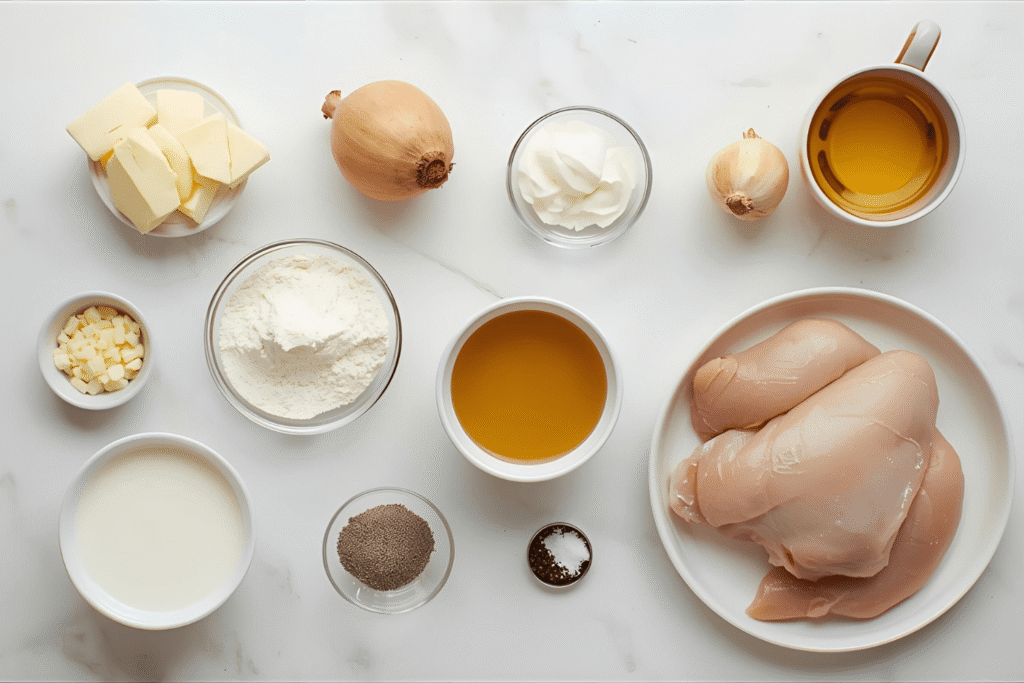
This recipe uses simple ingredients you probably already have. No condensed soup cans required.
Ingredient list
- Butter
- Onion or shallot
- Garlic
- Flour
- Chicken broth
- Milk or cream
- Cooked chicken
- Salt and pepper
Optional add-ins like thyme or bay leaf can elevate the flavor, but the base stays simple and approachable.
Pro Tip: Rotisserie chicken is a huge time saver and adds great depth of flavor.
Best chicken to use for cream of chicken soup
You have a few great options, depending on what you have on hand.
Rotisserie chicken
This is the fastest and most flavorful option. The meat is already seasoned and tender, making it ideal for soups.
Leftover roasted chicken
Perfect for reducing food waste and adding richness.
Poached chicken breasts
A lean option that works well if you want a lighter soup.
Dark meat tends to add more flavor, while white meat keeps things mild. A mix of both is ideal.
How to make homemade cream of chicken soup step by step
This method builds flavor gradually and intentionally, creating a soup that is rich and creamy without feeling heavy or overly thick. Each step plays a role in developing texture and depth, so taking your time here makes a noticeable difference in the final result.
Step 1 – Sauté aromatics
Melt butter in a large saucepan over medium heat. Once melted, add finely chopped onion and cook, stirring occasionally, until soft and translucent, about 4–5 minutes. The onions should look glossy and tender, not browned.
Add garlic and cook for about 30 seconds, just until fragrant. Keep the heat moderate and stir constantly during this step. Garlic burns quickly, and burnt garlic can make the soup bitter.
This step creates the flavor foundation for the entire soup, so letting the aromatics soften properly is key.
Pro Tip: If you want extra depth, add a pinch of dried thyme or a bay leaf at this stage.
Step 2 – Make the roux
Sprinkle flour evenly over the onion and garlic mixture. Stir continuously for 1–2 minutes until the mixture thickens slightly and looks paste-like.
Cooking the flour is important. It removes the raw flour taste and ensures the soup thickens smoothly rather than tasting chalky. The mixture should remain pale in color. If it starts to brown, lower the heat slightly.
The roux is what gives cream of chicken soup its signature body.
Step 3 – Slowly add chicken broth
Begin adding chicken broth gradually, whisking constantly. Start with a small amount to loosen the roux, then continue adding the broth in stages.
This slow addition prevents lumps and helps create a silky texture. As the broth heats, the soup will begin to thicken naturally.
Keep stirring until the mixture is completely smooth before moving on to the next step.
Step 4 – Add milk or cream
Once the soup base is smooth and slightly thickened, stir in milk or cream. Whole milk creates a lighter, everyday version, while cream results in a richer, more indulgent soup.
Reduce the heat slightly and bring the soup to a gentle simmer. Avoid boiling, as high heat can cause dairy to separate and affect the texture.
At this stage, the soup should look creamy, smooth, and cohesive.
Step 5 – Add chicken and season
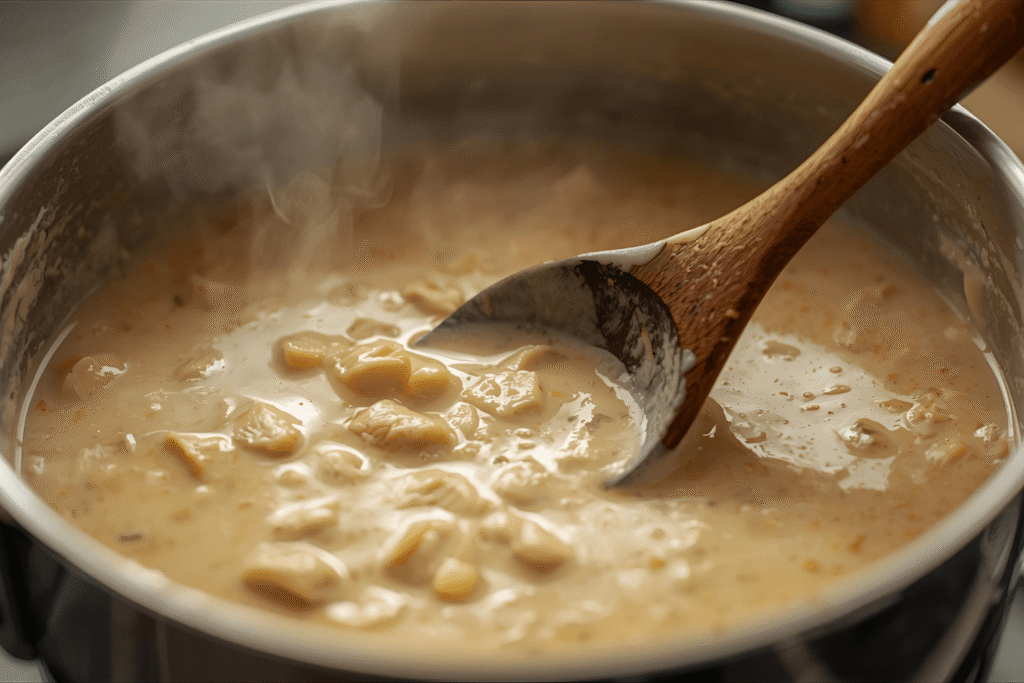
Stir in chopped cooked chicken, making sure it is evenly distributed throughout the soup. Season with salt and pepper, starting small and adjusting gradually.
Let the soup simmer gently for 10–15 minutes, stirring occasionally. This allows the chicken to warm through and the flavors to fully blend.
Taste the soup and adjust seasoning as needed before serving or using it in recipes.
How to customize the flavor of homemade cream of chicken soup
One of the biggest advantages of making cream of chicken soup from scratch is how easy it is to customize. Small changes can completely shift the flavor profile while keeping the same creamy base.
For a more savory soup, add a splash of Worcestershire sauce or a pinch of poultry seasoning. If you love herby flavors, fresh thyme, parsley, or a bay leaf simmered into the soup add warmth and depth.
To boost richness without adding extra cream, a spoonful of cream cheese or grated parmesan can be stirred in at the end. For a slightly lighter, fresher taste, finish the soup with a squeeze of lemon juice or a touch of black pepper.
These simple adjustments let you tailor the soup for casseroles, pot pies, or cozy bowls all on their own.
How thick should cream of chicken soup be
Homemade cream of chicken soup should be thick but pourable.
Think:
- Thicker than regular soup
- Thinner than gravy
If it becomes too thick, add a splash of broth or milk. If it is too thin, simmer a few minutes longer or whisk in a small slurry of flour and milk.
How to use homemade cream of chicken soup
This soup is incredibly versatile and works in almost any recipe that calls for canned cream of chicken soup.
Popular uses
- Chicken and rice casserole
- Chicken pot pie
- Creamy pasta sauces
- Chicken and biscuit bake
- Straight from the bowl with crusty bread
Using homemade soup instantly upgrades comfort food classics.
Is homemade cream of chicken soup healthier
Yes, and the difference is significant.
Homemade versions typically contain:
- 40–60 percent less sodium
- More protein from real chicken
- No artificial stabilizers
According to nutrition data, reducing sodium intake by even 1,000 mg per day can help lower blood pressure and improve heart health. Making soups at home is an easy way to do that.
How to store homemade cream of chicken soup
Proper storage keeps your soup fresh and safe.
In the fridge
Store in an airtight container for up to 4 days.
In the freezer
Freeze for up to 3 months. Let the soup cool completely before freezing.
When reheating, stir well to restore the creamy texture.
Pro Tip: Freeze in one-cup portions for easy recipe swaps later.
Can you make it dairy-free or gluten-free
Yes, with simple substitutions.
Dairy-free options
- Use unsweetened almond milk or oat milk
- Swap butter for olive oil or dairy-free butter
Gluten-free options
- Use gluten-free flour
- Thicken with cornstarch instead of a roux
The texture may vary slightly, but the flavor stays comforting and satisfying.
Common mistakes to avoid
Even simple recipes can go wrong without a few key tips.
Boiling the soup
Boiling can cause dairy to separate. Keep it at a gentle simmer.
Adding liquid too fast
Slow additions prevent lumps.
Over-seasoning early
Salt gradually and taste at the end.
FAQs
It lasts up to 4 days in the fridge and 3 months in the freezer when stored properly.
Yes. One cup of homemade soup replaces one standard can.
Yes, blending creates an ultra-smooth texture, especially if you prefer no chicken chunks.
Graininess usually comes from overheating dairy or not stirring enough during thickening.
Absolutely. The flavor often improves after a day in the fridge.
Final thoughts on homemade cream of chicken soup
Learning how to make homemade cream of chicken soup is one of those kitchen skills that instantly elevates your cooking. It replaces processed shortcuts with real ingredients and gives you a base that works for countless meals.
Once you make it from scratch, it is hard to go back to canned. The flavor is richer, the texture is better, and the process is far easier than most people expect.
Keep this recipe in your rotation, and you will always have a cozy, reliable option ready for busy nights and comforting dinners.