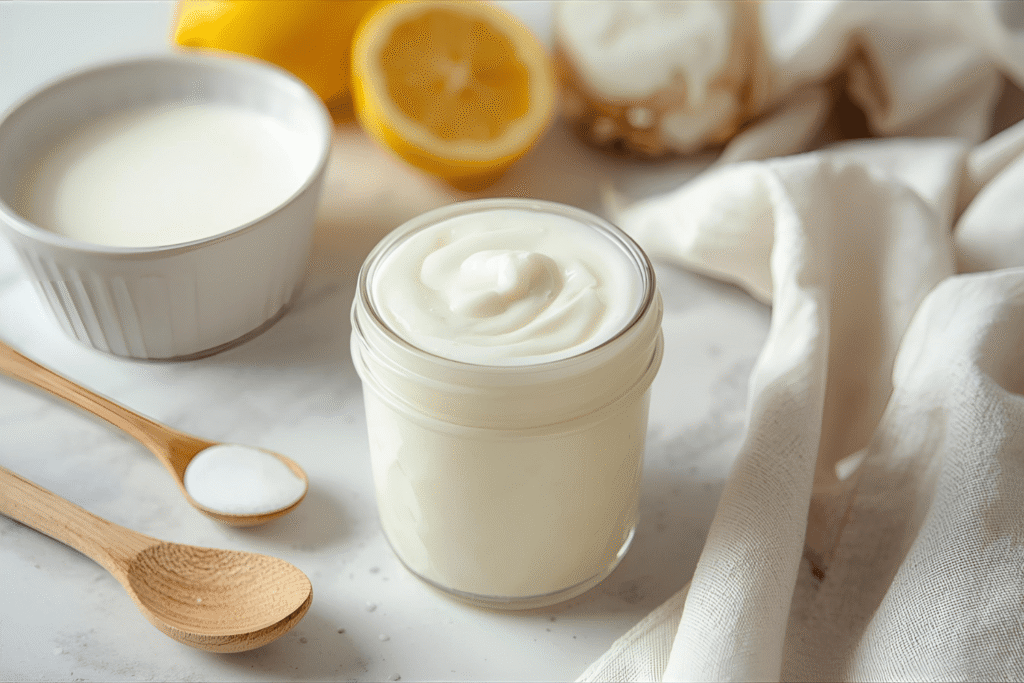
If you have ever opened the fridge mid recipe and realized you forgot to buy sour cream, you know the mini heart attack that follows. Learning how to make sour cream from milk is basically the ultimate kitchen cheat code. It’s easy, budget friendly, and honestly a little magical.
Homemade sour cream is also far cheaper. The average tub of sour cream costs €2.50 to €3.00, while making it at home typically costs under €1 depending on the milk you use.
And here is something fun: according to recent food waste studies, around 20 percent of groceries are thrown away simply because people don’t know what to do with leftover ingredients. Turning basic milk into sour cream is one way to stop that cycle.
When is homemade better?
- When you want control over thickness
- When you’re cutting back on additives
- When you’re cooking for someone sensitive to preservatives
- When you want it now and don’t feel like running to the store
Making sour cream from milk might sound intimidating, but the process is incredibly forgiving. As long as you have milk and something acidic, you’re basically set.
What you need to make sour cream from milk
Once you see how short this list is, you’ll feel like you’ve unlocked secret kitchen knowledge.
Ingredients
- 1 cup whole milk (lower fat works too but whole gives the best result)
- 1 to 2 tablespoons of acid
- Lemon juice
- White vinegar
- Buttermilk
- Plain yogurt (with live cultures)
Tools
- A clean jar or glass
- A spoon
- A cloth or lid
- A warm spot for fermentation
Substitutions
- Milk options: whole milk gives the richest sour cream, but 2 percent still works.
- Acid options: lemon juice gives a bright flavor, vinegar gives a neutral tang, and yogurt creates thick results.
- Dairy free alternatives: this specific recipe focuses on dairy sour cream, but coconut milk plus lemon juice works surprisingly well if you ever want a plant-based version.
How the sour cream process actually works
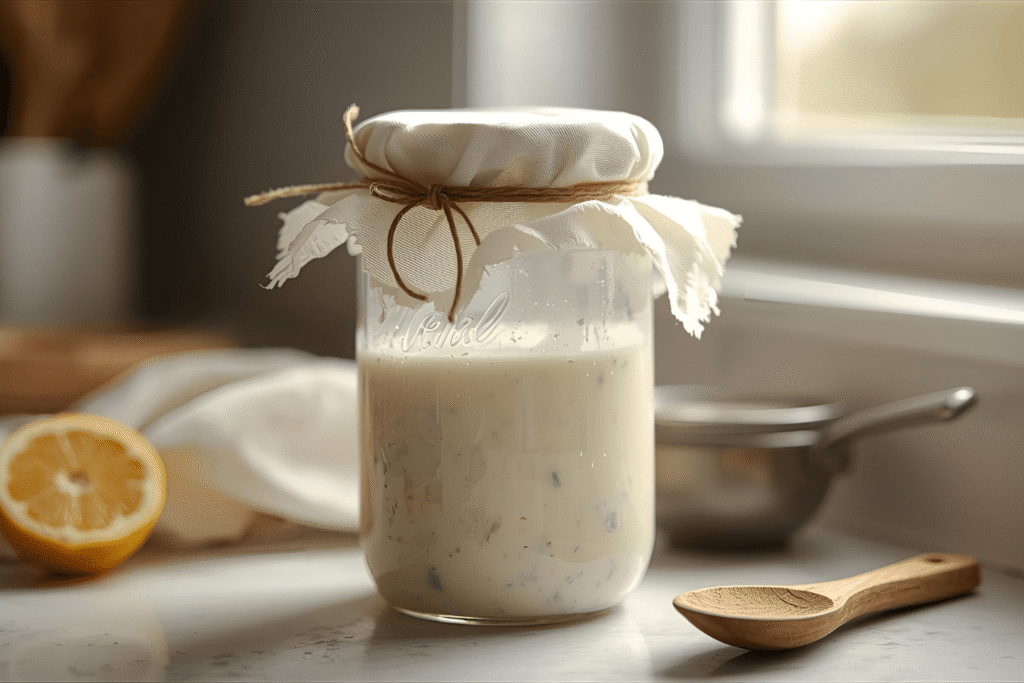
Making sour cream from milk feels like a little science experiment in your kitchen. Here’s what’s happening behind the scenes.
When you combine milk with an acid, the mixture starts to curdle slightly and thicken. If you use yogurt or buttermilk, the live cultures help the milk ferment gently, creating that creamy tangy finish.
This is why homemade sour cream:
- Gets thicker as it sits
- Develops a tangier flavor over time
- Can be adjusted to your taste
Fermentation sounds scary, but it’s one of the oldest methods of preserving food, dating back at least 7,000 years. As long as you start with fresh milk and keep everything clean, you’re good.
The easiest method for how to make sour cream from milk
This is the go to method because it uses ingredients you already have in your kitchen, takes almost no effort, and produces a creamy, tangy sour cream that tastes fresher than anything store bought. The method is simple, but the tiny details matter because they help the milk thicken properly and develop that classic tang.
Step by step instructions
- Warm your milk slightly
Pour 1 cup of milk into a saucepan or microwave safe container and warm it until it reaches a lukewarm temperature. You’re aiming for the same temperature you’d want for proofing yeast, roughly 25 to 30°C.
You should be able to dip your finger into it comfortably. If it feels hot, let it cool for a minute or two before moving on. Warm milk kickstarts the thickening process and helps the acid blend evenly. - Add your acid
Add 1 tablespoon of lemon juice or white vinegar directly into the warm milk. This is where the magic begins.
Stir slowly for about 10 to 15 seconds so the acid is fully incorporated. You might notice the milk looking slightly grainy or thicker almost instantly. That’s exactly what you want. - Let it sit
Leave the mixture at room temperature for 10 minutes. During this time, the milk and acid react, causing it to thicken into a light, creamy base.
If your kitchen is warm, you may see the texture change quite fast. In cooler rooms, the thickening can take a few extra minutes. - Optional: add 1 tablespoon of yogurt
If you want sour cream that tastes richer and silkier, add 1 tablespoon of plain yogurt with live cultures.
This step isn’t required, but it boosts fermentation, improves texture, and gives your sour cream that beautifully smooth finish. Stir it in gently until the mixture looks uniform. - Cover and let it rest
Transfer the mixture into a clean glass jar. Cover the top with a breathable cloth or a loosely placed lid.
Let it rest in a warm spot for 12 to 24 hours. This could be inside an unlit oven, near a sunny window, or anywhere slightly warm but not hot.
During this time, friendly bacteria work their magic, thickening the mixture and developing that classic tangy flavor. The longer it sits, the tangier and thicker it becomes. - Refrigerate
Once your sour cream has thickened to your liking, place it in the fridge for a few hours to firm up fully.
Refrigeration stops fermentation and locks in the flavor. After chilling, your sour cream will be noticeably thicker and creamier.
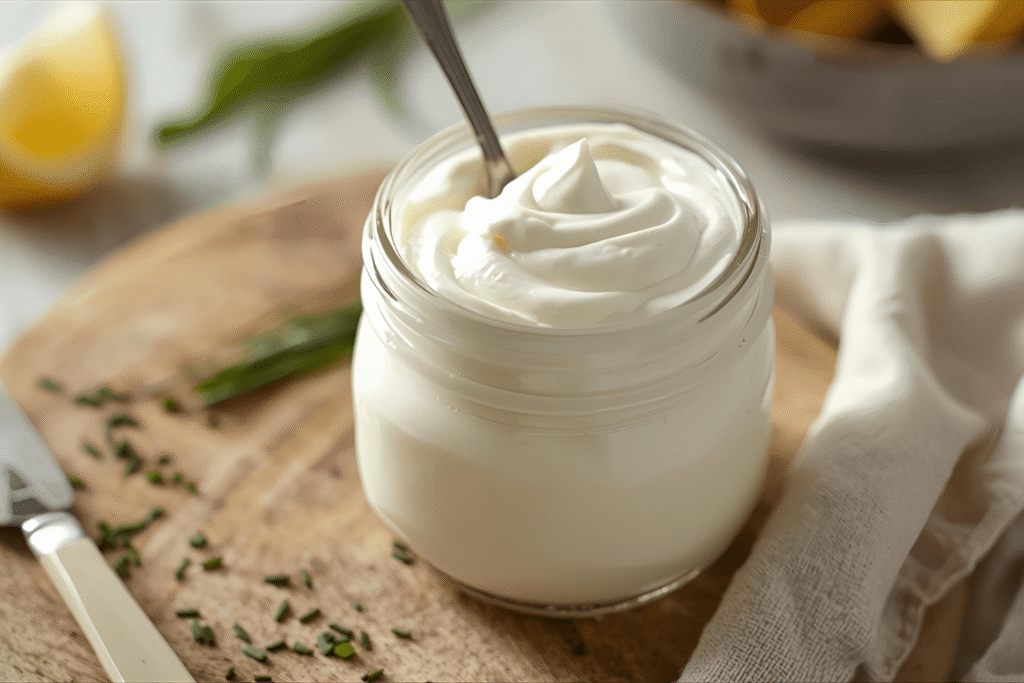
You now have fresh, homemade sour cream with almost zero effort and only minutes of active work.
Notes
- If your room is cold, fermentation can take longer, sometimes up to 36 hours.
- If it gets thicker than you prefer, whisk in a teaspoon of milk until you reach the right consistency.
- If it turns out too thin, let it sit longer at room temperature or add a tiny spoonful of yogurt to encourage thickening.
Pro Tip
If you want ultra silky sour cream, strain your final mixture through a fine cloth or coffee filter for 5 to 10 minutes. This removes excess whey and leaves you with a thick, luxurious texture similar to Greek style sour cream.
Alternative methods
If you’re feeling creative or only have certain ingredients, here are the best alternative ways to make sour cream from milk.
Making sour cream from milk and vinegar
This is the fastest method.
- 1 cup milk
- 1 tablespoon white vinegar
- Sit for 10 minutes
This method isn’t as thick as others but works perfectly as a quick sour cream substitute for baking.
Making sour cream from milk and yogurt
Using yogurt with live cultures gives you amazing results.
- 1 cup milk
- 2 tablespoons plain yogurt
- Leave for 12 to 24 hours
This creates the tangiest and thickest result, great for dips and toppings.
Making sour cream from milk and buttermilk
If you have buttermilk, this is the traditional way.
- 1 cup milk
- 1 tablespoon buttermilk
- Leave for 24 hours
The flavor is mild and creamy, ideal for cooking.
Making sour cream with milk only (no cream)
Some recipes use heavy cream, but this version sticks with milk only. Your sour cream will be slightly lighter but still delicious.
How to store homemade sour cream
Homemade sour cream stores surprisingly well, but here’s how to keep it fresh and safe.
- Keep it sealed in a clean jar
- Store in the fridge
- Use within 7 to 10 days
Signs it has gone bad
- A strong sour smell
- Visible mold
- Separation that doesn’t mix back together
- A fizzy texture or taste
Pro Tip
Never double dip in the jar. Even a tiny amount of bacteria from a spoon can shorten the shelf life dramatically.
How to use your homemade sour cream
This is where things get fun. Sour cream is one of those ingredients that makes everything better.
Cooking ideas
- Creamy soups
- Pasta sauces
- Chicken marinades
- Tacos and burritos
Baking ideas
Sour cream is famous for making baked goods extra moist.
- Banana bread
- Coffee cake
- Muffins
- Pancakes
- Cheesecake
Topping ideas
- Baked potatoes
- Chili
- Nachos
- Fresh fruit bowls
Pro Tip
If you bake often, label your jar with the date. Fresh sour cream makes your baked goods fluffier.
Troubleshooting common issues
Why is my sour cream too runny?
- It didn’t ferment long enough
- Your milk was very cold
- You used low fat milk
Fix it: let it sit another 12 hours or stir in a teaspoon of yogurt.
Why is it too thick?
This usually means it fermented longer than needed.
Fix it: whisk in a teaspoon of milk at a time until it loosens.
Why is it too tangy?
Letting it sit too long increases the tang.
Fix it: mix in a splash of fresh milk to mellow the flavor.
Why didn’t it thicken at all?
The most common reasons:
- Milk was ultra pasteurized
- Yogurt didn’t have live cultures
- Room was too cold
Try again with fresh milk or a warmer environment.
FAQs
Yes. Vinegar, yogurt, or buttermilk all work. Yogurt creates the thickest result.
Absolutely. It will be slightly thinner but still creamy.
Yes, but avoid boiling. It can separate. Add it at the end of cooking.
As long as you start with fresh milk and keep everything clean, it’s safe. Fermentation is a natural process used for thousands of years.
It tastes fresher and often creamier. You can adjust the tang to your liking.
Yes. This is the fastest substitute and works well for baking.
Technically yes, but the texture will change. It becomes grainy, so freezing isn’t recommended unless using it for cooking.
A little separation is normal. Stir it back together. Large watery separation means it’s too old.
Final thoughts
Learning how to make sour cream from milk is one of those skills that makes you feel like a kitchen genius without actually doing much work. Once you try it, you’ll realize how easy and fun it is, and you might never go back to store bought again.
This recipe is quick, customizable, and perfect whether you’re cooking, baking, or topping your favorite meals. Next time you’re out of sour cream, skip the store trip and make your own instead.