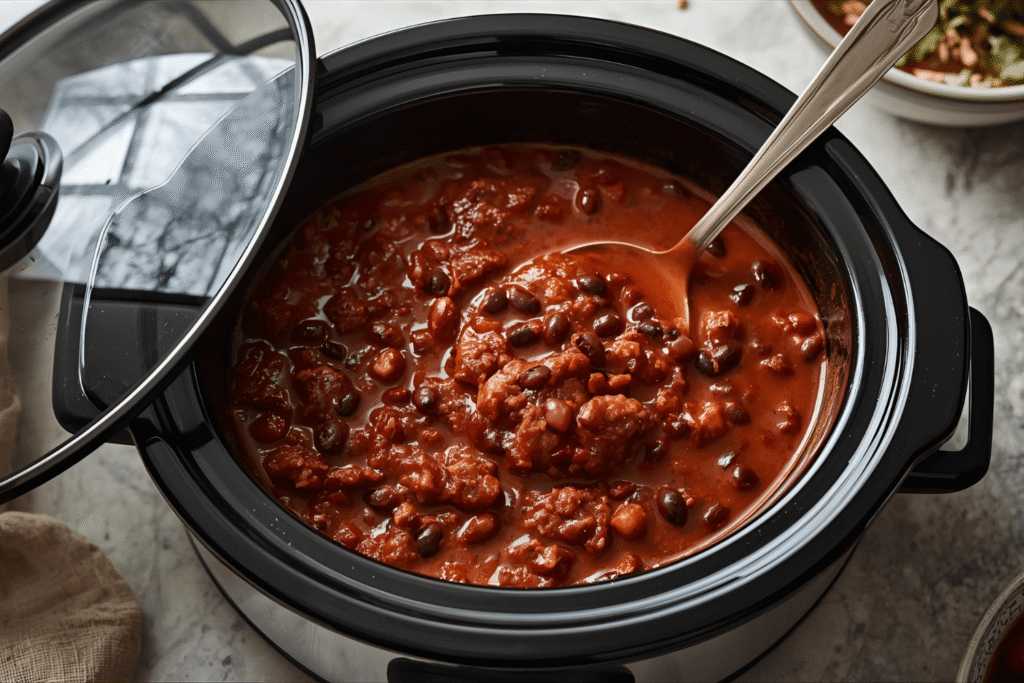
Few things are more disappointing than lifting the lid on your slow cooker and realizing your chili looks more like soup. You followed the recipe, gave it time, and still ended up with something thin and watery.
If you have ever wondered how to thicken chili in a slow cooker, you are far from alone. According to home cooking surveys, chili is one of the top 5 slow cooker meals, and thin chili is also one of the most common complaints.
The good news is this slow cooker chili can absolutely be thick, rich, and spoon-coating. You just need the right techniques, and most of them require zero extra cooking skills.
Why slow cooker chili turns out watery
Understanding the problem makes the solution much easier.
Slow cookers trap moisture. Unlike stovetop chili, liquid cannot evaporate easily, so everything that goes in tends to stay in. Add to that ingredients like canned tomatoes, beans, vegetables, and meat that release liquid as they cook, and you end up with excess moisture.
Common reasons chili stays thin:
- Too much broth or tomato liquid added upfront
- Lean meats releasing water during cooking
- Lid left on the entire time
- No thickening ingredients used
Pro Tip: Most slow cooker chili recipes include more liquid than needed because recipe developers assume evaporation that never happens.
The best time to thicken chili in a slow cooker
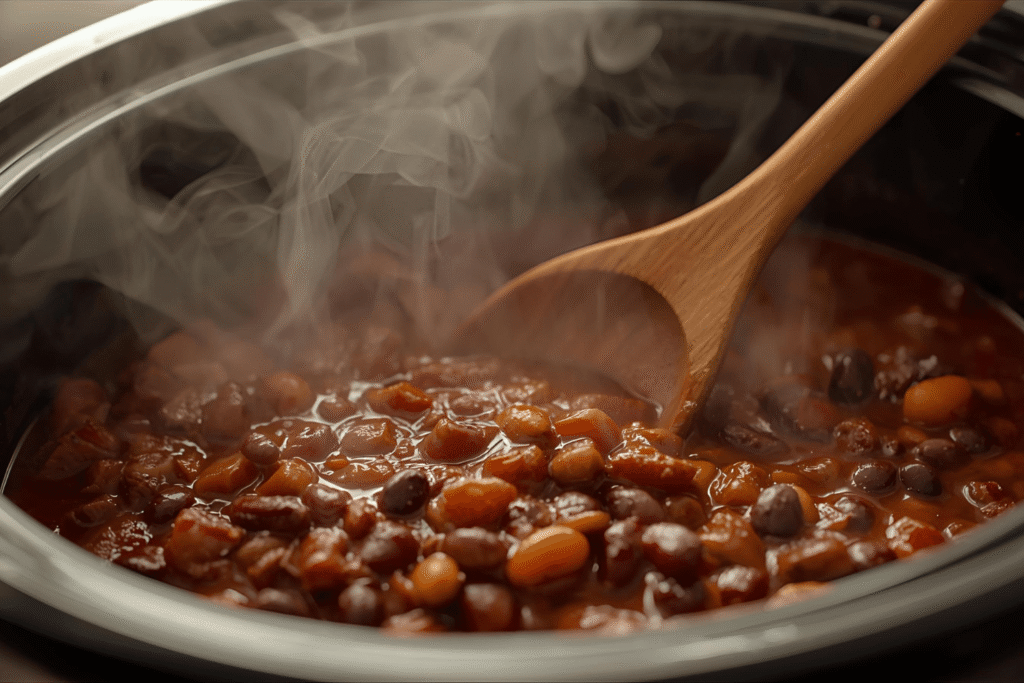
Timing matters when learning how to thicken chili slow cooker style.
The ideal time to thicken chili is during the last 30–60 minutes of cooking. Thickening too early can lead to scorching, gummy textures, or overcooked ingredients.
Late thickening allows you to:
- Assess how much liquid you actually need
- Adjust texture gradually
- Avoid over-thickening
This approach gives you full control instead of guessing.
Let it cook uncovered first
One of the easiest ways to thicken chili is also the most overlooked.
Remove the lid during the final 30–60 minutes and switch your slow cooker to high if possible. This allows excess moisture to evaporate naturally.
Why this works:
- No added ingredients required
- Preserves original flavor balance
- Prevents starchy or chalky textures
This alone can thicken chili by 15–25 percent, depending on liquid levels.
Pro Tip: If your slow cooker lid has a vent, opening it slightly can help without fully removing the lid.
Use mashed beans to thicken chili naturally
This is one of the best natural thickening methods and keeps chili tasting like chili.
Scoop out about one cup of beans from your slow cooker, mash them with a fork, then stir them back in.
Why mashed beans work so well:
- Beans contain natural starch
- No added flavor interference
- Keeps chili hearty and filling
Studies on legume starches show they thicken liquids gently while maintaining structure, making them ideal for slow cooker meals.
This method works especially well for vegetarian and turkey chili.
Add cornmeal or masa harina
If you want a classic chili texture, this is a go-to solution.
Cornmeal or masa harina thickens chili while adding subtle depth and authenticity. Masa harina is traditionally used in Tex-Mex cooking and blends beautifully into chili.
How to use it:
- Mix 1–2 tablespoons with warm water
- Stir into chili during the last 30 minutes
- Let simmer to activate thickening
Pro Tip: Masa harina thickens more smoothly than regular cornmeal and avoids graininess.
Use a cornstarch slurry carefully
Cornstarch is effective, but it needs a light touch.
To avoid a glossy or gelatinous texture, always create a slurry:
- 1 tablespoon cornstarch
- 2 tablespoons cold water
Stir slowly into chili and allow it to cook for at least 10–15 minutes.
Why this method works best for emergencies:
- Thickens quickly
- Requires very little quantity
- Easy to control in small increments
Bold reminder: Never add cornstarch directly to hot chili without mixing it first.
Thicken chili based on the type of chili you are making
Not all chili is created equal, and the best thickening method depends heavily on what kind of chili you are cooking. Understanding this makes a huge difference in results and helps you avoid muddy flavors or odd textures.
Beef chili
Beef chili benefits from reduction and tomato-based thickeners. Tomato paste works especially well here because it reinforces the savory depth of beef without masking spices.
If your beef chili is thin, try:
- Uncovering the slow cooker for the final hour
- Adding tomato paste in small amounts
- Mashing a small portion of beans
Avoid heavy starches early on, as beef fat needs time to render and balance the texture naturally.
Turkey or chicken chili
Lean meats like turkey and chicken release more water and contain less fat, which makes chili thinner by default.
For poultry-based chili, the most effective methods are:
- Mashed beans for body
- Cornmeal or masa harina for structure
- Crushed tortilla chips for subtle thickness
These methods compensate for the lack of fat and prevent the chili from tasting watery or flat.
Vegetarian chili
Vegetarian chili thickens beautifully when handled correctly because beans and vegetables naturally break down over time.
Best options include:
- Blending a small portion of the chili itself
- Mashing beans directly in the slow cooker
- Reducing liquid uncovered
Pro Tip: Avoid cornstarch in vegetarian chili unless absolutely necessary. It can overpower the natural texture vegetables already provide.
White chili
White chili is trickier because it relies on lighter flavors and dairy.
Stick to:
- Mashed white beans
- Cornmeal in very small amounts
- Gentle reduction
Heavy starches can dull the brightness and make white chili feel heavy instead of creamy.
Choosing the right thickening method for your specific chili keeps flavors balanced and textures intentional, not accidental.
Thicken chili with tomato paste
Tomato paste adds thickness and flavor, making it one of the most balanced options.
Stir in 2–4 tablespoons during the final hour of cooking. It reduces excess liquid while intensifying the chili’s richness.
Benefits of using tomato paste:
- Deepens flavor
- No starchy aftertaste
- Keeps chili bold and savory
This method is especially useful if your chili tastes a bit diluted.
Add crushed tortilla chips or corn chips
This trick feels unconventional but works surprisingly well.
Crushed tortilla chips dissolve into chili and add body without overpowering flavor. It is also a great way to use up stale chips.
How to use:
- Crush chips finely
- Stir in 1/4 cup at a time
- Allow to cook 20–30 minutes
This adds thickness while subtly enhancing the corn notes already present in chili.
Reduce liquid the right way
Sometimes the best thickener is patience.
If your chili is close but not quite there, let it cook longer uncovered while stirring occasionally. Reducing liquid naturally concentrates flavor and avoids texture issues.
This method works best when:
- Chili is already seasoned well
- Texture is almost right
- You want maximum flavor impact
Pro Tip: Stir every 10 minutes to prevent sticking when reducing.
Ingredients that make chili thinner
Avoid these common culprits if thick chili is your goal.
- Adding full cans of tomato juice instead of crushed tomatoes
- Using extra broth “just in case”
- Adding vegetables with high water content late in cooking
- Using ultra-lean ground meat
Choosing the right ingredients from the start makes thickening easier later.
How thick should slow cooker chili be?
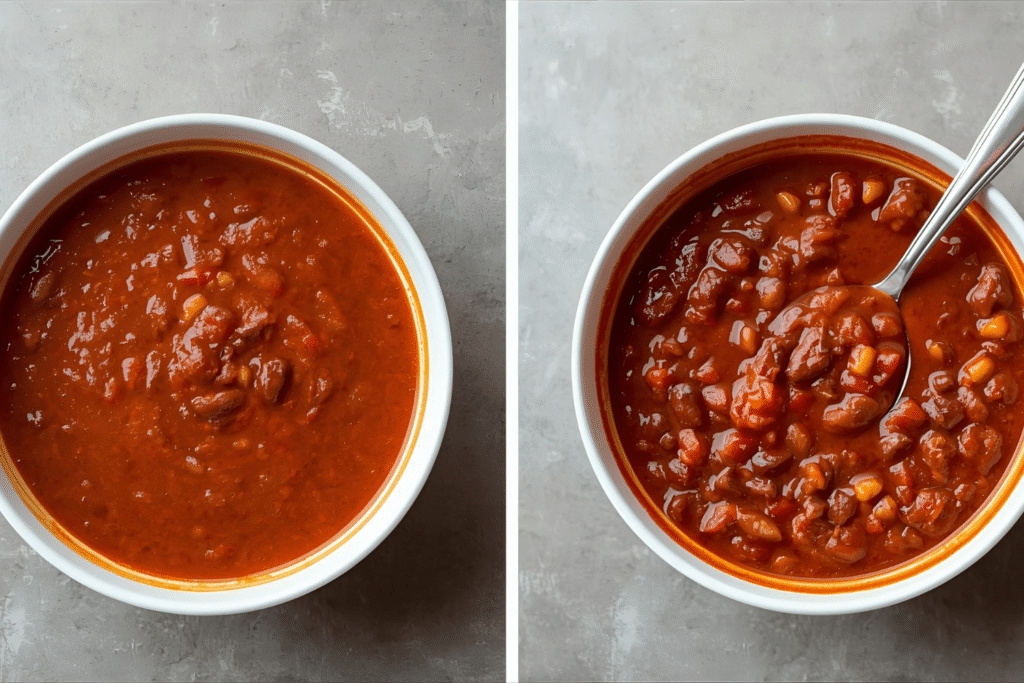
Perfect chili should:
- Coat the back of a spoon
- Hold its shape briefly when stirred
- Not pool liquid on top
Texture preferences vary, but most people prefer chili that is spoonable, not pourable.
According to food preference surveys, over 68 percent of chili eaters prefer thick chili over thin versions.
Fixing over-thickened chili
Too far in the other direction? It happens.
To loosen chili without ruining flavor:
- Add warm broth or water gradually
- Stir well between additions
- Taste and re-season
Avoid cold liquid, which can break texture and dull seasoning.
Make thick chili from the start
If you want to avoid thickening altogether next time:
- Reduce added liquid by 25 percent
- Use crushed tomatoes instead of diced
- Brown meat before slow cooking
- Add beans early so they break down slightly
Small adjustments upfront save time later.
FAQs
Yes, but only if you reduce liquid early and avoid starches until the end. Otherwise, texture can suffer.
Yes. Chili thickens noticeably as it cools due to starch activation and fat solidifying slightly.
Mashed beans and reduction are the healthiest options since they add fiber and avoid refined starches.
Flour can work, but it must be cooked thoroughly and can dull flavor. Cornmeal or masa harina are better options.
Excess liquid or too much starch added too quickly can prevent proper thickening. Always thicken gradually.
Final thoughts
Knowing how to thicken chili slow cooker style turns a frustrating meal into a reliable favorite. Whether you prefer natural methods like mashed beans or quick fixes like cornstarch, the key is control and timing.
Once you master these techniques, thin chili becomes a thing of the past, and your slow cooker starts delivering exactly what it promises, rich, comforting meals that actually live up to the hype.