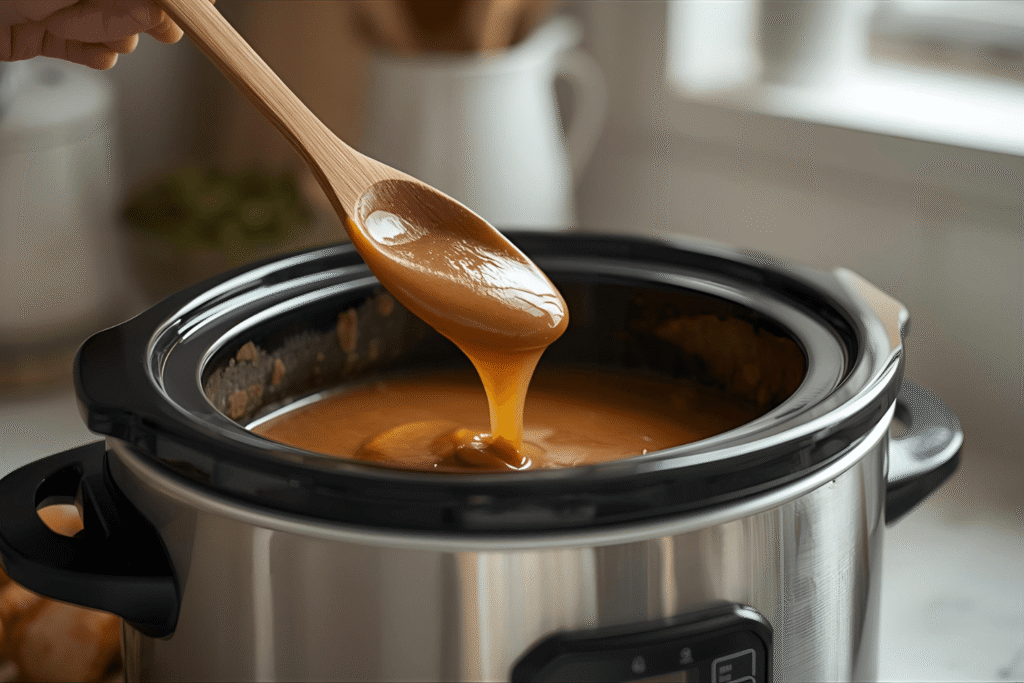
If you have ever lifted the lid on your slow cooker only to find watery gravy instead of the rich, silky sauce you imagined, you are not alone. Learning how to thicken gravy in crockpot recipes is one of the most common slow cooker struggles.
Crockpots are amazing for flavor, tenderness, and convenience, but they are notorious for producing thin gravies. The good news is that thickening gravy in a crockpot is easy once you know the right methods and timing.
This guide walks you through the best thickening techniques, why gravy stays thin in slow cookers, and how to fix mistakes without stressing dinner plans.
Why gravy stays thin in a crockpot
Crockpot gravy behaves differently than stovetop gravy, and it all comes down to moisture and evaporation.
Slow cookers are sealed environments. Unlike stovetop cooking where liquid reduces quickly, crockpots trap steam. This means excess moisture has nowhere to escape.
A few key reasons gravy stays thin:
- Meat releases 30–40 percent of its weight in liquid as it cooks
- Lids trap steam instead of allowing evaporation
- Low temperatures prevent natural reduction
- Flour added too early breaks down over long cook times
Understanding this makes it easier to choose the right thickening method at the right moment.
Best ways to thicken gravy in a crockpot
Not all thickening methods work well in a slow cooker. Below are the most reliable options, ranked by ease and consistency.
Cornstarch slurry
Cornstarch is the most popular and foolproof way to thicken crockpot gravy.
It thickens quickly, stays smooth, and does not require high heat.
How to do it:
- Mix 1 tablespoon cornstarch with 1 tablespoon cold water
- Stir until completely smooth
- Add to hot gravy during the last 20–30 minutes
- Cover and let it cook until thickened
Cornstarch thickens at around 203°F, which makes it ideal for crockpots.
Pro Tip: Always mix cornstarch with cold liquid first. Adding it directly will cause lumps.
Flour slurry
Flour works well but requires more care and longer cook time.
How to do it:
- Mix 2 tablespoons flour with 2 tablespoons cold water
- Whisk until no lumps remain
- Stir into gravy
- Cook uncovered for at least 30–45 minutes
Flour needs more heat than cornstarch to remove the raw taste, which is why it works best when added earlier or with the lid slightly ajar.
Pro Tip: Flour creates a more traditional, hearty gravy texture, especially for beef or roast recipes.
Arrowroot powder
Arrowroot is a great option if you want a gluten-free thickener with a glossy finish.
Why it works:
- Thickens quickly
- Does not cloud gravy
- Works at lower temperatures
How to use it:
- Mix 1 teaspoon arrowroot with 1 tablespoon cold water
- Stir in near the end of cooking
- Heat gently until thickened
Arrowroot should not be overcooked or reheated repeatedly, as it can thin out again.
Potato flakes
This method is surprisingly effective and perfect if you want comfort-food vibes.
Why it works:
- Absorbs liquid fast
- Adds body without lumps
- Great for beef or chicken gravies
How to use it:
- Sprinkle 1 teaspoon at a time
- Stir and wait 5 minutes
- Repeat until desired thickness
Pro Tip: Potato flakes slightly mute salt, so taste and adjust seasoning after thickening.
Reducing the gravy
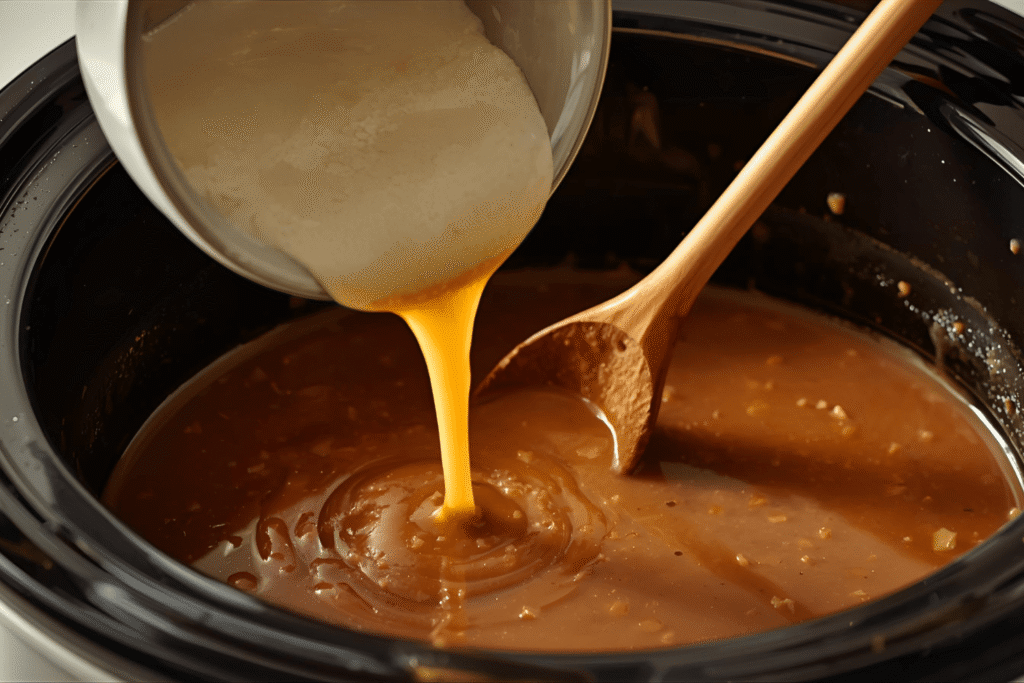
If you prefer a no-thickener approach, reduction is your friend.
How to reduce crockpot gravy:
- Remove the lid
- Turn crockpot to high
- Let liquid evaporate for 30–60 minutes
- Stir occasionally
This method intensifies flavor but takes longer and requires patience.
How long it takes for gravy to thicken in a crockpot
Timing matters when thickening gravy in a slow cooker.
General guidelines:
- Cornstarch: 10–20 minutes
- Flour: 30–45 minutes
- Arrowroot: 5–10 minutes
- Potato flakes: 5 minutes
- Reduction: 30–60 minutes
For best results, always thicken gravy at the end of cooking unless the recipe states otherwise.
Common mistakes when thickening gravy in a slow cooker
Many gravy issues come from small missteps.
Avoid these common mistakes:
- Adding thickener too early
- Not mixing slurry properly
- Using hot liquid to make slurry
- Over-thickening without tasting
- Replacing the lid too often
Opening the lid repeatedly can increase cook time by up to 20 minutes per lift, which affects consistency.
How to fix gravy that is too thick
Over-thickened gravy happens more often than you think.
Easy fixes:
- Stir in warm broth or stock, 2 tablespoons at a time
- Add reserved cooking liquid from the meat
- Add a splash of milk or cream for richness
Pro Tip: Always thin gravy gradually. Adding too much liquid at once can undo the texture.
Flavor tips to make crockpot gravy taste homemade
Thickness matters, but flavor seals the deal.
Simple upgrades:
- Add a splash of Worcestershire sauce
- Stir in roasted garlic paste
- Finish with butter for silkiness
- Add fresh herbs right before serving
According to food science studies, fat enhances flavor perception by up to 30 percent, which is why butter makes gravy taste richer even in small amounts.
When to thicken gravy depending on the meal
Knowing how to thicken gravy matters, but knowing when to do it makes an even bigger difference. The timing should change based on what you are cooking and how the gravy will be served.
For dishes like pot roast or beef stew, it is best to thicken the gravy right at the end of cooking. These meals release a lot of liquid as they cook, especially from vegetables like onions, carrots, and mushrooms. Thickening too early often leads to disappointment when the gravy thins out again after another hour or two.
Chicken-based crockpot meals benefit from late thickening as well, but with a lighter hand. Chicken gravies tend to thicken faster and can become gluey if overdone. Cornstarch or arrowroot works especially well here because both create a smooth texture without heaviness.
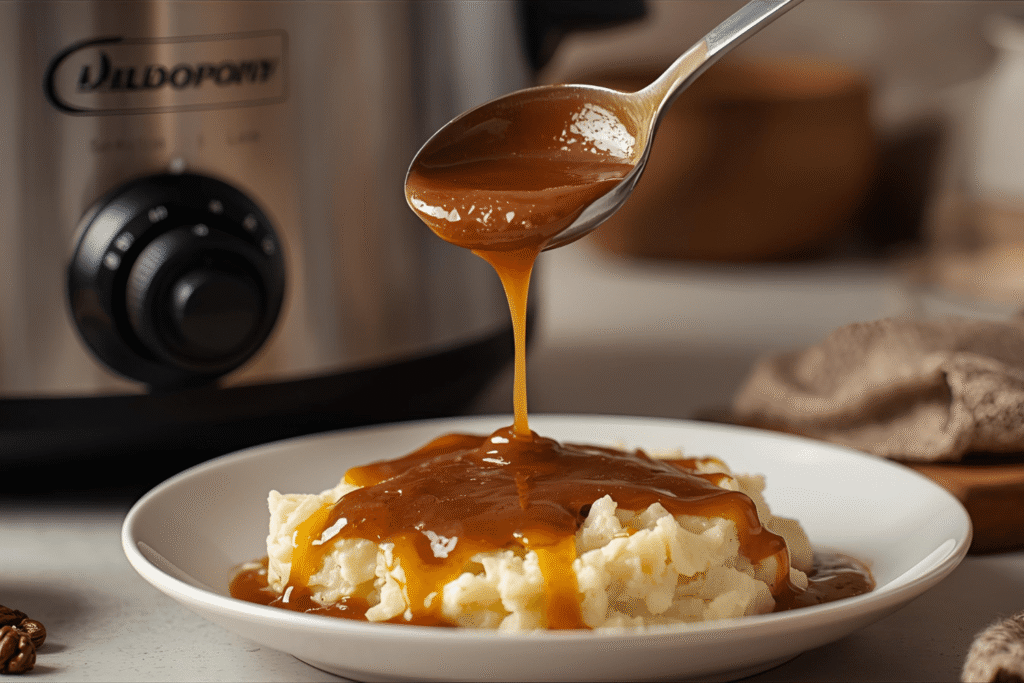
If you are serving gravy over mashed potatoes, biscuits, or rice, aim for a slightly thicker consistency than you think you need. Once gravy hits hot starch, it naturally loosens. A gravy that looks perfect in the crockpot can appear thin once plated.
On the other hand, gravies meant for pasta or egg noodles should stay looser. In that case, reduce liquid slightly or add a smaller slurry so the sauce coats without clumping.
Thickening gravy for leftovers and meal prep
If you plan to store crockpot meals, thickening becomes even more important.
Thin gravy tends to separate after chilling, while thickened gravy holds together better in the fridge. Flour-based gravies usually reheat the best, especially for beef or turkey dishes. Cornstarch gravies reheat well too, but should be warmed gently to avoid thinning.
For meal prep, slightly under-thicken the gravy on day one. When reheated, it will naturally tighten as moisture evaporates. This prevents ending up with overly thick sauce after reheating.
Another helpful trick is storing gravy separately from meat when possible. This keeps textures intact and allows you to adjust thickness fresh when reheating.
How gravy thickness affects comfort and satisfaction
Texture plays a surprisingly large role in how satisfying a meal feels. Research in sensory eating shows that thicker sauces are perceived as more indulgent and filling, even when calories stay the same. That is one reason watery gravy often feels disappointing, no matter how well seasoned it is.
A properly thickened gravy clings to food, carries flavor longer, and creates that comforting, home-cooked experience people expect from slow cooker meals. This is especially true for colder months, when heavier textures are associated with warmth and satiety.
Once you understand this, thickening gravy stops feeling like a rescue step and becomes part of the cooking process itself.
FAQs
Yes. Flour, arrowroot, potato flakes, and reduction all work well. Cornstarch is just the fastest.
Either the gravy was not hot enough or the slurry ratio was too low. Add a second small slurry and allow more time.
Always thicken after the meat is fully cooked. Meat releases liquid during cooking, which can undo thickening.
Yes, but only using reduction or flour. Cornstarch and arrowroot should be added shortly before serving.
Yes, as long as the food stays hot and is stirred occasionally.
Final thoughts
Knowing how to thicken gravy in crockpot recipes changes everything about slow cooking. Instead of watery sauces, you get rich, spoon-coating gravy that feels intentional and comforting.
The key is choosing the right method for your timeline, dietary needs, and flavor goals. Whether you love cornstarch for speed or potato flakes for cozy texture, there is a solution that works every time.
Once you get comfortable thickening gravy this way, slow cooker meals become far more forgiving and flexible. You can adjust texture at the very end, rescue a dish that looks too thin, or tweak consistency to match mashed potatoes, rice, or biscuits without starting over. That confidence alone makes crockpot cooking feel easier, more reliable, and far more satisfying.